People often use this word when they talk about schools, jobs, rights, and society. It helps us describe people who do not get the same chances as others. Learning synonyms of marginalized can help English learners and writers share ideas in clear and fresh ways.
In this article, you will learn the meaning of marginalized and 30 related words. You will also learn how to use them in sentences. We will explore their tone, history, word forms, and pronunciation. These simple lessons will help you choose the right word for speaking and writing.
Meaning of Marginalized
Marginalized (verb, past tense or past participle; also an adjective):
Marginalized means pushed aside, left out, or given less power and fewer chances than others.
Examples
- Some students felt marginalized during group work.
- The new plan aims to help marginalized people in the town.
Connotative Meaning
Connotation is the feeling or idea that a word brings to mind beyond its basic meaning.
- Positive tone: The word can appear in a positive message when people work to include marginalized groups.
- Negative tone: It often shows unfair treatment, neglect, or exclusive.
Read more about:https://synonymhunting.com/synonyms-of-warm/
Etymology of Marginalized
- Original meaning: A margin is the edge or side of a page. To marginalize someone is to place them at the edge of a group or society.
- Word history: Margin came into English through French from Latin margo, meaning “edge” or “border.”
Short History
- Old English (450–1100): The modern word marginalized was not in common use.
- Modern English (1500–Present): Words related to margin gained wider use. Marginalize later became common in discussions about power, rights, and social groups.
Pronunciation (US & UK – IPA)
- US: /ˈmɑːrdʒɪnəlaɪzd/
- UK: /ˈmɑːdʒɪnəlaɪzd/
Syllables
mar-gin-al-ized — 4 syllables.
Affixation Pattern of Marginalized
- Root: margin — the edge or border.
- Prefix: None in the main word form.
- Suffixes: -al helps form marginal; -ize forms the verb marginalize; -ed forms marginalized.
- Word formation: The word belongs to a family of related forms:
- Noun: marginalization
- Verb: marginalize
- Adjective: marginalized, marginal
- Adverb: marginally
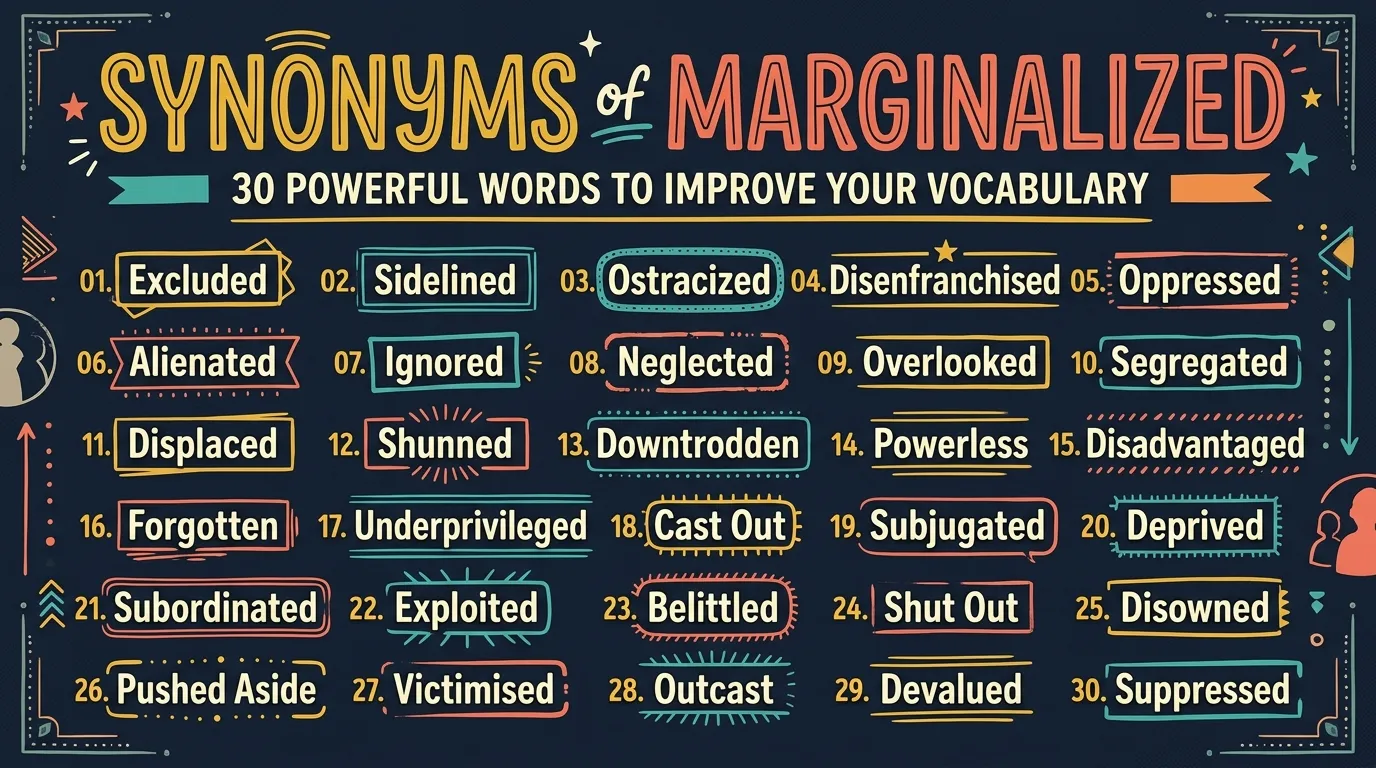
30 Synonyms of Marginalized
These words are related to marginalized, but they do not all mean the same thing. Choose a word that fits the situation.
1. Excluded (Verb/Adjective) — US: /ɪkˈskluːdɪd/ | UK: /ɪkˈskluːdɪd/
Meaning: Kept out of a group or activity.
Examples:
- Ali felt excluded from the school team.
2. Ignored (Verb/Adjective) — US: /ɪɡˈnɔːrd/ | UK: /ɪɡˈnɔːd/
Meaning: Not given attention or care.
Examples:
- The teacher ignored his questions.
3. Overlooked (Verb/Adjective) — US: /ˌoʊvərˈlʊkt/ | UK: /ˌəʊvəˈlʊkt/
Meaning: Not noticed or given enough attention.
Examples:
- The needs of poor families were overlooked.
4. Neglected (Verb/Adjective) — US: /nɪˈɡlektɪd/ | UK: /nɪˈɡlektɪd/
Examples:
- The neglected school needed new books.
- Some children feel neglected when no one listens to them.
5. Isolated (Verb/Adjective) — US: /ˈaɪsəleɪtɪd/ | UK: /ˈaɪsəleɪtɪd/
Meaning: Separated from other people or groups.
Examples:
- The new student felt isolated from the class.
6. Sidelined (Verb/Adjective) — US: /ˈsaɪdlaɪnd/ | UK: /ˈsaɪdlaɪnd/
Meaning: Put aside and given less chance to take part.
Examples
- Young workers felt sidelined by the manager.
7. Disadvantaged (Adjective) — US: /ˌdɪsədˈvæntɪdʒd/ | UK: /ˌdɪsədˈvɑːntɪdʒd/
Meaning: Having fewer chances or fewer helpful resources than others.
Examples:
- The school offers free books to disadvantaged children.
- Disadvantaged families may need extra support.
8. Oppressed (Verb/Adjective) — US: /əˈprest/ | UK: /əˈprest/
Meaning: Treated unfairly by people who hold power.
Examples:
- The group fought for the rights of oppressed people.
- Oppressed workers asked for fair pay.
9. Underrepresented (Adjective) — US: /ˌʌndərˌreprɪˈzentɪd/ | UK: /ˌʌndəˌreprɪˈzentɪd/
Meaning: Present in a group in smaller numbers than expected or fair.
Example
- The school wants to support underrepresented students.
10. Voiceless (Adjective) — US: /ˈvɔɪsləs/ | UK: /ˈvɔɪsləs/
Examples:
- The group spoke for voiceless children.
- Every person should have a voice, even those who feel voiceless.
11. Powerless (Adjective) — US: /ˈpaʊərləs/ | UK: /ˈpaʊələs/
Meaning: Having little or no power to change a situation.
Examples:
- The workers felt powerless against unfair rules.
- She felt powerless when no one heard her complaint.
12. Forgotten (Verb/Adjective) — US: /fərˈɡɑːtən/ | UK: /fəˈɡɒtən/
Meaning: Not remembered or given attention.
Example
- He felt forgotten by his old friends.
13. Alienated (Verb/Adjective) — US: /ˈeɪliəneɪtɪd/ | UK: /ˈeɪliəneɪtɪd/
Meaning: Made to feel distant from other people.
Examples:
- Harsh words alienated the new student.
- Some workers felt alienated from their team.
14. Discriminated Against (Verb Phrase) — US: /dɪˈskrɪməneɪtɪd əˈɡenst/ | UK: /dɪˈskrɪməneɪtɪd əˈɡenst/
Meaning: Treated unfairly because of who someone is or what group they belong to.
Example
- The law protects people who are discriminated against at work.
15. Shut Out (Verb Phrase) — US: /ʃʌt aʊt/ | UK: /ʃʌt aʊt/
Meaning: Kept out of a place, group, or chance.
Examples:
- He felt shut out of the group discussion.
- The team did not want anyone to feel shut out.
16. Left Out (Verb Phrase) — US: /left aʊt/ | UK: /left aʊt/
Meaning: Not included in an activity or group.
Examples:
- Sara felt left out during lunch.
- Every child should be included so no one feels left out.
17. Rejected (Verb/Adjective) — US: /rɪˈdʒektɪd/ | UK: /rɪˈdʒektɪd/
Meaning: Refused or not accepted.
Examples:
- His ideas were rejected without discussion.
- She felt rejected by her classmates.
18. Silenced (Verb/Adjective) — US: /ˈsaɪlənst/ | UK: /ˈsaɪlənst/
Meaning: Stopped from speaking or sharing views.
Examples:
- The workers felt silenced by unfair rules.
- No child should be silenced when asking for help.
19. Underserved (Adjective) — US: /ˌʌndərˈsɜːrvd/ | UK: /ˌʌndəˈsɜːvd/
Meaning: Not given enough services or support.
Examples:
- The charity helps underserved communities.
- The town needs better care for underserved families.
20. Deprived (Adjective) — US: /dɪˈpraɪvd/ | UK: /dɪˈpraɪvd/
Meaning: Lacking things that are needed for a good life.
Examples:
- The program helps children from deprived areas.
- No child should be deprived of a good education.
21. Mistreated (Verb/Adjective) — US: /ˌmɪsˈtriːtɪd/ | UK: /ˌmɪsˈtriːtɪd/
Meaning: Treated in a cruel or unfair way.
Examples:
- The group helped mistreated workers.
- Every person deserves respect and should not be mistreated.
22. Unrecognized (Adjective) — US: /ˌʌnˈrekəɡnaɪzd/ | UK: /ˌʌnˈrekəɡnaɪzd/
Meaning: Not noticed, accepted, or given credit.
Examples:
- Her work remained unrecognized for years.
- Unrecognized needs can harm a school community.
23. Undervalued (Verb/Adjective) — US: /ˌʌndərˈvæljuːd/ | UK: /ˌʌndəˈvæljuːd/
Meaning: Not valued or respected enough.
Examples:
- The staff felt undervalued by their manager.
- Every child’s ideas should be valued, not ignored or undervalued.
24. Ostracized (Verb/Adjective) — US: /ˈɑːstrəsaɪzd/ | UK: /ˈɒstrəsaɪzd/
Meaning: Deliberately kept away from a group.
Examples:
- He was ostracized for sharing a different view.
- No student should be ostracized for being different.
25. Segregated (Verb/Adjective) — US: /ˈseɡrɪɡeɪtɪd/ | UK: /ˈseɡrɪɡeɪtɪd/
Meaning: Kept apart from other people or groups, often unfairly.
Examples:
- The old rules segregated people by race.
- Schools should not be segregated unfairly.
26. Outcast (Noun) — US: /ˈaʊtkæst/ | UK: /ˈaʊtkɑːst/
Meaning: A person who is not accepted by a group.
Examples:
- The new boy felt like an outcast.
- The story tells of an outcast who finds true friends.
27. Invisible (Adjective) — US: /ɪnˈvɪzəbəl/ | UK: /ɪnˈvɪzəbəl/
Meaning: Not seen or not given attention.
Examples:
- The needs of poor families can seem invisible to leaders.
- She felt invisible when no one listened to her.
28. Disempowered (Verb/Adjective) — US: /ˌdɪsɪmˈpaʊərd/ | UK: /ˌdɪsɪmˈpaʊəd/
Meaning: Made to feel that you have little power or control.
Examples:
- Unfair rules left workers disempowered.
- Students may feel disempowered when they cannot share ideas.
29. Disenfranchised (Verb/Adjective) — US: /ˌdɪsɪnˈfræntʃaɪzd/ | UK: /ˌdɪsɪnˈfrɑːntʃaɪzd/
Meaning: Denied rights, especially the right to vote or take part in public life.
Examples:
- The reform aimed to help disenfranchised voters.
- Disenfranchised groups may call for equal rights.
30. Pushed Aside (Verb Phrase) — US: /pʊʃt əˈsaɪd/ | UK: /pʊʃt əˈsaɪd/
Meaning: Treated as less important and moved out of the way.
Examples:
- Her concerns were pushed aside at the meeting.
- No one should be pushed aside because of their background.
Prototype Meaning of Marginalized
The most common meaning of marginalized is being left out or treated as less important than others. People often use this word for groups that have fewer chances, less power, or less access to schools, jobs, health care, and other services. For example, a child who is never allowed to join class activities may feel marginalized. The word often brings to mind unfair treatment and a need for change.
Prototype Categorization
This helps you choose the best word for each sentence.
- Lacking support or resources: Disadvantaged, deprived, underserved, neglected. These words fit when people do not get the help they need.
- Facing unfair treatment: Oppressed, discriminated against, mistreated, segregated. These words fit when people face unfair rules or actions.
- Having little power: Voiceless, powerless, disempowered, disenfranchised, silenced. These words fit when people cannot easily speak up or take part.
- Feeling alone or rejected: Isolated, alienated, rejected, ostracized, outcast.
- Not getting enough value or attention: Undervalued, unrecognized, invisible, forgotten, sidelined, underrepresented. These words fit when people or their needs do not get enough attention.
Using these groups helps writers avoid repetition. It also helps them choose words that match the meaning, feeling, and purpose of a sentence.
Antonyms of Marginalized
Antonyms are words with opposite meanings. These words show inclusion, respect, power, or equal treatment.
- Included — made part of a group.
- Accepted — welcomed by others.
- Empowered — given power or confidence.
- Included and valued — treated as an important member.
- Respected — treated with care and honor.
- Supported — given help when needed.
- Recognized — noticed or given credit.
- Represented — given a place or voice in a group.
- Integrated — made part of a larger group.
- Equal — having the same rights or chances.
Short Questions and Answers
– What does marginalized mean?
Marginalized means pushed aside or treated as less important than others.
– When should marginalized be used?
Use it when people or groups have fewer chances, less power, or less access to needed services.
– Is marginalized positive or negative?
It usually has a negative tone because it describes exclusion or unfair treatment. It can also appear in positive messages about helping people gain equal rights.
– How is marginalized different from similar words?
Excluded means kept out. Ignored means not given attention. Oppressed means treated unfairly by people in power. Disadvantaged means having fewer chances or resources. Marginalized can include several of these problems.
Conclusion
Learning the word marginalized and its synonyms can improve your English vocabulary. They also help you write better sentences and speak with more care.
Each synonym has a special meaning. For example, excluded means kept out, while disadvantaged means having fewer chances or resources. Choosing the right word makes your message clear. It also helps you avoid using the same word again and again.
English learners, students, teachers, and content writers can all benefit from learning these words. Try to learn three new words each day. Write a sentence for each word and use it in daily speech. With regular practice, you can build a stronger vocabulary and speak English with more confidence.

I’m Zahid Abbas, an educator, researcher, and digital publishing strategist with a passion for linguistics, grammar, and clear communication. As a content creator and SEO specialist, I craft research-driven, reader-focused content that empowers learners and makes knowledge accessible worldwide.