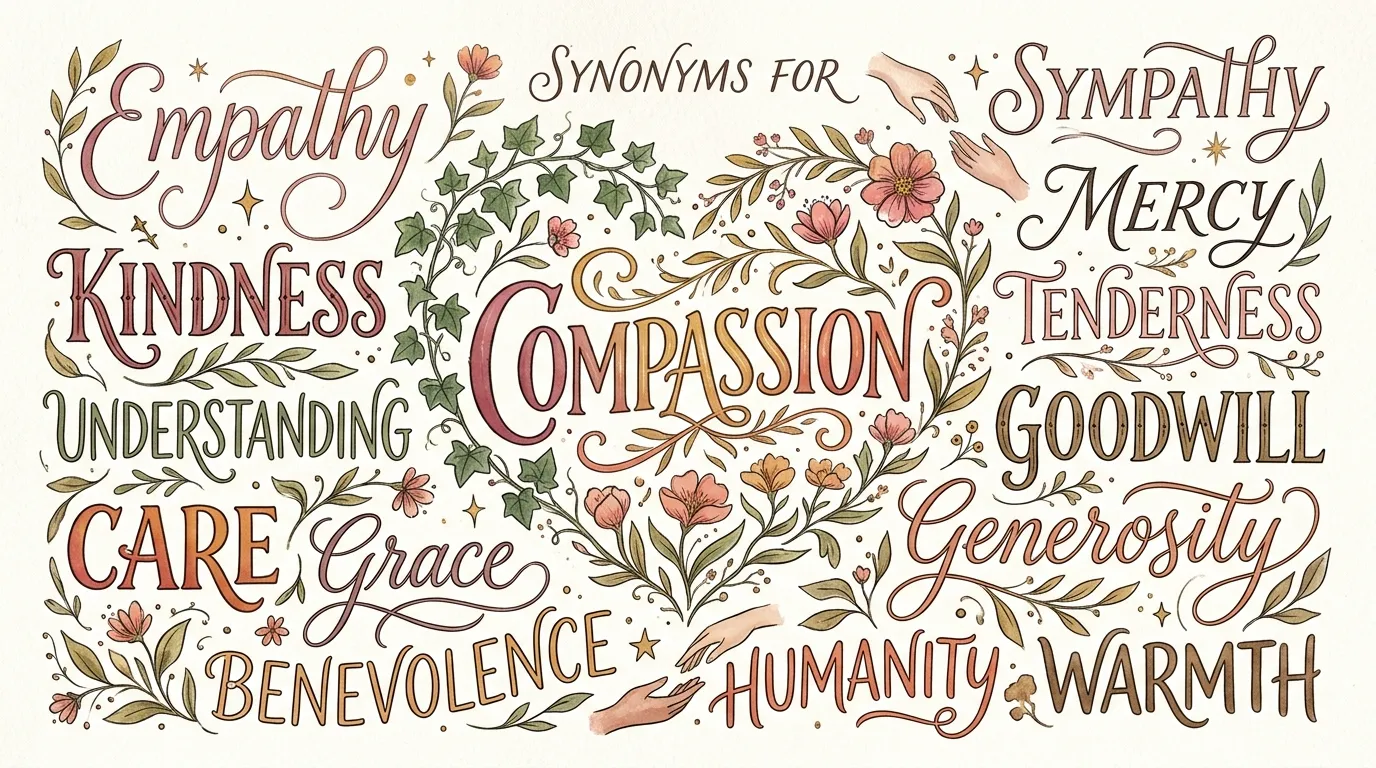
Compassion means caring about someone who is suffering and wanting to help. Imagine a student who sees a classmate crying after failing a test. Instead of laughing, the student listens, offers kind words, and helps them study. This is an example of compassion.
People often use this word when discussing kindness, family, friendship, education, healthcare, and social problems. It is also common in essays, stories, speeches, and everyday conversations.
Learning synonyms of compassion helps English learners express feelings more clearly. It also helps content writers avoid repetition and make their writing more natural. However, not every synonym has exactly the same meaning. Some words focus on understanding feelings, while others describe kindness, support, or comfort.
In this guide, you will learn the definition, pronunciation, history, and word formation of compassion. You will also explore 30 related words, their meanings, example sentences, emotional tones, antonyms, and practical ways to choose the right word.
Meaning of Compassion
Compassion (noun): A feeling of care for someone who is suffering, along with a desire to help.
Examples:
- The teacher showed compassion toward the struggling student.
- We should treat people with compassion, even when they make mistakes.
Read more about:https://synonymhunting.com/synonyms-of-monster/
Connotative Meaning
Connotation means the feelings or ideas that a word suggests beyond its basic meaning.
- Positive tone: Compassion suggests kindness, mercy, care, and a desire to help.
- Negative tone: The word itself is usually positive, but an action may be criticized as misplaced compassion if it ignores harm or unfairness.
- Neutral tone: In formal writing, compassion can describe a person’s attitude toward others without strong emotional language.
Etymology and History
- Origin: Latin, through French.
- Latin connection: Compassio relates to suffering with another person.
- Original idea: Sharing another person’s suffering.
- Word parts: The historical elements are connected with Latin com- (with or together) and pati (to suffer).
Historical Development
- Old English (450–1100): English speakers expressed similar ideas through words related to pity, mercy, and kindness.
- Middle English (1100–1500): The word entered English through French and Latin influence and appeared in religious and moral writing.
- Modern English (1500–Present): Compassion became widely used in literature, education, healthcare, philosophy, and everyday speech.
Pronunciation and Word Formation
Pronunciation
- US: /kəmˈpæʃ.ən/
- UK: /kəmˈpæʃ.ən/
- Syllables: com-pas-sion (3 syllables)
- Stress: The second syllable, PAS.
Word formation
- Root connection: Latin pati, meaning “to suffer.”
- Prefix: com- means “with” or “together” in its Latin origin.
- Suffix: -ion appears in the word’s historical formation and is commonly found in English nouns.
- Part of speech: Noun.
- Related forms: Compassionate (adjective), compassionately (adverb), and compassionateness (noun, uncommon).
The number of possible related words and expressions is not fixed. In everyday English, phrases such as “show compassion” and “feel compassion” are more natural than using compassion as a verb.
30 Synonyms of Compassion
These words share some aspects of compassion, but their meanings differ. Choose the one that best fits your sentence.
1. Sympathy (Noun) — US /ˈsɪm.pə.θi/ | UK /ˈsɪm.pə.θi/
Meaning: Concern or sorrow for someone facing difficulty.
Examples:
- I felt sympathy for the family after their loss.
- The teacher showed sympathy toward the worried student.
2. Empathy (Noun) — US /ˈɛm.pə.θi/ | UK /ˈɛm.pə.θi/
Meaning: The ability to understand and share another person’s feelings.
Examples:
- Good teachers use empathy to understand their students.
- She listened with empathy when her friend shared her fears.
3. Kindness (Noun) — US /ˈkaɪnd.nəs/ | UK /ˈkaɪnd.nəs/
Meaning: The quality of being caring, friendly, and helpful.
Examples:
- His kindness made the new student feel welcome.
- A small act of kindness can brighten someone’s day.
4. Mercy (Noun) — US /ˈmɝː.si/ | UK /ˈmɜː.si/
Meaning: A willingness to treat someone gently instead of punishing them harshly.
Examples:
- The judge showed mercy to the young offender.
- She asked for mercy after making an honest mistake.
5. Pity (Noun) — US /ˈpɪt̬.i/ | UK /ˈpɪt.i/
Meaning: Sorrow for someone who is suffering.
Examples:
- He felt pity for the injured animal.
- Her story filled the audience with pity.
6. Care (Noun) — US /kɛr/ | UK /keə/
Meaning: Concern for another person’s needs or well-being.
Examples:
- The nurse treated every patient with care.
- Children need love and care to grow well.
7. Concern (Noun) — US /kənˈsɝːn/ | UK /kənˈsɜːn/
Meaning: Worry or interest about someone’s well-being.
Examples:
- His parents showed concern when he became ill.
- The principal expressed concern about the student’s absence.
8. Tenderness (Noun) — US /ˈtɛn.dɚ.nəs/ | UK /ˈtɛn.də.nəs/
Meaning: A gentle and loving way of treating someone.
Examples:
- She spoke to the frightened child with tenderness.
- The father held his baby with tenderness.
9. Humanity (Noun) — US /hjuːˈmæn.ə.t̬i/ | UK /hjuːˈmæn.ə.ti/
Meaning: The quality of showing kindness and concern for others.
Examples:
- The volunteers showed great humanity during the crisis.
- Humanity calls us to help people in need.
10. Benevolence (Noun) — US /bəˈnɛv.ə.ləns/ | UK /bəˈnɛv.ə.ləns/
Meaning: A desire to do good and help others.
Examples:
- The charity was known for its benevolence.
- Her benevolence helped many poor families.
11. Altruism (Noun) — US /ˈæl.truː.ɪ.zəm/ | UK /ˈæl.truː.ɪ.zəm/
Meaning: Caring about others without expecting a personal reward.
Examples:
- His altruism led him to volunteer every weekend.
- Altruism often inspires people to help strangers.
12. Generosity (Noun) — US /ˌdʒɛn.əˈrɑː.sə.t̬i/ | UK /ˌdʒɛn.əˈrɒs.ə.ti/
Meaning: A willingness to give time, money, or help.
Examples:
- Her generosity helped the family pay for food.
- The community thanked him for his generosity.
13. Charity (Noun) — US /ˈtʃer.ə.t̬i/ | UK /ˈtʃær.ə.ti/
Meaning: Help or kindness given to people in need.
Examples:
- The school held a charity event for poor families.
- Charity can provide food and shelter to people in need.
14. Consideration (Noun) — US /kənˌsɪd.əˈreɪ.ʃən/ | UK /kənˌsɪd.əˈreɪ.ʃən/
Meaning: Careful thought about another person’s feelings or needs.
Examples:
- Please show consideration for your classmates.
- Her consideration made the guest feel comfortable.
15. Understanding (Noun) — US /ˌʌn.dɚˈstæn.dɪŋ/ | UK /ˌʌn.dəˈstæn.dɪŋ/
Meaning: The ability to recognize why someone feels or acts a certain way.
Examples:
- The coach showed understanding when the player made a mistake.
- Mutual understanding can strengthen a friendship.
16. Sensitivity (Noun) — US /ˌsɛn.səˈtɪv.ə.t̬i/ | UK /ˌsen.sɪˈtɪv.ə.ti/
Meaning: The ability to notice and respond carefully to others’ feelings.
Examples:
- She handled the painful topic with sensitivity.
- Teachers need sensitivity when discussing personal problems.
17. Compassionateness (Noun, uncommon) — US /kəmˈpæʃ.ən.ət.nəs/ | UK /kəmˈpæʃ.ən.ət.nəs/
Meaning: The quality of being compassionate toward people who suffer.
Examples:
- The story highlighted her compassionateness toward strangers.
- His compassionateness was clear in the way he treated patients.
18. Fellow Feeling (Noun Phrase) — US /ˌfɛl.oʊ ˈfiː.lɪŋ/ | UK /ˌfɛl.əʊ ˈfiː.lɪŋ/
Meaning: A sense of shared feeling or concern for another person.
Examples:
- Fellow feeling brought the neighbors together after the flood.
- She showed fellow feeling toward people facing the same problem.
19. Solidarity (Noun) — US /ˌsɑː.ləˈdær.ə.t̬i/ | UK /ˌsɒl.ɪˈdær.ə.ti/
Meaning: Support for others based on shared feelings or struggles.
Examples:
- The workers showed solidarity with their colleagues.
- The town stood in solidarity with families affected by the storm.
20. Support (Noun) — US /səˈpɔːrt/ | UK /səˈpɔːt/
Meaning: Help or encouragement given to someone who needs it.
Examples:
- Her friends gave her support during a hard time.
- Emotional support can help people face difficult changes.
21. Comfort (Noun) — US /ˈkʌm.fɚt/ | UK /ˈkʌm.fət/
Meaning: Relief or reassurance for someone who feels sad or upset.
Examples:
- His kind words brought comfort to the grieving family.
- She offered comfort to her friend after the bad news.
22. Consolation (Noun) — US /ˌkɑːn.səˈleɪ.ʃən/ | UK /ˌkɒn.səˈleɪ.ʃən/
Meaning: Something that helps a sad or disappointed person feel better.
Examples:
- Her friend’s visit was a source of consolation.
- The team found consolation in their strong effort.
23. Solace (Noun) — US /ˈsɑː.ləs/ | UK /ˈsɒl.ɪs/
Meaning: Comfort during sadness, grief, or trouble.
Examples:
- He found solace in talking to his sister.
- Music offered her solace during a difficult period.
24. Warmth (Noun) — US /wɔːrmθ/ | UK /wɔːmθ/
Meaning: A friendly and caring feeling shown toward someone.
Examples:
- The nurse welcomed each patient with warmth.
- Her warmth helped the new employee feel at ease.
25. Forgiveness (Noun) — US /fɚˈɡɪv.nəs/ | UK /fəˈɡɪv.nəs/
Meaning: The act of letting go of anger toward someone who has hurt you.
Examples:
- Forgiveness helped them rebuild their friendship.
- He asked for forgiveness after speaking harshly.
26. Patience (Noun) — US /ˈpeɪ.ʃəns/ | UK /ˈpeɪ.ʃəns/
Meaning: The ability to remain calm when someone needs time.
Examples:
- The teacher showed patience with the young learners.
- Learning a new skill takes patience and practice.
27. Gentleness (Noun) — US /ˈdʒɛn.təl.nəs/ | UK /ˈdʒen.təl.nəs/
Meaning: The quality of acting or speaking in a calm, kind way.
Examples:
- She treated the sick kitten with gentleness.
- His gentleness helped calm the frightened child.
28. Compassionate Concern (Noun Phrase) — US /kəmˈpæʃ.ən.ət kənˈsɝːn/ | UK /kəmˈpæʃ.ən.ət kənˈsɜːn/
Meaning: Care for someone’s suffering combined with a wish to help.
Examples:
- The doctor showed compassionate concern for the patient’s fears.
- Compassionate concern encouraged the neighbors to help the family.
29. Kindheartedness (Noun) — US /ˌkaɪndˈhɑːr.t̬ɪd.nəs/ | UK /ˌkaɪndˈhɑː.tɪd.nəs/
Meaning: The quality of being naturally kind and caring.
Examples:
- Her kindheartedness made her popular with the children.
30. Benevolence of Spirit (Noun Phrase) — US /bəˈnɛv.ə.ləns əv ˈspɪr.ɪt/ | UK /bəˈnɛv.ə.ləns əv ˈspɪr.ɪt/
Meaning: A caring attitude and desire to do good for others.
Examples:
- The leader’s benevolence of spirit inspired the community.
- Benevolence of spirit can encourage people to serve others.
Usage note: The closest everyday alternatives are empathy, sympathy, kindness, care, and mercy. Other entries describe related feelings or actions rather than exact synonyms. Use common, natural expressions in everyday writing.
Synonym Categories
- Understanding feelings: Empathy, sympathy, understanding, and sensitivity.
- Kind treatment: Kindness, tenderness, gentleness, warmth, and kindheartedness.
- Mercy and forgiveness: Mercy and forgiveness.
- Giving and helping: Benevolence, altruism, generosity, charity, and support.
- Comforting others: Comfort, consolation, and solace.
- Concern for well-being: Care, concern, consideration, and compassionate concern.
- Shared struggles: Solidarity, fellow feeling, and humanity.
- Personal qualities: Compassionateness and benevolence of spirit.
- Calm responses: Patience.
These categories help writers select a word that matches the situation. For example, use empathy to emphasize understanding, generosity to emphasize giving, and solace to emphasize comfort during sadness.
Antonyms of Compassion
- Cruelty: Behavior that causes pain without care.
- Callousness: A lack of concern for others’ feelings.
- Indifference: A lack of interest or concern.
- Unkindness: Behavior that is not kind or caring.
- Heartlessness: A lack of sympathy or compassion.
- Insensitivity: A failure to notice or respect others’ feelings.
- Harshness: A severe or unkind way of treating people.
- Selfishness: Caring mainly about one’s own needs.
- Ruthlessness: Acting harshly without concern for the harm caused.
- Mercilessness: A lack of mercy.
Short Questions and Answers
- What does compassion mean?
Compassion means caring about another person’s suffering and wanting to help. - When should compassion be used?
Use the word when discussing kindness, emotional care, or support for people in difficulty. - Is compassion positive or negative?
It is usually positive because it suggests kindness and concern. - How is compassion different from similar words?
Compassion combines concern about suffering with a desire to help. Sympathy expresses sorrow or concern, empathy focuses on understanding feelings, and kindness describes caring behavior more broadly.
Conclusion
Learning compassion and its synonyms helps you express feelings clearly and choose words that fit different situations. Words such as empathy, sympathy, kindness, mercy, and generosity share related meanings, but each highlights a different idea.
Using a wider range of words makes essays, stories, speeches, and everyday conversations more natural. It also reduces repetition and helps readers understand your message. For English learners, practicing these words can build vocabulary and improve confidence in speaking and writing.
Start by learning two or three words each day. Read their definitions, say them aloud, and write your own example sentences. With regular practice, you will become more confident in choosing the right word for the right situation.

I’m Zahid Abbas, an educator, researcher, and digital publishing strategist with a passion for linguistics, grammar, and clear communication. As a content creator and SEO specialist, I craft research-driven, reader-focused content that empowers learners and makes knowledge accessible worldwide.