Friendship is a special bond between people who care about, trust, and support each other. Think about two friends who help each other during hard times, share happy moments, and enjoy talking together. Their strong connection is a good example of friendship. This word is common in daily conversations, books, stories, and social media. It helps us describe the value of having good people in our lives.
Learning synonyms of friendship can help English learners build a stronger vocabulary. It also helps students, bloggers, and content writers express their ideas in fresh and clear ways. Instead of using the same word again and again, you can choose a word that fits the meaning and feeling you want to share. In this article, you will learn the meaning, pronunciation, history, grammar, and emotional tone of friendship. You will also explore 30 synonyms with simple meanings and examples to help you use them naturally in speaking and writing.
Meaning of Friendship
Definition
Friendship (noun): A close and caring relationship between people who trust, like, and support each other.
Examples
- Their friendship grew stronger as they worked together.
- True friendship brings comfort during difficult times.
Connotative Meaning
Connotation is the feeling or idea that a word suggests beyond its basic meaning.
- Positive tone: Friendship often suggests trust, love, kindness, loyalty, happiness, and mutual support.
- Negative tone: Friendship can suggest false trust or betrayal when someone uses a friendship for personal gain.
- Neutral tone: Friendship can simply describe a relationship between two people without expressing a strong emotion.
Etymology of Friendship
- Source language: Friendship comes from Old English frēondscipe.
- Original meaning: The word described the state or quality of being a friend.
- Word parts: It combines friend, meaning a person who cares about another, with -ship, a suffix that expresses a state, condition, or relationship.
Read more about:https://synonymhunting.com/synonyms-for-got/
Short History of Friendship
Old English (450–1100)
The Old English form frēondscipe referred to friendship, goodwill, and the relationship between friends. The word was built from frēond, meaning friend, and -scipe, a suffix used to describe a state or condition.
Middle English (1100–1500)
During the Middle English period, the word developed toward the form friendship. Its spelling and pronunciation changed over time as English developed. The word continued to describe a bond between people based on care and goodwill.
Modern English (1500–Present)
In Modern English, friendship refers to a relationship based on trust, affection, respect, and shared experiences. It is used in everyday speech, literature, education, psychology, and discussions about social relationships.
Pronunciation of Friendship
- US: /ˈfrɛndʃɪp/
- UK: /ˈfrendʃɪp/
- Syllables: friend-ship
- Number of syllables: 2
- Stress: The first syllable, friend.
Affixation Pattern of Friendship
- Root/base: friend
- Prefix: None
- Suffix: -ship
- Word formation: friend + ship = friendship
The suffix -ship turns the noun friend into another noun that describes a relationship or state.
Words Formed from Friend
Here are common words from the same word family:
- Friend (noun): A person you like and trust.
- Friends (plural noun): More than one friend.
- Friendly (adjective): Kind and pleasant toward others.
- Friendliness (noun): The quality of being friendly.
- Friendship (noun): A caring relationship between friends.
- Befriend (verb): To become a friend to someone or offer friendship.
- Friendless (adjective): Without friends.
- Unfriendly (adjective): Not kind or welcoming.
- Friendship’s (possessive form): Belonging to or connected with a friendship.
These words share the base friend, but they have different grammatical roles and meanings.
Synonyms of Friendship
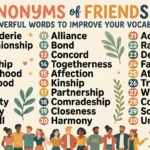
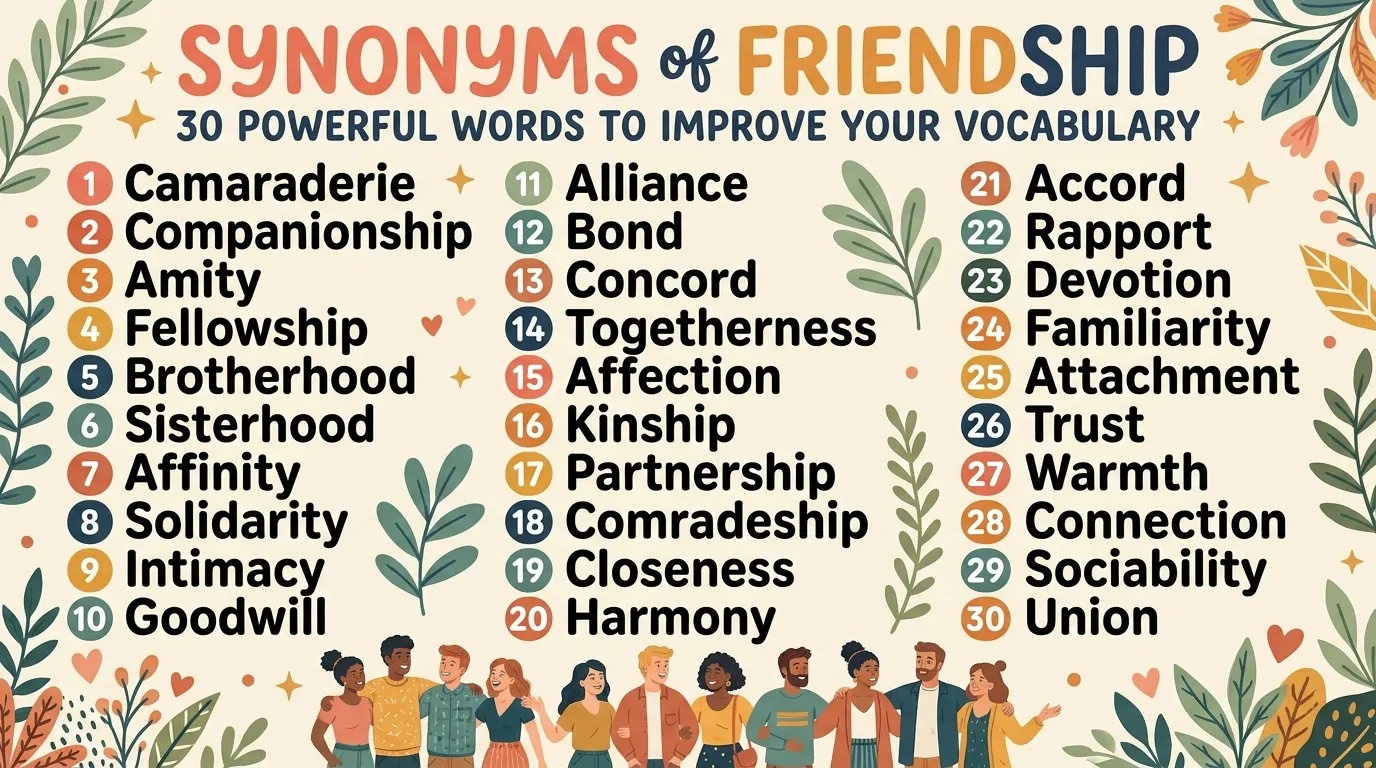
The following 30 words are related to friendship. Some are direct alternatives, while others describe particular types of friendly relationships, feelings, or bonds. Choose the word that best fits your sentence.
1. Companionship (Noun) — US /kəmˈpænjənʃɪp/ | UK /kəmˈpænjənʃɪp/
Meaning: The comfort and enjoyment of spending time with someone.
Examples:
- She enjoyed her grandmother’s companionship.
- Their companionship made the long journey easier.
2. Camaraderie (Noun) — US /ˌkɑːməˈrɑːdəri/ | UK /ˌkæməˈrɑːdəri/
Meaning: A feeling of trust and friendship among people in a group.
Examples:
- The team shared a strong sense of camaraderie.
- Camaraderie helped the workers solve problems together.
3. Fellowship (Noun) — US /ˈfɛloʊʃɪp/ | UK /ˈfɛləʊʃɪp/
Meaning: A feeling of friendship and connection among people with shared interests or beliefs.
Examples:
- The club gave its members a sense of fellowship.
- They enjoyed fellowship with people from their community.
4. Amity (Noun) — US /ˈæməti/ | UK /ˈæməti/
Meaning: A peaceful and friendly relationship between people or groups.
Examples:
- The two families lived together in amity.
- The leaders worked to build amity between their communities.
5. Affection (Noun) — US /əˈfɛkʃən/ | UK /əˈfekʃən/
Meaning: A feeling of liking, care, and warmth toward someone.
Examples:
- She showed affection for her old friend.
- His words expressed deep affection.
6. Bond (Noun) — US /bɑːnd/ | UK /bɒnd/
Meaning: A strong connection between people.
Examples:
- The two friends formed a lasting bond.
- Shared memories strengthened their bond.
7. Closeness (Noun) — US /ˈkloʊsnəs/ | UK /ˈkləʊsnəs/
Meaning: A strong emotional connection between people.
Examples:
- Honesty brought greater closeness to their friendship.
- Their closeness grew over many years.
8. Fellowship (Noun) — US /ˈfɛloʊʃɪp/ | UK /ˈfɛləʊʃɪp/
Meaning: A sense of belonging and mutual support within a group.
Examples:
- The volunteers found fellowship in their shared work.
- The event encouraged fellowship among neighbors.
9. Goodwill (Noun) — US /ˌɡʊdˈwɪl/ | UK /ˌɡʊdˈwɪl/
Meaning: A friendly and helpful attitude toward another person.
Examples:
- Their goodwill helped settle the disagreement.
- A small act of goodwill can build trust.
10. Harmony (Noun) — US /ˈhɑːrməni/ | UK /ˈhɑːməni/
Meaning: A peaceful relationship in which people get along well.
Examples:
- The neighbors lived in harmony.
- Respect helped the friends maintain harmony.
11. Intimacy (Noun) — US /ˈɪntɪməsi/ | UK /ˈɪntɪməsi/
Meaning: A close personal connection that allows people to share their feelings and thoughts.
Examples:
- Honest talks created intimacy between the friends.
- Emotional intimacy takes time to develop.
12. Loyalty (Noun) — US /ˈlɔɪəlti/ | UK /ˈlɔɪəlti/
Meaning: Strong support and faithfulness toward someone.
Examples:
- Her loyalty made her a trusted friend.
- True loyalty means standing by a friend in hard times.
13. Trust (Noun) — US /trʌst/ | UK /trʌst/
Meaning: The belief that someone is honest and dependable.
Examples:
- Trust is important in every friendship.
- They built trust by keeping their promises.
14. Unity (Noun) — US /ˈjuːnəti/ | UK /ˈjuːnəti/
Meaning: A state of being joined together for a shared purpose.
Examples:
- The friends showed unity during the crisis.
- Their shared goal created unity in the group.
15. Solidarity (Noun) — US /ˌsɑːlɪˈdærəti/ | UK /ˌsɒlɪˈdærəti/
Meaning: Support and agreement among people who share a situation or goal.
Examples:
- The community showed solidarity with the families.
- Their solidarity helped them face a difficult time.
16. Understanding (Noun) — US /ˌʌndərˈstændɪŋ/ | UK /ˌʌndəˈstændɪŋ/
Meaning: The ability to understand and accept another person’s feelings or needs.
Examples:
- Their friendship grew through mutual understanding.
- Understanding helped them overcome their disagreement.
17. Rapport (Noun) — US /ræˈpɔːr/ | UK /ræˈpɔː/
Meaning: A friendly and comfortable connection between people.
Examples:
- The teacher built rapport with her students.
- They developed rapport during their first meeting.
18. Affinity (Noun) — US /əˈfɪnəti/ | UK /əˈfɪnəti/
Meaning: A natural liking or connection between people.
Examples:
- They felt an affinity because they shared the same interests.
- Her affinity with children made her a good teacher.
19. Kinship (Noun) — US /ˈkɪnʃɪp/ | UK /ˈkɪnʃɪp/
Meaning: A feeling of connection through family ties or shared qualities.
Examples:
- They felt a sense of kinship through their common experiences.
- Their shared values created a feeling of kinship.
20. Fellowship Bond (Noun Phrase) — US /ˈfɛloʊʃɪp bɑːnd/ | UK /ˈfɛləʊʃɪp bɒnd/
Meaning: A connection formed through shared activities, values, or group experiences.
Examples:
- Their fellowship bond grew during the volunteer project.
- The club created a fellowship bond among its members.
21. Complicity (Noun) — US /kəmˈplɪsəti/ | UK /kəmˈplɪsəti/
Meaning: A shared understanding or involvement, sometimes in a secret or questionable activity.
Examples:
- The old friends shared a quiet complicity when they exchanged knowing looks.
- Their complicity in hiding the truth damaged their reputation.
Note: Complicity often has a negative meaning, so it is not a general synonym for friendship.
22. Solidarity (Noun) — US /ˌsɑːlɪˈdærəti/ | UK /ˌsɒlɪˈdærəti/
Meaning: A shared feeling of support and unity during a challenge.
Examples:
- The classmates showed solidarity when one student was bullied.
- Their solidarity helped the group stay strong.
23. Alliance (Noun) — US /əˈlaɪəns/ | UK /əˈlaɪəns/
Meaning: A relationship in which people or groups work together for a common purpose.
Examples:
- The two groups formed an alliance to help local children.
- Their alliance made the project more successful.
24. Partnership (Noun) — US /ˈpɑːrtnərʃɪp/ | UK /ˈpɑːtnəʃɪp/
Meaning: A relationship in which people work together and share responsibilities.
Examples:
- Their partnership was built on trust and respect.
- The friends started a business partnership.
25. Fellowship of Spirit (Noun Phrase) — US /ˈfɛloʊʃɪp əv ˈspɪrɪt/ | UK /ˈfɛləʊʃɪp əv ˈspɪrɪt/
Meaning: A feeling of deep connection based on shared values or beliefs.
Examples:
- They found a fellowship of spirit through their love of music.
- Their shared beliefs created a fellowship of spirit.
26. Esteem (Noun) — US /ɪˈstiːm/ | UK /ɪˈstiːm/
Meaning: Respect and admiration for another person.
Examples:
- She held her closest friend in high esteem.
- Mutual esteem helped their relationship grow.
27. Devotion (Noun) — US /dɪˈvoʊʃən/ | UK /dɪˈvəʊʃən/
Meaning: Strong love, care, and commitment toward someone.
Examples:
- His devotion to his friends was clear.
- Their devotion helped them remain close for years.
28. Kindred Spirit (Noun Phrase) — US /ˌkɪndrəd ˈspɪrɪt/ | UK /ˌkɪndrəd ˈspɪrɪt/
Meaning: A person who shares your feelings, interests, or way of thinking.
Examples:
- I found a kindred spirit in my new classmate.
- They became friends because they were kindred spirits.
29. Social Bond (Noun Phrase) — US /ˈsoʊʃəl bɑːnd/ | UK /ˈsəʊʃəl bɒnd/
Meaning: A connection that links people through social contact and shared experiences.
Examples:
- Regular meetings helped create a social bond.
- The sports club built strong social bonds among its members.
30. Good Fellowship (Noun Phrase) — US /ɡʊd ˈfɛloʊʃɪp/ | UK /ɡʊd ˈfɛləʊʃɪp/
Meaning: A friendly and pleasant feeling among people who spend time together.
Examples:
- The dinner was full of good fellowship.
- They enjoyed good fellowship during the school trip.
Prototype Meaning of Friendship
The most typical meaning of friendship is a close relationship between two people who care about each other, enjoy spending time together, and offer support when needed. People usually imagine trusted friends who share stories, help each other solve problems, and celebrate good times together. Friendship often grows through honesty, respect, shared interests, and regular contact. It can exist between children, adults, coworkers, classmates, and people from different backgrounds. A strong friendship does not require people to agree on everything. It requires care, trust, and a willingness to understand each other.
Prototype Categorization of Friendship Synonyms
Different synonyms describe different parts of friendship. Grouping them helps writers choose words that match their intended meaning and emotional tone.
- Closeness and emotional connection: Bond, closeness, intimacy, affection, affinity. Use these when describing deep feelings or personal relationships.
- Trust and commitment: Trust, loyalty, devotion, esteem. These words suit writing about dependability, respect, and long-term relationships.
- Group connection and shared purpose: Camaraderie, fellowship, solidarity, unity, alliance. Use these for teams, communities, clubs, and groups working together.
- Peaceful relationships: Amity, harmony, goodwill, understanding. These words fit situations involving kindness, cooperation, and respect.
- Comfort and companionship: Companionship, rapport, kindred spirit. Use these when people enjoy one another’s company or connect naturally.
- Shared responsibilities: Partnership and social bond. These work well for professional relationships and social connections.
- Special or context-dependent meanings: Kinship, complicity, and fellowship of spirit. These can describe shared identity, secret understanding, or a deeper connection based on values.
Choosing the right synonym helps writers avoid repetition and communicate a more precise meaning. For example, loyalty highlights faithfulness, while companionship focuses on spending time together. They relate to friendship, but they are not interchangeable in every sentence.
Antonyms of Friendship
Antonyms are words with opposite or contrasting meanings.
- Enmity: A feeling of strong hostility toward someone.
- Hostility: Unfriendly or aggressive behavior.
- Animosity: Strong dislike or ill will.
- Hatred: An intense feeling of dislike.
- Rivalry: Competition between people or groups.
- Estrangement: A state of becoming distant from someone.
- Alienation: A feeling of separation or disconnection.
- Disagreement: A difference in opinion that may cause conflict.
- Distrust: A lack of belief in someone’s honesty or reliability.
- Antagonism: Active opposition or hostility.
Not all these words are exact opposites in every context. For example, rivalry can exist between people who are also friends.
Short Questions and Answers
- What does friendship mean?
Friendship is a caring relationship between people who like, trust, and support one another. - When should friendship be used?
Use friendship when discussing a bond between friends, shared experiences, mutual care, or emotional support. - Is friendship positive or negative?
Friendship is usually positive because it suggests care, trust, and respect. However, a false or harmful friendship may have negative effects. - How is friendship different from companionship?
Friendship often includes trust and emotional commitment. Companionship mainly focuses on spending time with someone and enjoying their company. - What is the difference between friendship and loyalty?
Friendship is the relationship itself, while loyalty is the faithfulness and support shown within that relationship. - What is a strong synonym for friendship?
Companionship, camaraderie, and bond are useful alternatives, depending on the context. - What is the opposite of friendship?
Enmity and hostility are common opposites because they describe unfriendly or hostile relationships. - Can friendship be used in formal writing?
Yes. Friendship is suitable for academic writing, essays, speeches, stories, and everyday communication.
Conclusion
Learning the meaning and synonyms of friendship helps you express ideas with greater care and clarity. Words such as companionship, loyalty, trust, camaraderie, and affection describe different parts of a relationship. Each word has its own meaning and emotional tone, so choosing the right one makes your writing more natural and precise.
A stronger vocabulary also helps English learners speak with confidence, write better essays, and understand books and conversations more easily. Students, bloggers, and content writers can use synonyms to avoid repetition and keep readers interested. However, it is important to learn how each word works in a sentence instead of memorizing a list.
Make vocabulary practice part of your daily routine. Learn two or three new words, read their examples, and use them in your own sentences. With regular practice, you will become more confident in expressing your thoughts about friendship and many other topics.

I’m Zahid Abbas, an educator, researcher, and digital publishing strategist with a passion for linguistics, grammar, and clear communication. As a content creator and SEO specialist, I craft research-driven, reader-focused content that empowers learners and makes knowledge accessible worldwide.