Thoughtful means showing careful thought, or being kind and considerate toward others. Think about a boy who notices his older neighbor struggling to carry her groceries up the stairs. Without being asked, he runs over and offers to help. His teacher later says, “That was a very thoughtful thing to do.” This word describes both careful thinking and kind actions that show someone cares about others. People use synonyms for thoughtful a lot to describe good friends, caring family members, and wise decisions. Learning new synonyms for thoughtful are helpful for English learners and writers. Who want to describe kindness and careful thinking in many different ways. Synonyms for thoughtful also makes writing feel warmer and more expressive. This article explains the meaning of thoughtful, its history, how to say it, and 30 words that share a similar meaning.
Meaning of Thoughtful
Definition
Thoughtful (Adjective): Showing careful thought, or being kind and considerate toward the feelings and needs of others.
Examples
- She wrote a thoughtful letter to thank her teacher.
- He gave his friend a thoughtful gift for her birthday.
Connotative Meaning
- Positive tone:
- This word almost always feels warm and kind, showing care for others or careful, wise thinking.
- Negative tone:
- This word rarely feels negative, though it can sometimes describe someone lost deep in worry, or quiet mood.
- Neutral tone:
- In formal writing, this word can describe careful planning or decision-making, without a strong emotional feeling.
Etymology
- This word comes from the Old English word “þoht,” meaning “thought” or “idea.”
- “Þoht” came from the verb “þencan,” meaning “to think.”
- The suffix “-ful,” meaning “full of,” was added to create “thoughtful,” meaning “full of thought.”
Short History
- Old English (450–1100):
- The word “þoht” described the act of thinking or a formed idea. It was often used in serious or reflective writing.
- Middle English (1100–1500):
- The word “thoughtful” formed by joining “thought” with “-ful,” meaning someone full of careful thinking.
- Modern English (1500–Present):
- The meaning grew to include kindness and care for others, not just careful thinking. Today, it describes both wise thinking and warm, caring actions.
Pronunciation (US & UK – IPA)
- US: /ˈθɔːtfəl/
- UK: /ˈθɔːtfʊl/
Syllables
thought-ful (2 syllables)
Affixation Pattern of Thoughtful
- Root: thought (from Old English “þoht”)
- Prefix: none
- Suffix: -ful (meaning “full of”)
Word Formation:
- Think (verb)
- Thought (noun)
- Thoughtful (adjective)
- Thoughtfully (adverb)
- Thoughtfulness (noun)
Discover more about https://synonymhunting.com/synonyms-for-importance/
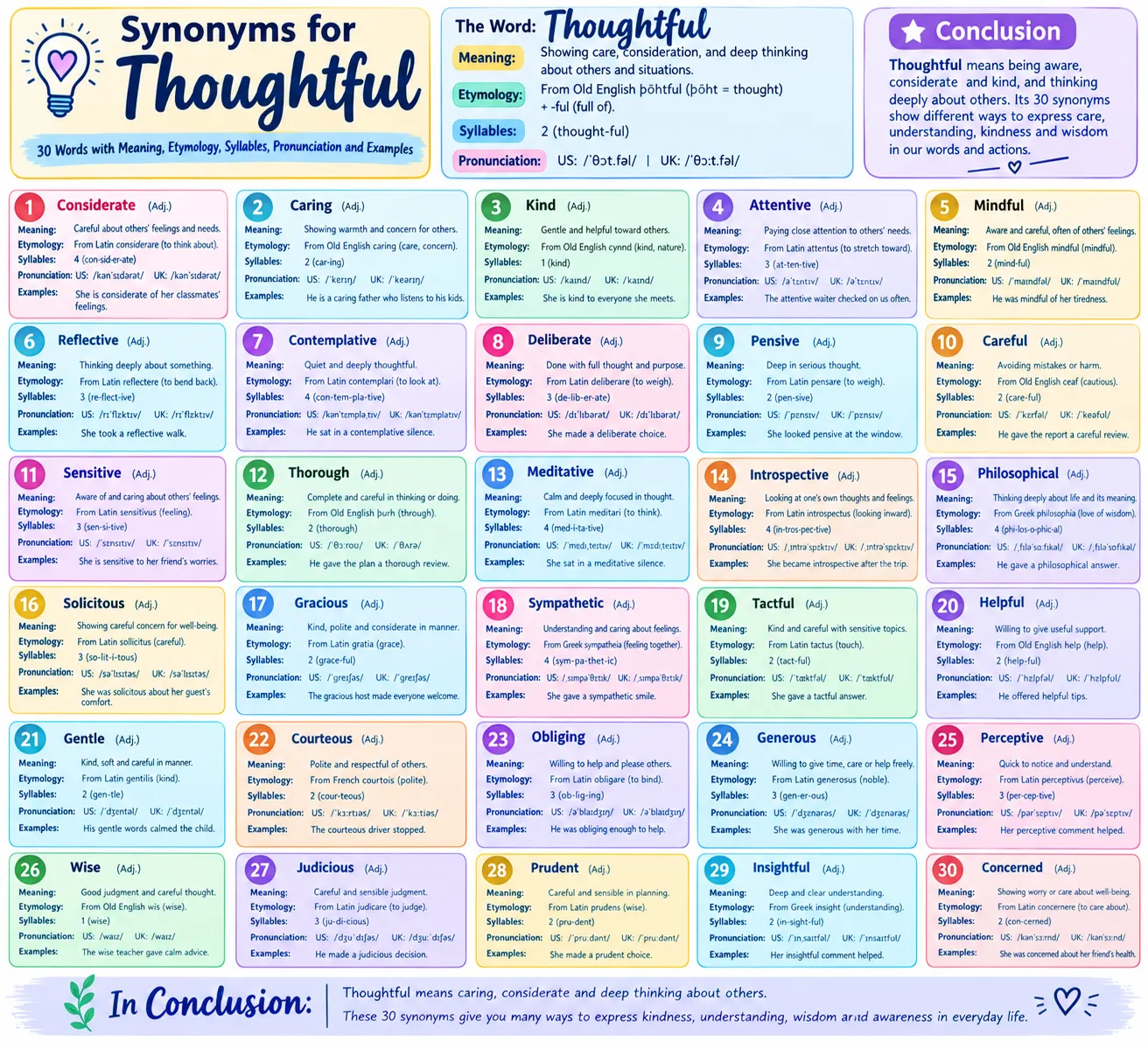
Synonyms for Thoughtful
1. Considerate (Adjective) — US: /kənˈsɪdərət/ | UK: /kənˈsɪdərət/
Meaning: Careful about the feelings and needs of others. Examples:
- She is always considerate of her classmates’ feelings.
- He was considerate enough to keep the noise down.
2. Caring (Adjective) — US: /ˈkɛrɪŋ/ | UK: /ˈkeərɪŋ/
Meaning: Showing warmth and concern for others. Examples:
- Her caring nature made her a great nurse.
- He is a caring father who listens closely to his kids.
3. Kind (Adjective) — US: /kaɪnd/ | UK: /kaɪnd/
Meaning: Gentle and helpful toward others. Examples:
- The kind old man helped the lost puppy.
- She is kind to everyone she meets.
4. Attentive (Adjective) — US: /əˈtɛntɪv/ | UK: /əˈtɛntɪv/
Meaning: Paying close attention to someone’s needs or feelings. Examples:
- The attentive waiter checked on us often.
- She is an attentive listener during meetings.
5. Mindful (Adjective) — US: /ˈmaɪndfəl/ | UK: /ˈmaɪndfʊl/
Meaning: Aware and careful about something, often others’ feelings. Examples:
- He was mindful of her tiredness and spoke softly.
- Being mindful of others makes teamwork easier.
6. Reflective (Adjective) — US: /rɪˈflɛktɪv/ | UK: /rɪˈflɛktɪv/
Meaning: Thinking deeply and carefully about something. Examples:
- She took a reflective walk before making her choice.
- His reflective mood showed he was thinking hard.
7. Contemplative (Adjective) — US: /kənˈtɛmpləˌtɪv/ | UK: /kənˈtɛmplətɪv/
Meaning: Quiet and deeply thoughtful. Examples:
- He sat in a contemplative silence by the lake.
- Her contemplative nature made her a good writer.
8. Deliberate (Adjective) — US: /dɪˈlɪbərət/ | UK: /dɪˈlɪbərət/
Meaning: Careful and done with full thought and purpose. Examples:
- She made a deliberate choice to stay calm.
- His deliberate planning helped the trip go smoothly.
9. Pensive (Adjective) — US: /ˈpɛnsɪv/ | UK: /ˈpɛnsɪv/
Meaning: Deep in serious or quiet thought. Examples:
- She looked pensive as she stared out the window.
- His pensive mood worried his friends.
10. Careful (Adjective) — US: /ˈkɛrfəl/ | UK: /ˈkeəfʊl/
Meaning: Paying close attention to avoid mistakes or harm. Examples:
- She was careful with her choice of words.
- He gave the report a careful review.
11. Sensitive (Adjective) — US: /ˈsɛnsɪtɪv/ | UK: /ˈsɛnsɪtɪv/
Meaning: Aware of and caring about others’ feelings. Examples:
- She is sensitive to her friend’s worries.
- He gave a sensitive response to the sad news.
12. Thorough (Adjective) — US: /ˈθɜːroʊ/ | UK: /ˈθʌrə/
Meaning: Careful and complete in thinking or doing something. Examples:
- He gave the plan a thorough review.
- Her thorough research impressed the teacher.
13. Meditative (Adjective) — US: /ˈmɛdɪˌteɪtɪv/ | UK: /ˈmɛdɪteɪtɪv/
Meaning: Calm and deeply focused in thought. Examples:
- She sat in a meditative silence after the walk.
- His meditative nature helped him stay calm under stress.
14. Introspective (Adjective) — US: /ˌɪntrəˈspɛktɪv/ | UK: /ˌɪntrəˈspɛktɪv/
Meaning: Looking closely at one’s own thoughts and feelings. Examples:
- She became introspective after the long trip.
- His introspective journal helped him understand himself.
15. Philosophical (Adjective) — US: /ˌfɪləˈsɑːfɪkəl/ | UK: /ˌfɪləˈsɒfɪkəl/
Meaning: Thinking deeply about life and its meaning. Examples:
- He gave a philosophical answer about success.
- Her philosophical outlook helped her stay calm.
16. Solicitous (Adjective) — US: /səˈlɪsɪtəs/ | UK: /səˈlɪsɪtəs/
Meaning: Showing careful concern for someone’s comfort or well-being. Examples:
- She was solicitous about her guest’s comfort.
- His solicitous questions showed how much he cared.
17. Gracious (Adjective) — US: /ˈɡreɪʃəs/ | UK: /ˈɡreɪʃəs/
Meaning: Kind, polite, and considerate in manner. Examples:
- The gracious host made everyone feel welcome.
- She gave a gracious thank-you speech.
18. Sympathetic (Adjective) — US: /ˌsɪmpəˈθɛtɪk/ | UK: /ˌsɪmpəˈθɛtɪk/
Meaning: Showing kind understanding for someone’s feelings. Examples:
- She gave a sympathetic smile after hearing the news.
- His sympathetic tone comforted the worried student.
19. Tactful (Adjective) — US: /ˈtæktfəl/ | UK: /ˈtæktfʊl/
Meaning: Careful and kind when dealing with sensitive topics. Examples:
- She gave a tactful answer to avoid hurting him.
- His tactful advice helped solve the argument calmly.
20. Helpful (Adjective) — US: /ˈhɛlpfəl/ | UK: /ˈhɛlpfʊl/
Meaning: Willing to give useful support or care. Examples:
- He offered helpful tips for the new students.
- Her helpful nature made her popular at work.
21. Gentle (Adjective) — US: /ˈdʒɛntəl/ | UK: /ˈdʒɛntəl/
Meaning: Kind, soft, and careful in manner. Examples:
- She gave a gentle reminder about the deadline.
- His gentle words calmed the crying child.
22. Courteous (Adjective) — US: /ˈkɜːrtiəs/ | UK: /ˈkɜːtiəs/
Meaning: Polite and respectful of others. Examples:
- The courteous driver stopped to let them cross.
- She gave a courteous nod to the guests.
23. Obliging (Adjective) — US: /əˈblaɪdʒɪŋ/ | UK: /əˈblaɪdʒɪŋ/
Meaning: Willing to help and please others. Examples:
- The obliging staff answered every question kindly.
- He was obliging enough to switch seats for them.
24. Generous (Adjective) — US: /ˈdʒɛnərəs/ | UK: /ˈdʒɛnərəs/
Meaning: Willing to give time, care, or help freely. Examples:
- She was generous with her time and advice.
- His generous nature made him well loved.
25. Perceptive (Adjective) — US: /pərˈsɛptɪv/ | UK: /pəˈsɛptɪv/
Meaning: Quick to notice and understand others’ feelings. Examples:
- Her perceptive comment showed she understood the problem.
- He gave a perceptive answer about the story’s meaning.
26. Wise (Adjective) — US: /waɪz/ | UK: /waɪz/
Meaning: Showing good judgment based on careful thought. Examples:
- The wise teacher gave calm advice.
- Her wise choice saved them a lot of trouble.
27. Judicious (Adjective) — US: /dʒuˈdɪʃəs/ | UK: /dʒuːˈdɪʃəs/
Meaning: Showing careful and sensible judgment. Examples:
- He made a judicious decision about the budget.
- Her judicious advice helped avoid the mistake.
28. Prudent (Adjective) — US: /ˈpruːdənt/ | UK: /ˈpruːdənt/
Meaning: Careful and sensible in planning or decisions. Examples:
- She made a prudent choice to save money.
- His prudent planning avoided any last-minute trouble.
29. Insightful (Adjective) — US: /ˈɪnˌsaɪtfəl/ | UK: /ˈɪnsaɪtfʊl/
Meaning: Showing deep and clear understanding. Examples:
- Her insightful comment helped everyone understand better.
- He gave an insightful answer during the interview.
30. Concerned (Adjective) — US: /kənˈsɜːrnd/ | UK: /kənˈsɜːnd/
Meaning: Showing worry or care about someone’s well-being. Examples:
- She was concerned about her friend’s health.
- His concerned look showed he cared deeply.
Prototype Meaning
When people hear the word thoughtful, they often think of someone who pays close attention to others’ feelings, or someone deep in careful, quiet thinking. It brings to mind small, kind actions, like remembering a friend’s birthday, or wise decisions made after careful reflection.
Prototype Categorization
- Kindness toward others: considerate, caring, kind, sympathetic, gracious, courteous
- Careful attention to feelings: attentive, mindful, sensitive, tactful, solicitous, concerned
- Deep or quiet thinking: reflective, contemplative, pensive, meditative, introspective, philosophical
- Careful decision-making: deliberate, careful, thorough, wise, judicious, prudent
- Helpful and giving nature: helpful, generous, obliging, gentle
- Sharp understanding: perceptive, insightful
Antonyms of Thoughtful
- Careless
- Inconsiderate
- Thoughtless
- Selfish
- Rude
Short Questions and Answers
- What does thoughtful mean?
- It means showing careful thought, or being kind and considerate toward others.
- When should thoughtful be used?
- Use it when describing kind actions, careful thinking, or wise decisions.
- Is thoughtful positive or negative?
- It is almost always positive, showing kindness, care, or careful thinking.
- How is it different from similar words?
- “Kind” often describes a general warm nature. “Thoughtful” shows deeper care, like noticing small details about someone’s needs or feelings.
Conclusion
Synonyms for thoughtful helps you build a richer, more caring vocabulary. It strengthens your writing and speaking by giving you many ways to describe careful thinking, and consideration for others. Synonyms for thoughtful also helps you avoid repeating the same word again and again. Which keeps your writing warmer and more expressive. Most importantly, learning synonyms for thoughtful builds your confidence as an English writer. Try learning one new word from this list each day, and watch your vocabulary grow steadily over time.

I’m Zahid Abbas, an educator, researcher, and digital publishing strategist with a passion for linguistics, grammar, and clear communication. As a content creator and SEO specialist, I craft research-driven, reader-focused content that empowers learners and makes knowledge accessible worldwide.