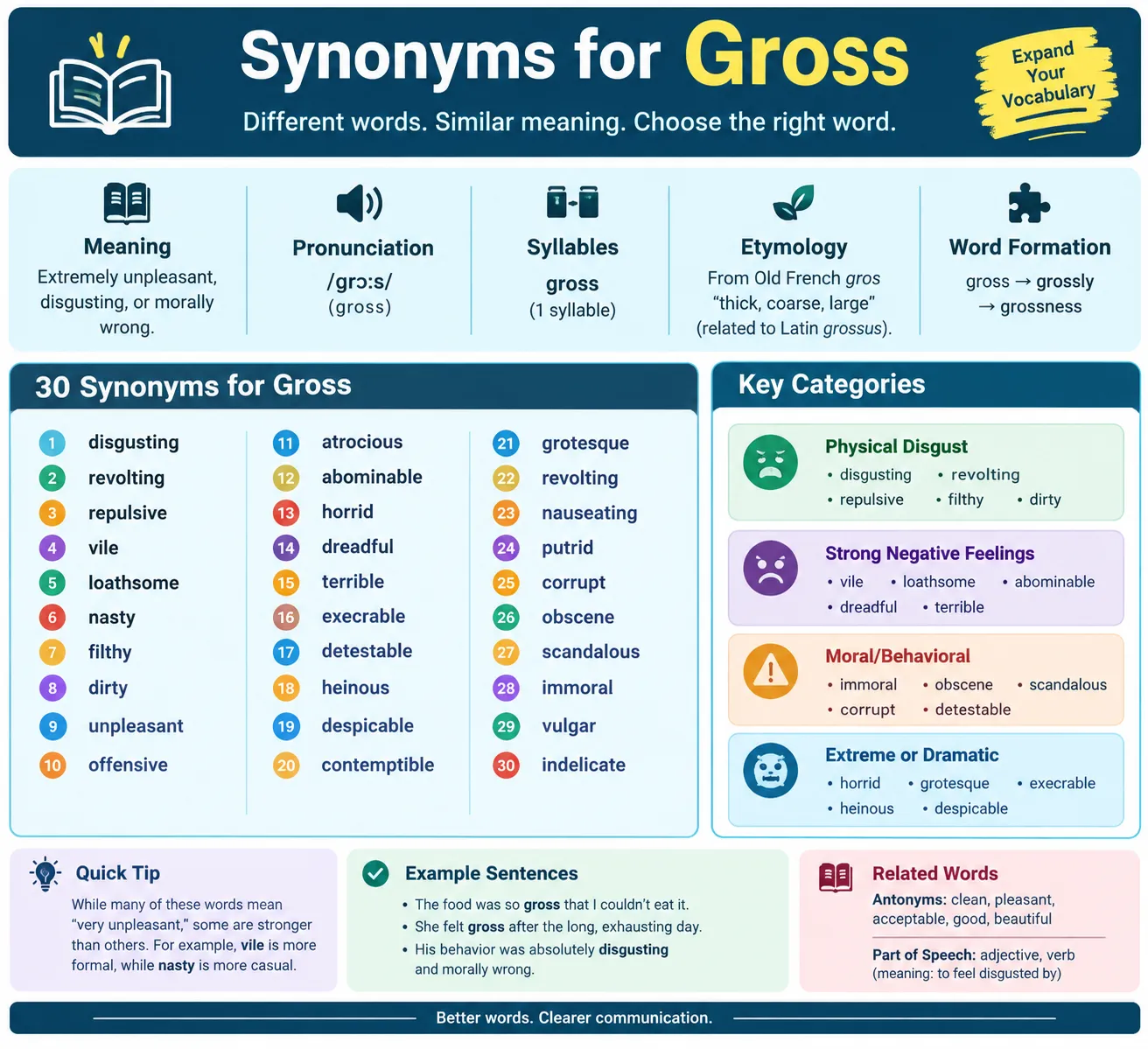
Gross means something that is very unpleasant, disgusting, or unattractive to look at, smell, or think about. Think about a boy who opens his lunch box and finds a sandwich that has been sitting in the sun all day. He wrinkles his nose and says, “Ew, that is so gross!” This word is often used when something looks, smells, or feels very unpleasant. People use synonyms for gross a lot in daily talk, especially among kids and teens, to describe something they strongly dislike. Learning new synonyms for gross like this is helpful for English learners and writers who want to describe strong feelings of disgust in many different ways. It also makes writing and speech feel more colorful and expressive. This article explains the meaning of gross, its history, how to say it, and 30 words that share a similar meaning.
Meaning of Gross
Definition
Gross (Adjective): Very unpleasant, disgusting, or unattractive; causing a strong feeling of dislike.
Examples
- The old milk in the fridge smelled absolutely gross.
- She thought the moldy bread looked gross.
Connotative Meaning
- Positive tone: This word rarely feels positive. It is almost never used to describe something good.
- Negative tone: This word strongly feels negative, often showing disgust, dislike, or discomfort.
- Neutral tone: In business or formal writing, the word “gross” can be used in a plain way, such as “gross income,” without any feeling of disgust at all.
Etymology
- This word comes from the Old French word “gros,” meaning “big” or “thick.”
- That word came from the Latin word “grossus,” meaning “thick” or “coarse.”
- Over time, the word’s meaning grew to include the idea of something coarse or unrefined, which later led to the modern sense of “disgusting.”
Short History
- Old English (450–1100): This word did not exist yet. People used other native words to describe something unpleasant or coarse.
- Middle English (1100–1500): The word “gross” entered English from French, mainly meaning “large,” “bulky,” or “coarse.”
- Modern English (1500–Present): The word kept its formal meaning of “whole” or “total” in business terms, like “gross income,” while also gaining a popular, informal meaning of “disgusting,” especially in casual speech during the 20th century.
Pronunciation (US & UK – IPA)
- US: /ɡroʊs/
- UK: /ɡrəʊs/
Syllables
gross (1 syllable)
Affixation Pattern of Gross
- Root: gross
- Prefix: none
- Suffix: -ly (forms “grossly”) + -ness (forms “grossness”)
Word Formation:
- Gross (adjective/noun/verb)
- Grossly (adverb)
- Grossness (noun)
- Engross (verb, a related word meaning to fully capture someone’s attention)
You also get more information about https://synonymhunting.com/synonyms-for-destruction/
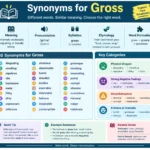
Synonyms for Gross
1. Disgusting (Adjective) — US: /dɪsˈɡʌstɪŋ/ | UK: /dɪsˈɡʌstɪŋ/
Meaning: Causing a strong feeling of dislike or discomfort. Examples:
- The smell from the trash can was disgusting.
- She found the moldy cheese disgusting.
2. Revolting (Adjective) — US: /rɪˈvoʊltɪŋ/ | UK: /rɪˈvəʊltɪŋ/
Meaning: Extremely unpleasant, causing strong dislike. Examples:
- The rotten smell coming from the fridge was revolting.
- He described the meal as revolting.
3. Repulsive (Adjective) — US: /rɪˈpʌlsɪv/ | UK: /rɪˈpʌlsɪv/
Meaning: So unpleasant that it pushes people away. Examples:
- The dirty bathroom looked repulsive.
- His rude comment was repulsive to everyone.
4. Nasty (Adjective) — US: /ˈnæsti/ | UK: /ˈnɑːsti/
Meaning: Very unpleasant or unkind. Examples:
- The wound looked really nasty after the fall.
- She had a nasty cold last week.
5. Vile (Adjective) — US: /vaɪl/ | UK: /vaɪl/
Meaning: Extremely unpleasant or morally bad. Examples:
- The soup had a vile taste.
- His vile behavior shocked everyone at the party.
6. Repugnant (Adjective) — US: /rɪˈpʌɡnənt/ | UK: /rɪˈpʌɡnənt/
Meaning: Causing strong dislike or disgust. Examples:
- The smell of burnt rubber was repugnant.
- She found his rude jokes repugnant.
7. Foul (Adjective) — US: /faʊl/ | UK: /faʊl/
Meaning: Having a very bad smell, taste, or appearance. Examples:
- The pond gave off a foul smell.
- He made a foul face after tasting the sour milk.
8. Sickening (Adjective) — US: /ˈsɪkənɪŋ/ | UK: /ˈsɪkənɪŋ/
Meaning: So unpleasant that it makes you feel ill. Examples:
- The sickening smell made her leave the room.
- The story had a sickening ending.
9. Distasteful (Adjective) — US: /dɪsˈteɪstfəl/ | UK: /dɪsˈteɪstfəl/
Meaning: Unpleasant or offensive, often to good manners or taste. Examples:
- His joke was distasteful during the sad event.
- She found the movie’s violence distasteful.
10. Offensive (Adjective) — US: /əˈfɛnsɪv/ | UK: /əˈfɛnsɪv/
Meaning: Causing strong displeasure or disgust. Examples:
- The smell from the factory was quite offensive.
- His offensive comment upset the whole class.
11. Yucky (Adjective) — US: /ˈjʌki/ | UK: /ˈjʌki/
Meaning: A simple, casual word for something disgusting. Examples:
- The kids said the swamp water looked yucky.
- She refused to eat the yucky vegetable.
12. Icky (Adjective) — US: /ˈɪki/ | UK: /ˈɪki/
Meaning: A casual word meaning unpleasant or sticky in a gross way. Examples:
- The floor felt icky under his shoes.
- She didn’t want to touch the icky slime.
13. Gruesome (Adjective) — US: /ˈɡruːsəm/ | UK: /ˈɡruːsəm/
Meaning: Causing horror or disgust, often through violence or injury. Examples:
- The movie had a gruesome scene.
- The accident left a gruesome mark on the road.
14. Horrid (Adjective) — US: /ˈhɔːrɪd/ | UK: /ˈhɒrɪd/
Meaning: Very unpleasant or shocking. Examples:
- The weather was horrid during the trip.
- She had a horrid experience at the dentist.
15. Obnoxious (Adjective) — US: /əbˈnɑːkʃəs/ | UK: /əbˈnɒkʃəs/
Meaning: Extremely unpleasant, often in behavior or manner. Examples:
- His obnoxious laugh annoyed everyone.
- The smell from the chemical plant was obnoxious.
16. Loathsome (Adjective) — US: /ˈloʊðsəm/ | UK: /ˈləʊðsəm/
Meaning: Causing strong hatred or disgust. Examples:
- The villain’s loathsome plan shocked the readers.
- The loathsome smell filled the old barn.
17. Nauseating (Adjective) — US: /ˈnɔːziˌeɪtɪŋ/ | UK: /ˈnɔːzieɪtɪŋ/
Meaning: So unpleasant that it makes you feel sick. Examples:
- The nauseating smell came from the spoiled meat.
- The ride was fun but a bit nauseating.
18. Appalling (Adjective) — US: /əˈpɔːlɪŋ/ | UK: /əˈpɔːlɪŋ/
Meaning: Shockingly bad or unpleasant. Examples:
- The conditions in the old building were appalling.
- Her appalling manners embarrassed her family.
19. Unappetizing (Adjective) — US: /ʌnˈæpɪˌtaɪzɪŋ/ | UK: /ʌnˈæpɪtaɪzɪŋ/
Meaning: Not attractive or pleasant to eat. Examples:
- The gray, mushy food looked unappetizing.
- He pushed away the unappetizing meal.
20. Unpleasant (Adjective) — US: /ʌnˈplɛzənt/ | UK: /ʌnˈplɛzənt/
Meaning: Not nice or enjoyable in any way. Examples:
- The smell in the alley was very unpleasant.
- It was an unpleasant surprise to find the leak.
21. Filthy (Adjective) — US: /ˈfɪlθi/ | UK: /ˈfɪlθi/
Meaning: Extremely dirty and unpleasant. Examples:
- The filthy kitchen needed a deep clean.
- His shoes were filthy after the hike.
22. Rank (Adjective) — US: /ræŋk/ | UK: /ræŋk/
Meaning: Having a strong, unpleasant smell. Examples:
- The gym bag smelled rank after the game.
- A rank odor filled the old basement.
23. Putrid (Adjective) — US: /ˈpjuːtrɪd/ | UK: /ˈpjuːtrɪd/
Meaning: Rotten and having a strong bad smell. Examples:
- The putrid smell came from the forgotten leftovers.
- The pond water looked putrid and green.
24. Abhorrent (Adjective) — US: /əbˈhɔːrənt/ | UK: /əbˈhɒrənt/
Meaning: Causing strong hatred or disgust. Examples:
- His cruel actions were abhorrent to everyone.
- The idea of cheating was abhorrent to her.
25. Hideous (Adjective) — US: /ˈhɪdiəs/ | UK: /ˈhɪdiəs/
Meaning: Extremely ugly or unpleasant to look at. Examples:
- The old, cracked mask looked hideous.
- She thought the wallpaper pattern was hideous.
26. Ghastly (Adjective) — US: /ˈɡæstli/ | UK: /ˈɡɑːstli/
Meaning: Very shocking or unpleasant, often frightening. Examples:
- The ghastly scene shocked the whole town.
- His face turned ghastly pale after the news.
27. Atrocious (Adjective) — US: /əˈtroʊʃəs/ | UK: /əˈtrəʊʃəs/
Meaning: Extremely bad or unpleasant. Examples:
- The weather was atrocious during the trip.
- Her handwriting was atrocious and hard to read.
28. Cringe-worthy (Adjective) — US: /ˈkrɪndʒ ˌwɜːrði/ | UK: /ˈkrɪndʒ ˌwɜːði/
Meaning: So awkward or unpleasant that it makes you uncomfortable. Examples:
- The speech was full of cringe-worthy jokes.
- His cringe-worthy dance moves made everyone laugh.
29. Stomach-turning (Adjective) — US: /ˈstʌmək ˌtɜːrnɪŋ/ | UK: /ˈstʌmək ˌtɜːnɪŋ/
Meaning: So disgusting that it makes you feel sick. Examples:
- The stomach-turning smell filled the alley.
- The gory scene was stomach-turning to watch.
30. Off-putting (Adjective) — US: /ɔːf ˈpʊtɪŋ/ | UK: /ɒf ˈpʊtɪŋ/
Meaning: Causing dislike or discouragement. Examples:
- His rude tone was off-putting to the new students.
- The strange smell was off-putting to customers.
Prototype Meaning
When people hear the word gross, they often picture something unpleasant to look at, touch, or eat. It brings to mind a strong wrinkled-nose reaction, often used by kids and teens in casual conversation. The word carries a clear feeling of disgust and strong dislike.
Prototype Categorization
- Bad smells: foul, rank, putrid, nauseating, sickening
- Casual, everyday disgust: yucky, icky, gross itself, cringe-worthy
- Strong dislike or hatred: revolting, repulsive, loathsome, abhorrent, vile
- Unpleasant appearance: hideous, ghastly, unappetizing, filthy
- Shocking or extreme unpleasantness: appalling, atrocious, gruesome, horrid
- General unpleasant feeling: disgusting, nasty, offensive, distasteful, unpleasant, repugnant, stomach-turning, off-putting, obnoxious
Antonyms of Gross
- Pleasant
- Delightful
- Appealing
- Attractive
- Charming
Short Questions and Answers
- What does gross mean? It means something very unpleasant, disgusting, or unattractive.
- When should gross be used? Use it in casual talk to describe something that causes strong dislike or discomfort.
- Is gross positive or negative? It is almost always negative, showing strong dislike or disgust.
- How is it different from similar words? “Nasty” can describe both unpleasant things and unkind behavior. “Gross” usually focuses on something physically unpleasant, like a smell, taste, or sight.
Conclusion
Synonyms for gross helps you build a richer, more expressive vocabulary. It strengthens your writing and speaking by giving you many ways to describe strong feelings of disgust or dislike. Synonyms for gross also helps you avoid repeating the same word again and again. Wich keeps your language more colorful and fun. Most importantly, learning new words like this builds your confidence as an English speaker and writer. Try learning synonyms for gross each day, and watch your vocabulary grow steadily over time.

I’m Zahid Abbas, an educator, researcher, and digital publishing strategist with a passion for linguistics, grammar, and clear communication. As a content creator and SEO specialist, I craft research-driven, reader-focused content that empowers learners and makes knowledge accessible worldwide.