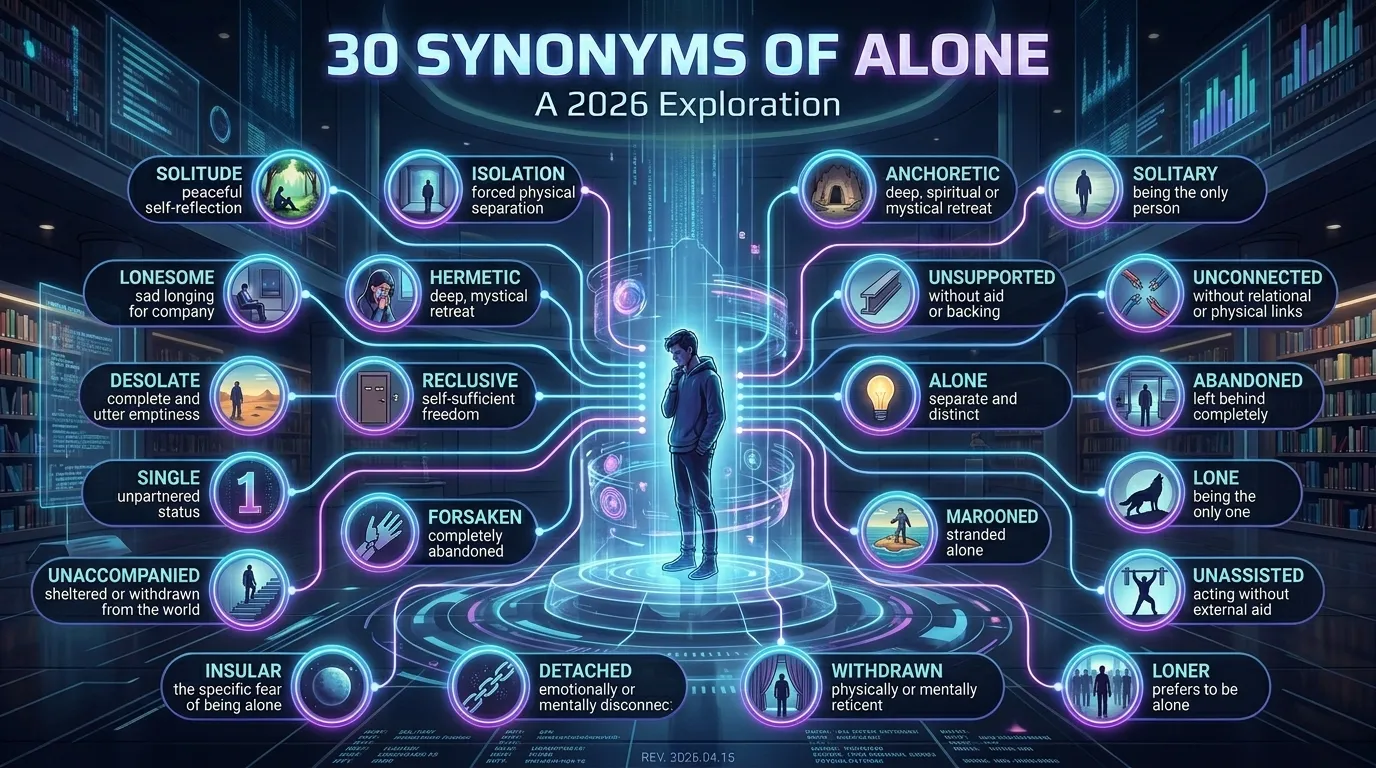
The word alone means being without other people or being by yourself. Imagine sitting quietly in a room after a busy day. The house is silent, and you spend time alone reading a book or thinking peacefully. Many people enjoy being alone sometimes, while others may feel lonely.
This word is very common in daily English because it describes emotions, situations, and personal experiences. Writers, students, and speakers use it in conversations, stories, and social discussions. Learning synonyms of alone helps English learners improve vocabulary and express feelings more clearly. It also helps content writers avoid repeating the same word again and again. In this article, you will learn the meaning of alone, its pronunciation, history, grammar, and 30 useful synonyms with meanings, examples, and semantic categories to strengthen your English communication skills.
Meaning of Alone
Definition
Alone (adjective/adverb): being without other people; by yourself.
Examples
- She stayed alone at home.
- He likes walking alone in the park.
Connotative Meaning
(Connotation means the feeling or emotion a word suggests beyond its basic meaning.)
- Positive tone: peaceful, independent, calm
- Negative tone: lonely, isolated, abandoned
- Neutral tone: without company or others nearby
Etymology
- From Old English all ana meaning “completely by oneself”
- Developed from Germanic language roots
Short History:
- Old English (450–1100): used as all ana for complete solitude
- Middle English (1100–1500): changed into “alone” in spelling and pronunciation
- Modern English (1500–Present): widely used for solitude, independence, and loneliness
Pronunciation (US & UK – IPA)
- US: /əˈloʊn/
- UK: /əˈləʊn/
Syllables
- a-lone
Affixation Pattern of Alone
- Root: lone
- Prefix: a-
- Suffix: none
Word Formation:
- lone (adjective)
- loneliness (noun)
- lonely (adjective)
- alone (adjective/adverb)
- loner (noun)
30 Synonyms of Alone
1. Lonely (adjective)
US: /ˈloʊnli/ | UK: /ˈləʊnli/
Meaning: sad because nobody is nearby
Examples:
- She felt lonely after moving away.
- He looked lonely at the party.
2. Solitary (adjective)
US: /ˈsɑːləteri/ | UK: /ˈsɒlətri/
Meaning: existing without others
Examples:
- The monk lived a solitary life.
- She enjoyed a solitary walk.
3. Isolated (adjective)
US: /ˈaɪsəleɪtɪd/ | UK: /ˈaɪsəleɪtɪd/
Meaning: separated from people or places
Examples:
- The village was isolated.
- He felt emotionally isolated.
4. By Yourself (phrase)
US: /baɪ jərˈself/ | UK: /baɪ jɔːˈself/
Meaning: without help or company
Examples:
- Can you do this by yourself?
- She traveled by herself.
5. Companionless (adjective)
US: /kəmˈpænjənləs/ | UK: /kəmˈpænjənləs/
Meaning: without companions
Examples:
- The traveler felt companionless.
- He sat companionless in silence.
6. Unaccompanied (adjective)
US: /ˌʌnəˈkʌmpənid/ | UK: /ˌʌnəˈkʌmpənid/
Meaning: without another person
Examples:
- Children cannot travel unaccompanied.
- She arrived unaccompanied.
7. Solo (adjective)
US: /ˈsoʊloʊ/ | UK: /ˈsəʊləʊ/
Meaning: done by one person alone
Examples:
- He made a solo trip.
- She performed a solo dance.
8. Friendless (adjective)
US: /ˈfrendləs/ | UK: /ˈfrendləs/
Meaning: having no friends
Examples:
- The child felt friendless at school.
- He looked friendless in the crowd.
9. Deserted (adjective)
US: /dɪˈzɜːrtɪd/ | UK: /dɪˈzɜːtɪd/
Meaning: left alone or empty
Examples:
- The street was deserted at night.
- She felt deserted after the breakup.
10. Secluded (adjective)
US: /sɪˈkluːdɪd/ | UK: /sɪˈkluːdɪd/
Meaning: quiet and away from people
Examples:
- They stayed in a secluded cabin.
- The beach was secluded.
11. Withdrawn (adjective)
US: /wɪðˈdrɔːn/ | UK: /wɪðˈdrɔːn/
Meaning: keeping away from others
Examples:
- He became withdrawn after the accident.
- She stayed quiet and withdrawn.
12. Detached (adjective)
US: /dɪˈtætʃt/ | UK: /dɪˈtætʃt/
Meaning: emotionally separate from others
Examples:
- He sounded emotionally detached.
- She remained detached during the meeting.
13. Abandoned (adjective)
US: /əˈbændənd/ | UK: /əˈbændənd/
Meaning: left without support
Examples:
- The puppy looked abandoned.
- He felt abandoned by friends.
14. Remote (adjective)
US: /rɪˈmoʊt/ | UK: /rɪˈməʊt/
Meaning: far away from people
Examples:
- They lived in a remote village.
- The cabin was remote and quiet.
15. Hermitlike (adjective)
US: /ˈhɜːrmɪtlaɪk/ | UK: /ˈhɜːmɪtlaɪk/
Meaning: living away from society
Examples:
- He lived a hermitlike life.
- Her lifestyle became hermitlike.
16. Independent (adjective)
US: /ˌɪndɪˈpɛndənt/ | UK: /ˌɪndɪˈpendənt/
Meaning: able to live or work alone
Examples:
- She is very independent.
- He learned to live independently.
17. Separate (adjective)
US: /ˈsepərət/ | UK: /ˈseprət/
Meaning: apart from others
Examples:
- They stayed in separate rooms.
- The houses stood separate.
18. Single (adjective)
US: /ˈsɪŋɡəl/ | UK: /ˈsɪŋɡəl/
Meaning: one only; not accompanied
Examples:
- A single person entered the hall.
- She ordered a single ticket.
19. Lonesome (adjective)
US: /ˈloʊnsəm/ | UK: /ˈləʊnsəm/
Meaning: feeling sad because of being alone
Examples:
- The old man looked lonesome.
- She felt lonesome at night.
20. Apart (adverb)
US: /əˈpɑːrt/ | UK: /əˈpɑːt/
Meaning: separated by distance
Examples:
- The friends lived far apart.
- They sat apart silently.
21. Unsocial (adjective)
US: /ʌnˈsoʊʃəl/ | UK: /ʌnˈsəʊʃəl/
Meaning: avoiding social contact
Examples:
- He became unsocial lately.
- Her behavior seemed unsocial.
22. Reclusive (adjective)
US: /rɪˈkluːsɪv/ | UK: /rɪˈkluːsɪv/
Meaning: avoiding other people
Examples:
- The writer lived a reclusive life.
- He became increasingly reclusive.
23. Sheltered (adjective)
US: /ˈʃɛltərd/ | UK: /ˈʃeltəd/
Meaning: protected and separated from others
Examples:
- She had a sheltered childhood.
- The home was quiet and sheltered.
24. Singular (adjective)
US: /ˈsɪŋɡjələr/ | UK: /ˈsɪŋɡjʊlə/
Meaning: unique or one only
Examples:
- He had a singular focus.
- The idea remained singular.
25. One-Man (adjective)
US: /wʌn mæn/ | UK: /wʌn mæn/
Meaning: operated by one person
Examples:
- It was a one-man business.
- He managed a one-man project.
26. Alonehanded (adjective)
US: /əˈloʊnˌhændɪd/ | UK: /əˈləʊnˌhændɪd/
Meaning: done without help
Examples:
- She completed it alonehanded.
- He fought the battle alonehanded.
27. Alienated (adjective)
US: /ˈeɪliəˌneɪtɪd/ | UK: /ˈeɪliəneɪtɪd/
Meaning: separated emotionally from others
Examples:
- Teenagers sometimes feel alienated.
- He became socially alienated.
28. Quiet (adjective)
US: /ˈkwaɪət/ | UK: /ˈkwaɪət/
Meaning: peaceful without activity or people
Examples:
- She enjoyed the quiet room.
- The area remained quiet all day.
29. Privatized (adjective)
US: /ˈpraɪvətaɪzd/ | UK: /ˈpraɪvətaɪzd/
Meaning: separated for personal use
Examples:
- They used a privatized office space.
- The garden felt privatized.
30. Introverted (adjective)
US: /ˈɪntrəvɜːrtɪd/ | UK: /ˈɪntrəvɜːtɪd/
Meaning: focused more on inner thoughts than social activity
Examples:
- He is naturally introverted.
- The child appeared introverted.
Prototype Meaning
The most typical meaning of alone is being without other people nearby. People often imagine a person sitting quietly in a room, walking alone in nature, or spending peaceful time away from crowds.
Prototype Categorization
- Emotional loneliness: lonely, lonesome, abandoned
- Physical separation: isolated, remote, apart
- Peaceful solitude: secluded, quiet, solitary
- Independent living: solo, independent, one-man
- Social withdrawal: introverted, reclusive, withdrawn
Categorization helps writers choose the best synonym based on emotion, tone, and situation.
Antonyms of Alone
Antonyms
- Together (adverb): with other people
- Social (adjective): enjoying interaction with others
- Accompanied (adjective): having someone with you
- Connected (adjective): emotionally or socially linked
- Crowded (adjective): full of people
Short Questions and Answers
What does alone mean?
- It means being by yourself without other people.
When should alone be used?
- Use it when describing solitude, independence, or lack of company.
Is alone positive or negative?
- It can be positive or negative depending on context and emotions.
How is it different from similar words?
- “Alone” simply means by yourself, while “lonely” suggests sadness or emotional pain.
Conclusion
Learning synonyms of alone and synonyms of alone improves vocabulary and communication skills. It helps English learners describe emotions, relationships, and situations more clearly in speaking and writing. Using different synonyms also avoids repetition and makes communication more natural and expressive. These words are useful in daily conversations, storytelling, essays, and professional writing. They help writers express peace, sadness, independence, or emotional distance with greater accuracy. Practice using new words every day in simple sentences and conversations. Daily vocabulary learning builds confidence, strengthens English fluency, and improves overall communication skills over time.

I’m Zahid Abbas, an educator, researcher, and digital publishing strategist with a passion for linguistics, grammar, and clear communication. As a content creator and SEO specialist, I craft research-driven, reader-focused content that empowers learners and makes knowledge accessible worldwide.