The word soft means smooth, gentle, or not hard. Imagine touching a warm pillow after a long day. The pillow feels soft and comfortable. People also use the word soft to describe quiet sounds, kind behavior, light colors, or gentle emotions.
This word is very common in daily English conversations, writing, education, and business communication. However, using the same word repeatedly can make language less interesting. Learning synonyms of soft helps English learners improve vocabulary and express ideas more clearly.
Different synonyms can describe texture, personality, sound, emotion, or appearance in a more accurate way. In this article, you will learn the meaning of soft, its pronunciation, history, grammar, and 30 useful synonyms with meanings and examples. You will also explore semantic categories, antonyms, and simple questions to strengthen your English speaking and writing skills.
Meaning of Soft
Definition
Soft (adjective): not hard, gentle to touch, quiet, or kind in nature.
Examples
- The blanket feels soft and warm.
- She spoke in a soft voice.
Connotative Meaning
(Connotation means the feeling or emotion a word suggests beyond its basic meaning.)
- Positive tone: gentle, kind, comfortable, calm
- Negative tone: weak, emotional, lacking strength
- Neutral tone: smooth or not hard
Etymology
- From Old English sōfte meaning “gentle, mild, or calm”
- Related to Germanic language roots about smoothness and gentleness
Short History:
- Old English (450–1100): used for gentle movement and mild behavior
- Middle English (1100–1500): described texture and emotional kindness
- Modern English (1500–Present): expanded to sound, color, personality, and material descriptions
Pronunciation (US & UK – IPA)
- US: /sɔːft/
- UK: /sɒft/
Syllables
- soft
Affixation Pattern of Soft
- Root: soft
- Prefix: none
- Suffix: none
Word Formation:
- soft (adjective)
- soften (verb)
- softly (adverb)
- softness (noun)
- softener (noun)
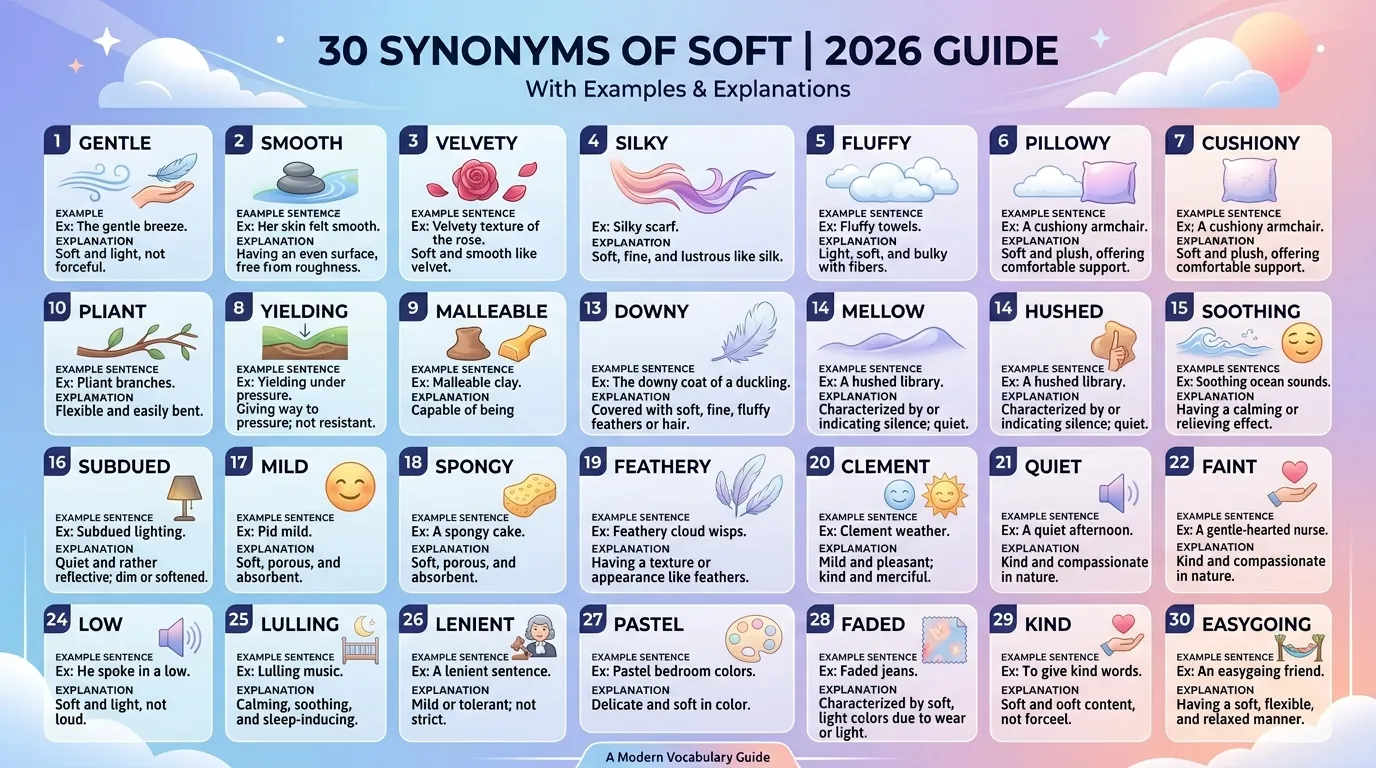
30 Synonyms of Soft
1. Gentle (adjective)
US: /ˈdʒɛntl/ | UK: /ˈdʒentl/
Meaning: calm, kind, and not rough
Examples:
- She has a gentle voice.
- The nurse was gentle with the baby.
2. Smooth (adjective)
US: /smuːð/ | UK: /smuːð/
Meaning: even and not rough
Examples:
- The stone feels smooth.
- Her skin looked smooth.
3. Tender (adjective)
US: /ˈtɛndər/ | UK: /ˈtendə/
Meaning: soft and caring
Examples:
- He gave a tender smile.
- The meat became tender after cooking.
4. Mild (adjective)
US: /maɪld/ | UK: /maɪld/
Meaning: not strong or harsh
Examples:
- The weather is mild today.
- She has a mild personality.
5. Cushiony (adjective)
US: /ˈkʊʃəni/ | UK: /ˈkʊʃəni/
Meaning: soft like a cushion
Examples:
- The sofa feels cushiony.
- He sat on the cushiony chair.
6. Fluffy (adjective)
US: /ˈflʌfi/ | UK: /ˈflʌfi/
Meaning: light and soft
Examples:
- The kitten is very fluffy.
- She wore a fluffy sweater.
7. Silky (adjective)
US: /ˈsɪlki/ | UK: /ˈsɪlki/
Meaning: smooth and soft like silk
Examples:
- Her hair feels silky.
- The fabric looked silky.
8. Velvety (adjective)
US: /ˈvɛlvəti/ | UK: /ˈvelvɪti/
Meaning: soft like velvet
Examples:
- The rose petals felt velvety.
- He touched the velvety cloth.
9. Delicate (adjective)
US: /ˈdɛlɪkət/ | UK: /ˈdelɪkət/
Meaning: fine, soft, and easily damaged
Examples:
- She wore a delicate dress.
- The flowers looked delicate.
10. Pliable (adjective)
US: /ˈplaɪəbəl/ | UK: /ˈplaɪəbəl/
Meaning: easy to bend or shape
Examples:
- The clay is pliable.
- The material stayed pliable.
11. Supple (adjective)
US: /ˈsʌpəl/ | UK: /ˈsʌpl/
Meaning: soft and flexible
Examples:
- The leather became supple.
- She has supple hands.
12. Mellow (adjective)
US: /ˈmɛloʊ/ | UK: /ˈmeləʊ/
Meaning: soft, calm, and pleasant
Examples:
- The music sounded mellow.
- He has a mellow voice.
13. Warm (adjective)
US: /wɔːrm/ | UK: /wɔːm/
Meaning: friendly and comforting
Examples:
- She gave a warm welcome.
- The blanket felt warm and soft.
14. Light (adjective)
US: /laɪt/ | UK: /laɪt/
Meaning: gentle or not heavy
Examples:
- The cake feels light.
- She used a light touch.
15. Quiet (adjective)
US: /ˈkwaɪət/ | UK: /ˈkwaɪət/
Meaning: making little sound
Examples:
- He spoke in a quiet voice.
- The room stayed quiet.
16. Calm (adjective)
US: /kɑːm/ | UK: /kɑːm/
Meaning: peaceful and relaxed
Examples:
- Her tone remained calm.
- The sea looked calm.
17. Faint (adjective)
US: /feɪnt/ | UK: /feɪnt/
Meaning: weak or soft in strength
Examples:
- I heard a faint sound.
- The light became faint.
18. Subtle (adjective)
US: /ˈsʌtl/ | UK: /ˈsʌtl/
Meaning: soft and not obvious
Examples:
- The perfume has a subtle smell.
- She gave a subtle smile.
19. Weak (adjective)
US: /wiːk/ | UK: /wiːk/
Meaning: lacking strength
Examples:
- His voice sounded weak.
- The coffee tastes weak.
20. Fine (adjective)
US: /faɪn/ | UK: /faɪn/
Meaning: thin, smooth, or delicate
Examples:
- The sand feels fine.
- She wore a fine scarf.
21. Cottony (adjective)
US: /ˈkɑːtəni/ | UK: /ˈkɒtəni/
Meaning: soft like cotton
Examples:
- The towel feels cottony.
- He touched the cottony fabric.
22. Downy (adjective)
US: /ˈdaʊni/ | UK: /ˈdaʊni/
Meaning: covered with soft feathers
Examples:
- The bird had downy feathers.
- The pillow felt downy.
23. Creamy (adjective)
US: /ˈkriːmi/ | UK: /ˈkriːmi/
Meaning: smooth and soft in texture
Examples:
- The soup tasted creamy.
- Her lotion feels creamy.
24. Flexible (adjective)
US: /ˈflɛksəbəl/ | UK: /ˈfleksəbəl/
Meaning: able to bend easily
Examples:
- The rubber is flexible.
- She has a flexible schedule.
25. Easygoing (adjective)
US: /ˌiːziˈɡoʊɪŋ/ | UK: /ˌiːziˈɡəʊɪŋ/
Meaning: relaxed and gentle
Examples:
- He has an easygoing personality.
- She remained easygoing during stress.
26. Lenient (adjective)
US: /ˈliːniənt/ | UK: /ˈliːniənt/
Meaning: not strict or harsh
Examples:
- The teacher was lenient.
- His parents are very lenient.
27. Kind (adjective)
US: /kaɪnd/ | UK: /kaɪnd/
Meaning: caring and gentle
Examples:
- She is a kind person.
- He gave a kind answer.
28. Sweet (adjective)
US: /swiːt/ | UK: /swiːt/
Meaning: pleasant and gentle
Examples:
- She has a sweet smile.
- The baby made a sweet sound.
29. Cushioned (adjective)
US: /ˈkʊʃənd/ | UK: /ˈkʊʃənd/
Meaning: protected by soft material
Examples:
- The seat is cushioned.
- He wore cushioned shoes.
30. Feathery (adjective)
US: /ˈfɛðəri/ | UK: /ˈfeðəri/
Meaning: light and soft like feathers
Examples:
- The scarf felt feathery.
- Her touch was feathery.
Prototype Meaning
The most typical meaning of soft is something smooth, gentle, and pleasant to touch. People usually imagine pillows, blankets, soft voices, or kind personalities when hearing this word.
Prototype Categorization
- Texture and material: silky, velvety, fluffy, creamy
- Personality and behavior: gentle, kind, lenient, easygoing
- Sound and emotion: quiet, mellow, calm, subtle
- Flexibility and movement: pliable, supple, flexible
Antonyms of Soft
- Hard (adjective): firm and not soft
- Rough (adjective): uneven or harsh
- Harsh (adjective): strong or unpleasant
- Rigid (adjective): stiff and not flexible
- Loud (adjective): making strong sound
Short Questions and Answers
What does soft mean?
- It means gentle, smooth, quiet, or not hard.
When should soft be used?
- Use it to describe texture, sound, personality, or emotions.
Is soft positive or negative?
- It is usually positive, but sometimes it may suggest weakness.
How is it different from similar words?
- “Soft” is a general word, while “silky” focuses on smooth texture and “gentle” focuses on behavior.
Conclusion
Learning synonyms of soft and synonyms of soft improves vocabulary and communication skills. It helps English learners describe textures, emotions, sounds, and personalities more clearly. Using different synonyms also avoids repetition and makes writing more natural and expressive. These words strengthen speaking and writing by adding detail and emotional meaning. They also help writers choose the perfect word for different situations and tones. Practice using new vocabulary every day in conversations, reading, and writing. Small daily habits can build strong English confidence and improve fluency over time.

I’m Zahid Abbas, an educator, researcher, and digital publishing strategist with a passion for linguistics, grammar, and clear communication. As a content creator and SEO specialist, I craft research-driven, reader-focused content that empowers learners and makes knowledge accessible worldwide.