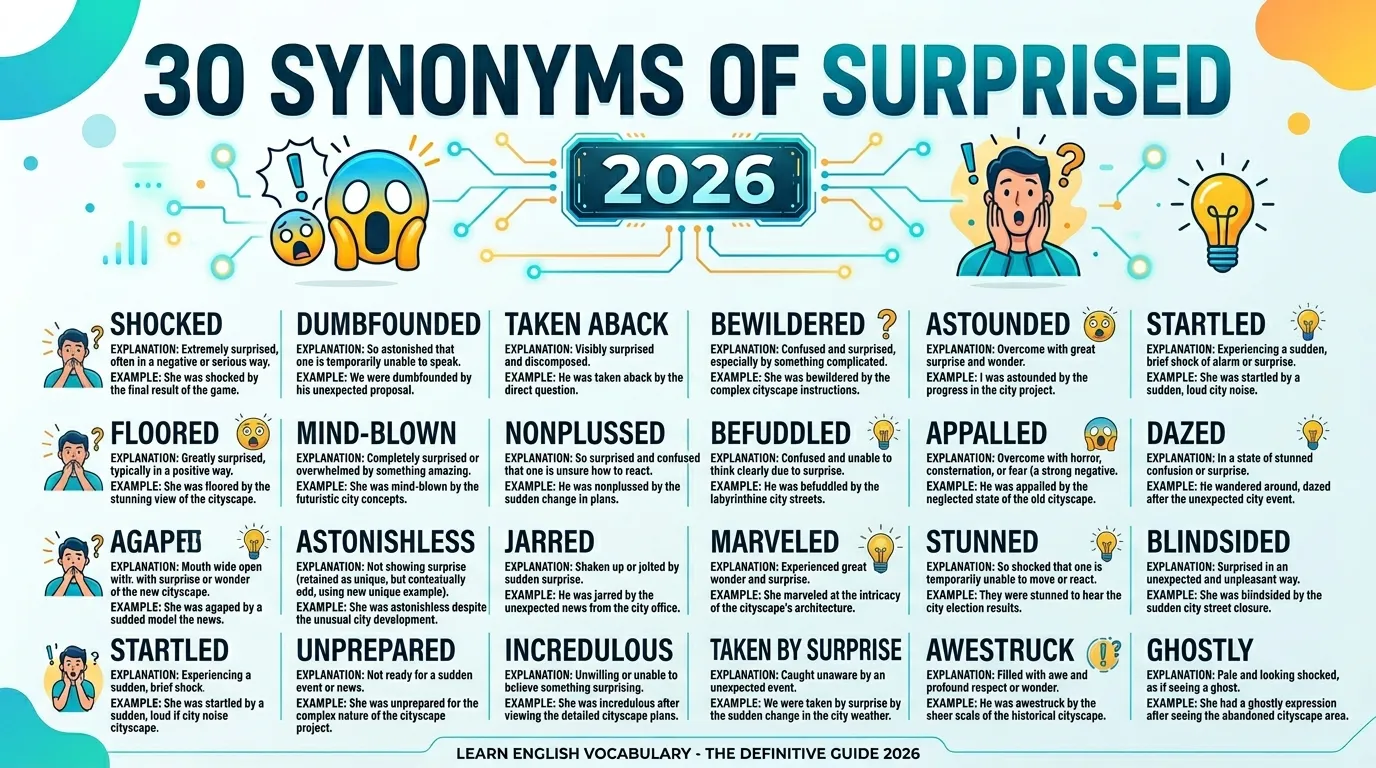
The word surprised means feeling shocked, amazed, or unexpected because something unusual happens. Imagine opening your door on your birthday and seeing your friends waiting with gifts and balloons. You would feel surprised and happy at that moment.
People use the word surprised every day in conversations, stories, movies, and social media. It helps describe sudden emotions and reactions. However, repeating the same word too often can make writing sound dull and repetitive.
Learning synonyms of surprised helps English learners improve vocabulary and express emotions more clearly. It also helps writers create stronger and more natural sentences. In this article, you will learn the meaning of surprised, its pronunciation, history, grammar, and 30 useful synonyms with examples. You will also explore semantic categories, antonyms, and simple questions to improve your English communication skills.
Meaning of Surprised
Definition
Surprised (adjective): feeling shocked or amazed because something unexpected happened.
Examples
- I was surprised by the good news.
- She looked surprised when he arrived early.
Connotative Meaning
- Positive tone: amazed, delighted, excited
- Negative tone: shocked, disturbed, confused
- Neutral tone: unexpected reaction to something
Etymology
- From Old French surprendre meaning “to overtake suddenly”
- From Latin roots meaning “to seize unexpectedly”
Short History:
- Old English (450–1100): no direct form of “surprised”
- Middle English (1100–1500): French influence introduced related forms
- Modern English (1500–Present): “surprised” became common for sudden emotional reactions
Pronunciation (US & UK – IPA)
- US: /sərˈpraɪzd/
- UK: /səˈpraɪzd/
Syllables
- sur-prised
Affixation Pattern of Surprised
- Root: surprise
- Prefix: sur-
- Suffix: -ed
Word Formation:
- surprise (noun/verb)
- surprised (adjective)
- surprising (adjective)
- surprisingly (adverb)
30 Synonyms of Surprised
1. Amazed (adjective)
US: /əˈmeɪzd/ | UK: /əˈmeɪzd/
Meaning: feeling great wonder or surprise
Examples:
- I was amazed by her talent.
- They looked amazed at the performance.
2. Astonished (adjective)
US: /əˈstɑːnɪʃt/ | UK: /əˈstɒnɪʃt/
Meaning: very shocked or surprised
Examples:
- She felt astonished by the news.
- He looked astonished at the result.
3. Shocked (adjective)
US: /ʃɑːkt/ | UK: /ʃɒkt/
Meaning: deeply surprised in a disturbing way
Examples:
- We were shocked by the accident.
- She sounded shocked on the phone.
4. Startled (adjective)
US: /ˈstɑːrtld/ | UK: /ˈstɑːtld/
Meaning: suddenly frightened or surprised
Examples:
- The loud noise made him startled.
- She looked startled by the question.
5. Stunned (adjective)
US: /stʌnd/ | UK: /stʌnd/
Meaning: unable to react because of surprise
Examples:
- He was stunned by the announcement.
- The team stood stunned in silence.
6. Astounded (adjective)
US: /əˈstaʊndɪd/ | UK: /əˈstaʊndɪd/
Meaning: extremely surprised
Examples:
- She felt astounded by the price.
- I was astounded at his success.
7. Speechless (adjective)
US: /ˈspiːtʃləs/ | UK: /ˈspiːtʃləs/
Meaning: unable to speak because of surprise
Examples:
- The gift left her speechless.
- He became speechless with joy.
8. Dumbfounded (adjective)
US: /dʌmˈfaʊndɪd/ | UK: /dʌmˈfaʊndɪd/
Meaning: completely shocked and confused
Examples:
- I felt dumbfounded by the answer.
- They looked dumbfounded.
9. Bewildered (adjective)
US: /bɪˈwɪldərd/ | UK: /bɪˈwɪldəd/
Meaning: confused because of surprise
Examples:
- She looked bewildered after the speech.
- He seemed bewildered by the rules.
10. Flabbergasted (adjective)
US: /ˈflæbərˌɡæstɪd/ | UK: /ˈflæbəɡɑːstɪd/
Meaning: extremely shocked or surprised
Examples:
- We were flabbergasted by the decision.
- She looked flabbergasted.
11. Thunderstruck (adjective)
US: /ˈθʌndərstrʌk/ | UK: /ˈθʌndəstrʌk/
Meaning: suddenly shocked with surprise
Examples:
- He stood thunderstruck.
- She felt thunderstruck by the news.
12. Awestruck (adjective)
US: /ˈɔːstrʌk/ | UK: /ˈɔːstrʌk/
Meaning: filled with wonder and admiration
Examples:
- The children were awestruck.
- She looked awestruck at the mountains.
13. Confused (adjective)
US: /kənˈfjuːzd/ | UK: /kənˈfjuːzd/
Meaning: unable to understand something unexpected
Examples:
- I felt confused by his reaction.
- She looked confused at first.
14. Stupefied (adjective)
US: /ˈstuːpɪfaɪd/ | UK: /ˈstjuːpɪfaɪd/
Meaning: unable to think because of shock
Examples:
- He was stupefied by the outcome.
- She sat stupefied silently.
15. Gobsmacked (adjective)
US: /ˈɡɑːbsmækt/ | UK: /ˈɡɒbsmækt/
Meaning: extremely surprised
Examples:
- I was gobsmacked by the announcement.
- They looked gobsmacked.
16. Alarmed (adjective)
US: /əˈlɑːrmd/ | UK: /əˈlɑːmd/
Meaning: worried and surprised
Examples:
- She felt alarmed by the sound.
- He looked alarmed suddenly.
17. Moved (adjective)
US: /muːvd/ | UK: /muːvd/
Meaning: emotionally affected
Examples:
- She felt deeply moved by the gift.
- He was moved by their kindness.
18. Dazed (adjective)
US: /deɪzd/ | UK: /deɪzd/
Meaning: unable to think clearly because of surprise
Examples:
- He walked around dazed.
- She looked dazed after the news.
19. Perplexed (adjective)
US: /pərˈplekst/ | UK: /pəˈplekst/
Meaning: confused and surprised
Examples:
- I felt perplexed by the problem.
- She seemed perplexed.
20. Fascinated (adjective)
US: /ˈfæsəˌneɪtɪd/ | UK: /ˈfæsɪneɪtɪd/
Meaning: very interested and amazed
Examples:
- The children were fascinated by magic.
- He felt fascinated by science.
21. Overwhelmed (adjective)
US: /ˌoʊvərˈwelmd/ | UK: /ˌəʊvəˈwelmd/
Meaning: strongly affected emotionally
Examples:
- She felt overwhelmed with joy.
- He was overwhelmed by support.
22. Curious (adjective)
US: /ˈkjʊriəs/ | UK: /ˈkjʊəriəs/
Meaning: wanting to know more
Examples:
- She became curious about the story.
- He looked curious and surprised.
23. Excited (adjective)
US: /ɪkˈsaɪtɪd/ | UK: /ɪkˈsaɪtɪd/
Meaning: very happy and energetic
Examples:
- The children were excited by the trip.
- She sounded excited on the call.
24. Distracted (adjective)
US: /dɪˈstræktɪd/ | UK: /dɪˈstræktɪd/
Meaning: unable to focus because of emotion
Examples:
- He felt distracted after the surprise.
- She looked distracted all day.
25. Amazed-looking (adjective)
US: /əˈmeɪzd ˈlʊkɪŋ/ | UK: /əˈmeɪzd ˈlʊkɪŋ/
Meaning: appearing very surprised
Examples:
- She gave an amazed-looking smile.
- He had an amazed-looking face.
26. Wonderstruck (adjective)
US: /ˈwʌndərstrʌk/ | UK: /ˈwʌndəstrʌk/
Meaning: filled with wonder and surprise
Examples:
- The tourists were wonderstruck.
- She stood wonderstruck quietly.
27. Baffled (adjective)
US: /ˈbæfld/ | UK: /ˈbæfld/
Meaning: confused and unable to understand
Examples:
- He looked baffled by the puzzle.
- I felt baffled at the response.
28. Nonplussed (adjective)
US: /ˌnɑːnˈplʌst/ | UK: /nɒnˈplʌst/
Meaning: confused and unsure how to react
Examples:
- She seemed nonplussed.
- He looked nonplussed by the question.
29. Mesmerized (adjective)
US: /ˈmezməˌraɪzd/ | UK: /ˈmezməraɪzd/
Meaning: completely fascinated and amazed
Examples:
- The audience was mesmerized.
- She felt mesmerized by the music.
30. Floored (adjective)
US: /flɔːrd/ | UK: /flɔːd/
Meaning: extremely shocked or surprised
Examples:
- I was completely floored by the news.
- She looked floored after hearing it.
Prototype Meaning
The most common meaning of surprised is feeling sudden emotion because something unexpected happens. People usually imagine wide eyes, sudden silence, excitement, or shock after hearing surprising news.
Prototype Categorization
- Positive surprise: amazed, fascinated, excited
- Negative surprise: shocked, alarmed, stunned
- Confused surprise: bewildered, perplexed, baffled
- Extreme surprise: flabbergasted, thunderstruck, floored
Antonyms of Surprised
Antonyms
- Calm (adjective): peaceful and not emotional
- Unimpressed (adjective): not affected emotionally
- Expecting (adjective): prepared for something
- Indifferent (adjective): showing little interest
- Bored (adjective): not excited or interested
Short Questions and Answers
What does surprised mean?
- It means feeling shocked or amazed because something unexpected happened.
When should surprised be used?
- Use it when describing sudden emotional reactions.
Is surprised positive or negative?
- It can be positive or negative depending on the situation.
How is it different from similar words?
- “Surprised” is a general word, while “astonished” or “shocked” describe stronger reactions.
Conclusion
Learning synonyms of surprised and synonyms of surprised improves vocabulary and emotional expression. It helps English learners describe reactions more clearly in speaking and writing. Using different synonyms also avoids repetition and makes communication more natural and interesting. These words are useful in stories, conversations, essays, and daily communication. They help writers describe happiness, shock, confusion, or wonder with greater accuracy. Practice using new vocabulary every day. Small learning habits can improve English confidence, fluency, and communication skills over time.

I’m Zahid Abbas, an educator, researcher, and digital publishing strategist with a passion for linguistics, grammar, and clear communication. As a content creator and SEO specialist, I craft research-driven, reader-focused content that empowers learners and makes knowledge accessible worldwide.