The word emotional describes having, showing, or expressing strong feelings like joy, sadness, excitement, or love. Imagine watching a heartwarming movie where a lost puppy finds its way back home and you feel happy tears in your eyes. That state of feeling deeply inside your heart is what we call emotional.
We use synonyms for emotional to describe touching stories, tears of joy, sudden mood shifts, or how someone reacts when they are super happy or sad. Learning new ways to say emotional helps learners make their story writing expressive. English learners and content writers need synonyms for emotional too.
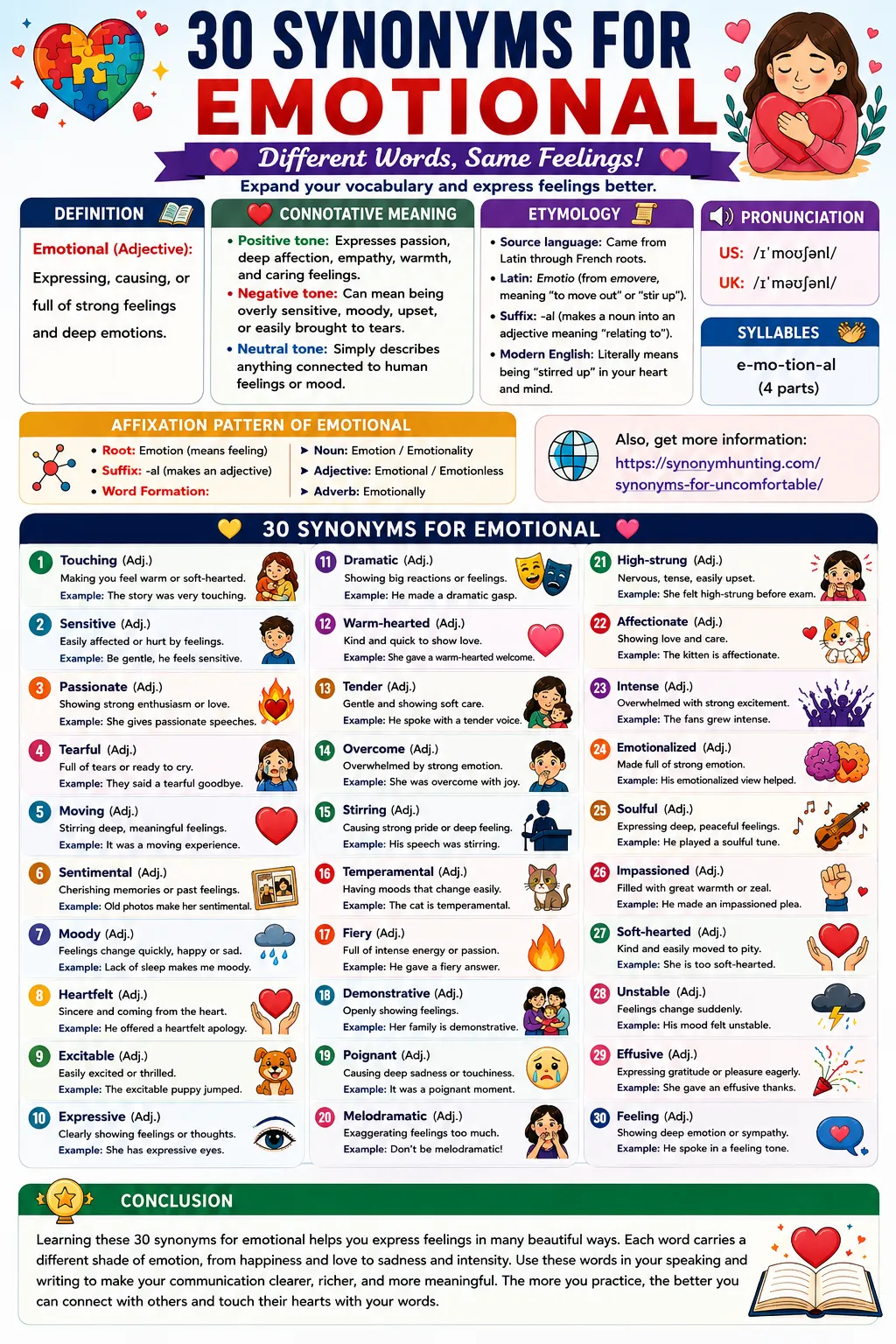
This guide gives you 30 simple synonyms for emotional. Along with easy sentences, word origins, pronunciation guides, and clear categories.
Definition
Emotional (Adjective): Expressing, causing, or full of strong feelings and deep emotions.
Examples
- She got very emotional when her best friend gave her a goodbye hug.
- Playing music can be a deeply emotional experience.
Connotative Meaning
- Positive tone: Expresses passion, deep affection, empathy, warmth, and caring feelings.
- Negative tone: Can mean being overly sensitive, moody, upset, or easily brought to tears.
- Neutral tone: Simply describes anything connected to human feelings or mood.
Etymology
- Source language: Came from Latin through French roots.
- Latin: Emotio (from emovere, meaning “to move out” or “stir up”).
- Suffix: -al (makes a noun into an adjective meaning “relating to”).
- Modern English: Literally means being “stirred up” in your heart and mind.
You can also get more information https://synonymhunting.com/synonyms-for-uncomfortable/
Pronunciation
- US: /ɪˈmoʊʃənl/
- UK: /ɪˈməʊʃənl/
Syllables
e-mo-tion-al (4 parts)
Affixation Pattern of Emotional
- Root: Emotion (means feeling)
- Suffix: -al (makes an adjective)
- Word Formation:
- Noun: Emotion / Emotionality
- Adjective: Emotional / Emotionless
- Adverb: Emotionally
Synonyms for Emotional
1. Touching (Adjective) — US: /ˈtʌtʃɪŋ/ | UK: /ˈtʌtʃɪŋ/
Meaning: Making you feel warm, gentle, or soft-hearted sympathy.
Examples:
The puppy reunion story was very touching.
He wrote a touching card to his grandmother.
2. Sensitive (Adjective) — US: /ˈsɛnsətɪv/ | UK: /ˈsensətɪv/
Meaning: Easily affected, hurt, or moved by feelings and emotions.
Examples:
The sensitive child cried during the sad cartoon.
Be gentle with him because he feels sensitive today.
3. Passionate (Adjective) — US: /ˈpæʃənət/ | UK: /ˈpæʃənət/
Meaning: Showing strong, eager enthusiasm or deep love for something.
Examples:
She gives passionate speeches about saving animals.
He is a passionate painter who paints every afternoon.
4. Tearful (Adjective) — US: /ˈtɪrfl/ | UK: /ˈtɪəfl/
Meaning: Full of tears or ready to cry from big feelings.
Examples:
They said a tearful goodbye at the airport.
Her eyes grew tearful during the happy ending.
5. Moving (Adjective) — US: /ˈmuːvɪŋ/ | UK: /ˈmuːvɪŋ/
Meaning: Stirring up deep, meaningful feelings inside your heart.
Examples:
The choir sang a moving song about friendship.
Reading his speech was a moving experience for all.
6. Sentimental (Adjective) — US: /ˌsɛntɪˈmɛntl/ | UK: /ˌsentɪˈmentl/
Meaning: Cherishing special memories or soft, sweet feelings from the past.
Examples:
She kept the sentimental toy from when she was two.
Old family photo albums make her feel sentimental.
7. Moody (Adjective) — US: /ˈmuːdi/ | UK: /ˈmuːdi/
Meaning: Feelings changing quickly from happy to sad or cranky.
Examples:
Lack of sleep can make anyone feel moody.
The moody sky turned dark and rainy fast.
8. Heartfelt (Adjective) — US: /ˈhɑːrtfɛlt/ | UK: /ˈhɑːtfelt/
Meaning: Honest, sincere, and coming straight from the heart.
Examples:
He offered a heartfelt apology for bumping into her.
She gave her mother a heartfelt thank-you hug.
9. Excitable (Adjective) — US: /ɪkˈsaɪtəbl/ | UK: /ɪkˈsaɪtəbl/
Meaning: Getting easily worked up, thrilled, or loud over small things.
Examples:
The excitable puppy jumped around the garden.
The excitable children cheered for the magic trick.
10. Expressive (Adjective) — US: /ɪkˈsprɛsɪv/ | UK: /ɪkˈspresɪv/
Meaning: Clearly showing thoughts and feelings on your face or voice.
Examples:
She has very expressive eyes that show when she is glad.
An actor uses an expressive voice on stage.
11. Dramatic (Adjective) — US: /drəˈmætɪk/ | UK: /drəˈmætɪk/
Meaning: Showing big, noticeable reactions or feelings like in a play.
Examples:
He made a dramatic gasp when he saw the birthday cake.
Her dramatic story kept everyone listening closely.
12. Warm-hearted (Adjective) — US: /wɔːrm ˈhɑːrtɪd/ | UK: /wɔːm ˈhɑːtɪd/
Meaning: Kind, friendly, and quick to show loving feelings to others.
Examples:
Our teacher is a warm-hearted person who helps everyone.
She gave a warm-hearted welcome to the new student.
13. Tender (Adjective) — US: /ˈtɛndər/ | UK: /ˈtendə/
Meaning: Gentle, sweet, and showing soft care or affection.
Examples:
The mother dog gave her puppies a tender lick.
He spoke with a tender voice to soothe his baby brother.
14. Overcome (Adjective) — US: /ˌoʊvərˈkʌm/ | UK: /ˌəʊvəˈkʌm/
Meaning: Feeling so much emotion that you don’t know what to say or do.
Examples:
She was overcome with joy when she won the award.
He was overcome by tears at the sad news.
15. Stirring (Adjective) — US: /ˈstɜːrɪŋ/ | UK: /ˈstɜːrɪŋ/
Meaning: Causing strong excitement, pride, or deep feeling.
Examples:
The brass band played a stirring national anthem.
His stirring speech made the team play harder.
16. Temperamental (Adjective) — US: /ˌtɛmprəˈmɛntl/ | UK: /ˌtemprəˈmentl/
Meaning: Having strong moods that swing easily and unexpectedly.
Examples:
The temperamental cat only likes pets on its own terms.
Our old car engine can be a bit temperamental.
17. Fiery (Adjective) — US: /ˈfaɪəri/ | UK: /ˈfaɪəri/
Meaning: Full of intense energy, quick anger, or burning passion.
Examples:
The player had a fiery spirit on the basketball court.
She gave a fiery answer when defending her project.
18. Demonstrative (Adjective) — US: /dɪˈmɑːnstrətɪv/ | UK: /dɪˈmɒnstrətɪv/
Meaning: Openly showing feelings by hugging, kissing, or cheering.
Examples:
Her family is very demonstrative and gives hugs constantly.
He was not very demonstrative, but he was happy inside.
19. Poignant (Adjective) — US: /ˈpɔɪnjənt/ | UK: /ˈpɔɪnjənt/
Meaning: Causing a sharp, deep sense of sadness, regret, or touchiness.
Examples:
The movie had a poignant moment when the old friends parted.
It was a poignant memory of his old hometown.
20. Melodramatic (Adjective) — US: /ˌmɛlədrəˈmætɪk/ | UK: /ˌmelədrəˈmætɪk/
Meaning: Exaggerating feelings way too much to get attention.
Examples:
Don’t be so melodramatic over a tiny scratch!
His melodramatic sigh made his sister giggle.
21. High-strung (Adjective) — US: /haɪ ˈstrʌŋ/ | UK: /haɪ ˈstrʌŋ/
Meaning: Extremely nervous, tense, and easily upset by small things.
Examples:
The high-strung dog barked at every falling leaf.
She felt a little high-strung right before the big exam.
22. Affectionate (Adjective) — US: /əˈfɛkʃənət/ | UK: /əˈfekʃənət/
Meaning: Showing fondness, love, and care through words and actions.
Examples:
The affectionate kitten purred on my lap.
He gave his dad an affectionate pat on the shoulder.
23. Intense (Adjective) — US: /hɪˈstɛrɪkl/ | UK: /hɪˈsterɪkl/
Meaning: Overwhelmed by wild, uncontrollable excitement or crying.
Examples:
The fans grew intense when the singer walked out.
She burst into Iintense laughter at the funny joke.
24. Emotionalized (Adjective) — US: /ɪˈmoʊʃənəlaɪzd/ | UK: /ɪˈməʊʃənəlaɪzd/
Meaning: Made full of strong emotion or viewed through feelings.
Examples:
It was an emotionalized account of what happened at camp.
His emotionalized view made him stick up for his team.
25. Soulful (Adjective) — US: /ˈsoʊlfl/ | UK: /ˈsəʊlfl/
Meaning: Expressing deep, serious, or peaceful feelings from the soul.
Examples:
The musician played a soulful tune on the violin.
The dog looked up with big, soulful eyes.
26. Impassioned (Adjective) — US: /ɪmˈpæʃnd/ | UK: /ɪmˈpæʃnd/
Meaning: Filled with or showing great warmth, zeal, and earnest feeling.
Examples:
He made an impassioned plea for people to recycle.
She wrote an impassioned story about nature.
27. Soft-hearted (Adjective) — US: /sɔːft ˈhɑːrtɪd/ | UK: /sɒft ˈhɑːtɪd/
Meaning: Gentle, kind, and easily moved to pity or affection.
Examples:
My soft-hearted brother always feeds stray birds.
She was too soft-hearted to turn away a lost dog.
28. Unstable (Adjective) — US: /ʌnˈsteɪbl/ | UK: /ʌnˈsteɪbl/
Meaning: Changing feelings suddenly and not staying calm or steady.
Examples:
His mood felt unstable after sleeping poorly.
The storm created unstable weather conditions.
29. Effusive (Adjective) — US: /ɪˈfjuːsɪv/ | UK: /ɪˈfjuːsɪv/
Meaning: Expressing feelings of gratitude or pleasure in an eager way.
Examples:
She gave an effusive thank-you when she got the gift.
He was effusive in praising his group’s hard work.
30. Feeling (Adjective) — US: /ˈfiːlɪŋ/ | UK: /ˈfiːlɪŋ/
Meaning: Showing deep emotion, understanding, or sympathy.
Examples:
She spoke in a feeling tone when comforting her friend.
He gave a feeling rendition of the lullaby.
Prototype Meaning
When someone hear emotional, they picture tears falling during a sad movie, jumping up and down with wild cheering at a sports game. Wrapping arms around a best friend during a warm goodbye.
Prototype Categorization
- Warmth, Love & Kindness: Touching, Sentimental, Heartfelt, Warm-hearted, Tender, Affectionate, Soft-hearted, Soulful.
- Deep Impact & Passion: Passionate, Moving, Stirring, Impassioned, Fiery, Expressive, Demonstrative, Effusive, Feeling.
- Tears & Big Feelings: Sensitive, Tearful, Overcome, Poignant, intense.
- Changing Moods & Reactivity: Moody, Excitable, Dramatic, Temperamental, Melodramatic, High-strung, Unstable, Emotionalized.
Antonyms of Emotional
- Unemotional
- Calm
- Cold
- Cool
- Unfeeling
- Indifferent
Short Questions and Answers
- What does emotional mean?
- It means showing, having, or causing strong feelings like joy, sadness, or excitement.
- When should I use emotional?
- Use it when describing touching stories, mood changes, tearful moments, or passionate reactions.
- Is emotional an adjective or a noun?
- It is an adjective! (The related noun is emotion).
- Is being emotional a bad thing?
- No! Being emotional shows that you care deeply, feel sympathy, and connect with the world.
Conclusion
Synonyms for emotional can help you describe feelings, moods, and reactions in a clearer way. Words such as sensitive, expressive, passionate, sentimental, heartfelt, and touching can make your English more varied and natural. Each word has a slightly different meaning, so choosing the right synonym helps you express your feelings more accurately. For English learners, synonyms for emotional can improve speaking, writing, reading, and everyday communication. synonyms for emotional can also help you avoid using emotional too many times. Practice these synonyms in simple sentences about family, friends, school, and daily life. With regular practice, you can build a stronger vocabulary. Also express your thoughts and feelings with greater confidence.

I’m Zahid Abbas, an educator, researcher, and digital publishing strategist with a passion for linguistics, grammar, and clear communication. As a content creator and SEO specialist, I craft research-driven, reader-focused content that empowers learners and makes knowledge accessible worldwide.