The word identity means the qualities, name, personality, or characteristics that make a person or thing unique. Imagine meeting someone for the first time. Their name, behavior, culture, and appearance help form their identity. A company logo, a nation’s culture, or even a personal belief can also represent identity.
People use this word often in education, psychology, business, law, and daily conversations. It is important because identity helps people understand who they are and how they connect with others. Learning synonyms of identity helps English learners and writers express ideas more clearly and avoid repeating the same word. In this article, you will learn the meaning of identity, its pronunciation, history, grammar, and 30 useful synonyms with examples. You will also explore semantic categories, antonyms, and simple questions to improve your vocabulary and communication skills.
Meaning of Identity
Definition
Identity (noun): the qualities, characteristics, or information that make a person or thing different from others.
Examples
- Her cultural identity is important to her.
- The police confirmed the man’s identity.
Connotative Meaning
(Connotation means the feeling or emotion a word suggests beyond its basic meaning.)
- Positive tone: uniqueness, individuality, self-awareness
- Negative tone: confusion, secrecy, identity loss
- Neutral tone: recognition or personal information
Etymology
- From Late Latin identitas meaning “sameness”
- Derived from Latin idem, meaning “same”
Short History:
- Old English (450–1100): no direct form of “identity”
- Middle English (1100–1500): philosophical ideas about sameness appeared
- Modern English (1500–Present): identity became common in psychology, law, and society
Pronunciation (US & UK – IPA)
- US: /aɪˈdɛntəti/
- UK: /aɪˈdentəti/
Syllables
- i-den-ti-ty
Affixation Pattern of Identity
- Root: ident
- Prefix: none
- Suffix: -ity
Word Formation:
- identify (verb)
- identification (noun)
- identifiable (adjective)
- identical (adjective)
- identity (noun)
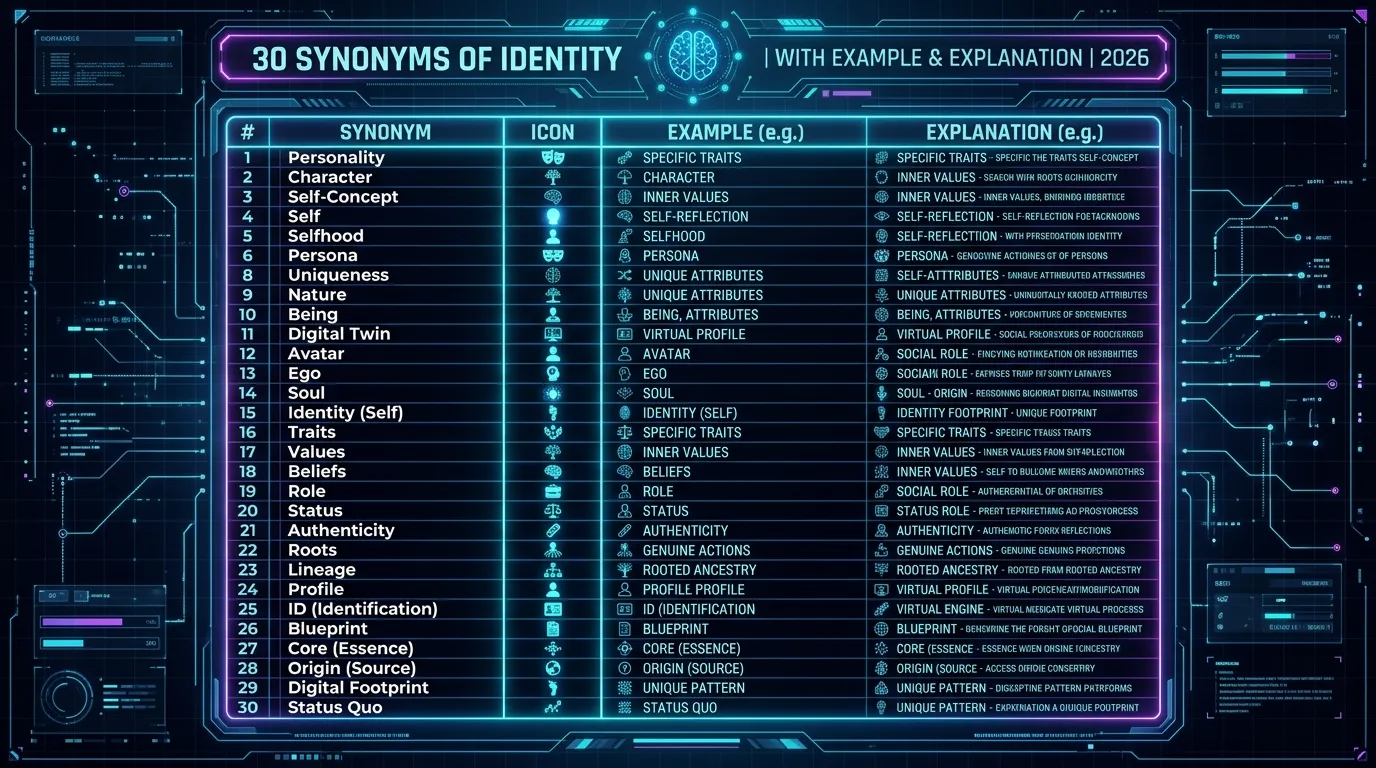
30 Synonyms of Identity
1. Character (noun)
US: /ˈkærɪktər/ | UK: /ˈkærɪktə/
Meaning: the qualities that make a person unique
Examples:
- Her strong character inspired others.
- Honesty is part of his character.
2. Personality (noun)
US: /ˌpɜːrsəˈnæləti/ | UK: /ˌpɜːsəˈnæləti/
Meaning: the way a person thinks and behaves
Examples:
- She has a friendly personality.
- His personality attracts people.
3. Individuality (noun)
US: /ˌɪndəˌvɪdʒuˈæləti/ | UK: /ˌɪndɪˌvɪdʒuˈæləti/
Meaning: qualities that make someone different
Examples:
- Art helps express individuality.
- Everyone has their own individuality.
4. Selfhood (noun)
US: /ˈsɛlfhʊd/ | UK: /ˈselfhʊd/
Meaning: a person’s sense of self
Examples:
- Travel strengthened her selfhood.
- He explored his selfhood deeply.
5. Persona (noun)
US: /pərˈsoʊnə/ | UK: /pəˈsəʊnə/
Meaning: the image a person presents publicly
Examples:
- The actor created a public persona.
- Her online persona differs from real life.
6. Profile (noun)
US: /ˈproʊfaɪl/ | UK: /ˈprəʊfaɪl/
Meaning: information describing someone
Examples:
- The company reviewed his profile.
- Her social media profile is popular.
7. Nature (noun)
US: /ˈneɪtʃər/ | UK: /ˈneɪtʃə/
Meaning: basic qualities or character
Examples:
- Kindness is in her nature.
- His calm nature helped everyone.
8. Image (noun)
US: /ˈɪmɪdʒ/ | UK: /ˈɪmɪdʒ/
Meaning: how someone appears to others
Examples:
- The brand improved its image.
- She protects her public image.
9. Reputation (noun)
US: /ˌrɛpjəˈteɪʃən/ | UK: /ˌrepjʊˈteɪʃən/
Meaning: what people think about someone
Examples:
- The school has a good reputation.
- His reputation spread quickly.
10. Essence (noun)
US: /ˈɛsəns/ | UK: /ˈesəns/
Meaning: the basic nature of something
Examples:
- Freedom is the essence of democracy.
- Her smile captured her true essence.
11. Being (noun)
US: /ˈbiːɪŋ/ | UK: /ˈbiːɪŋ/
Meaning: existence or self
Examples:
- Music touched his whole being.
- She felt peace in her being.
12. Self (noun)
US: /sɛlf/ | UK: /self/
Meaning: a person’s true personality
Examples:
- Meditation helps discover the self.
- He stayed true to his self.
13. Individualism (noun)
US: /ˌɪndəˈvɪdʒuəˌlɪzəm/ | UK: /ˌɪndɪˈvɪdʒuəlɪzəm/
Meaning: belief in personal independence
Examples:
- The culture values individualism.
- Individualism encourages creativity.
14. Uniqueness (noun)
US: /juˈniːknəs/ | UK: /juˈniːknəs/
Meaning: the quality of being different
Examples:
- Her art shows great uniqueness.
- Celebrate your uniqueness.
15. Distinctiveness (noun)
US: /dɪˈstɪŋktɪvnəs/ | UK: /dɪˈstɪŋktɪvnəs/
Meaning: quality of being clearly different
Examples:
- The logo has strong distinctiveness.
- His voice gives him distinctiveness.
16. Identification (noun)
US: /aɪˌdɛntəfəˈkeɪʃən/ | UK: /aɪˌdentɪfɪˈkeɪʃən/
Meaning: proof of who someone is
Examples:
- Please show your identification.
- Police requested official identification.
17. Name (noun)
US: /neɪm/ | UK: /neɪm/
Meaning: a word used to identify someone
Examples:
- Her name is well known.
- Write your name clearly.
18. Signature (noun)
US: /ˈsɪɡnətʃər/ | UK: /ˈsɪɡnətʃə/
Meaning: a personal mark or style
Examples:
- The artist has a signature style.
- Please add your signature.
19. Brand (noun)
US: /brænd/ | UK: /brænd/
Meaning: the identity of a business or product
Examples:
- The company built a strong brand.
- Her clothing brand became famous.
20. Culture (noun)
US: /ˈkʌltʃər/ | UK: /ˈkʌltʃə/
Meaning: shared beliefs and traditions
Examples:
- Food reflects cultural identity.
- Their culture values respect.
21. Heritage (noun)
US: /ˈhɛrɪtɪdʒ/ | UK: /ˈherɪtɪdʒ/
Meaning: traditions passed through generations
Examples:
- She is proud of her heritage.
- Museums protect national heritage.
22. Background (noun)
US: /ˈbækˌɡraʊnd/ | UK: /ˈbækɡraʊnd/
Meaning: a person’s history or origin
Examples:
- His family background is diverse.
- Employers checked her background.
23. Status (noun)
US: /ˈsteɪtəs/ | UK: /ˈsteɪtəs/
Meaning: social or professional position
Examples:
- Her social status changed.
- The document confirmed his legal status.
24. Role (noun)
US: /roʊl/ | UK: /rəʊl/
Meaning: a position or function
Examples:
- Parents play an important role.
- His leadership role grew.
25. Identity Card (noun)
US: /aɪˈdɛntəti kɑːrd/ | UK: /aɪˈdentəti kɑːd/
Meaning: an official card proving identity
Examples:
- Show your identity card.
- Students need an identity card.
26. Credentials (noun)
US: /krɪˈdɛnʃəlz/ | UK: /krɪˈdenʃəlz/
Meaning: documents proving identity or ability
Examples:
- She presented her credentials.
- The guard checked his credentials.
27. Soul (noun)
US: /soʊl/ | UK: /səʊl/
Meaning: the spiritual or emotional self
Examples:
- Music touched her soul.
- His poetry reveals his soul.
28. Core (noun)
US: /kɔːr/ | UK: /kɔː/
Meaning: the central part of someone’s identity
Examples:
- Honesty is at her core.
- Family values shaped his core.
29. Composition (noun)
US: /ˌkɑːmpəˈzɪʃən/ | UK: /ˌkɒmpəˈzɪʃən/
Meaning: the structure or makeup of something
Examples:
- The team’s composition changed.
- Personality forms part of human composition.
30. Makeup (noun)
US: /ˈmeɪkʌp/ | UK: /ˈmeɪkʌp/
Meaning: the qualities forming someone’s nature
Examples:
- Patience is part of her makeup.
- His emotional makeup is complex.
Prototype Meaning
The most typical meaning of identity is the qualities and characteristics that make a person unique. People often imagine a person’s name, personality, culture, beliefs, and appearance when hearing this word.
Prototype Categorization
- Personal qualities: character, personality, nature
- Self and individuality: selfhood, individuality, uniqueness
- Public image: persona, profile, reputation
- Cultural identity: heritage, culture, background
- Official recognition: identification, credentials, identity card
Categorization helps writers choose the best synonym depending on emotional tone, formal use, or social context.
Antonyms of Identity
- Anonymity (noun): the state of being unknown
- Difference (noun): lack of sameness
- Mismatch (noun): failure to correspond correctly
- Unknownness (noun): condition of not being recognized
- Confusion (noun): lack of clear understanding
Short Questions and Answers
What does identity mean?
- Identity means the qualities or information that make a person or thing unique.
When should identity be used?
- Use it when talking about personality, culture, recognition, or personal information.
Is identity positive or negative?
- It is usually positive, but it can become negative when connected to identity theft or confusion.
How is it different from similar words?
- “Identity” focuses on uniqueness and recognition, while “personality” mainly describes behavior and emotions.
Conclusion
Learning synonyms of identity and synonyms of identity improves vocabulary and communication skills. It helps English learners describe personality, culture, self-awareness, and recognition more clearly. Using different synonyms also avoids repetition and makes writing more natural and professional.These words are useful in education, psychology, business, and daily conversation. They help writers explain human qualities, social roles, and personal uniqueness with greater accuracy. Practice learning new words every day and use them in speaking and writing. Small vocabulary habits can greatly improve English confidence, fluency, and expression over time.

I’m Zahid Abbas, an educator, researcher, and digital publishing strategist with a passion for linguistics, grammar, and clear communication. As a content creator and SEO specialist, I craft research-driven, reader-focused content that empowers learners and makes knowledge accessible worldwide.