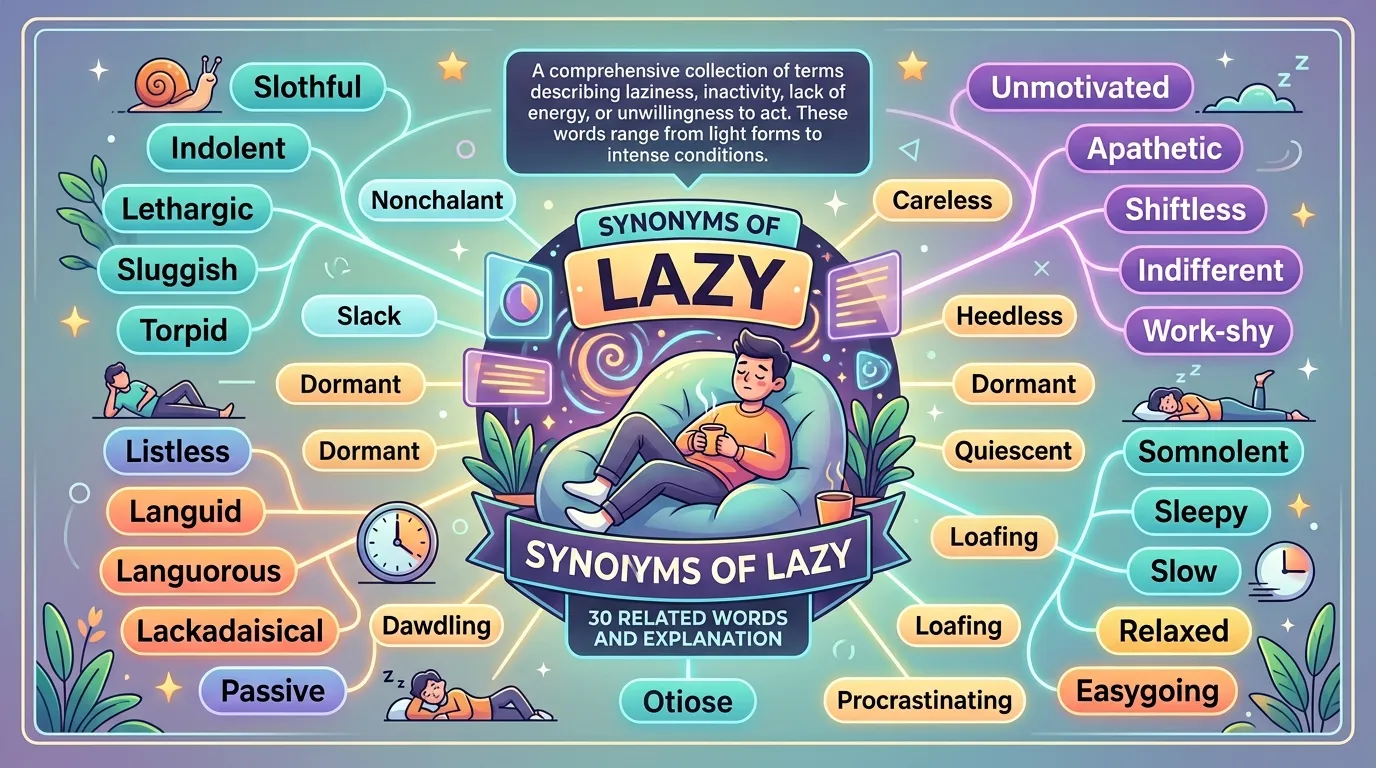
The word lazy means unwilling to work or use energy. Imagine a cute sloth hanging upside down from a tree branch on a warm, sunny afternoon. Instead of running around or climbing quickly, it prefers to move very slowly, and rest all day long. That feeling of wanting to relax and avoid hard work is what we call lazy.
We use synonyms for lazy every day to talk about sleeping in on a rainy Sunday, pets lounging in the sun, or putting off chores until tomorrow. Learning new ways to say lazy helps make their writing lively.
This guide gives you 30 simple synonyms for lazy. Along with easy sentences, word origins, pronunciation guides, and clear categories designed just for young learners.
Meaning of Lazy
Definition
Lazy (Adjective): Unwilling to work or use energy; moving slowly or doing little activity.
Examples
- The lazy cat slept in the warm sunlight all afternoon.
- He felt too lazy to clean his bedroom on Saturday.
Connotative Meaning
- Positive tone: Points to relaxing, peaceful rest, cozy weekends, and stress-free moments.
- Negative tone: Points to carelessness, avoiding chores, or being irresponsible.
- Neutral tone: Describes slow movement, resting states, or low energy levels.
Etymology
- Source language: Came into Middle English around 1540 (possibly from Low German or Dutch).
- Dutch/Low German: Related to lasich (meaning feeble, weary, or weak).
- Modern English (1500–Present): Entered English to describe people, animals, or afternoons that move slowly or avoid exertion!
Pronunciation
- US: /ˈleɪzi/
- UK: /ˈleɪzi/
Syllables
la-zy (2 parts)
Affixation Pattern of Lazy
- Root: Laz / Laze (meaning to relax or be idle)
- Prefix: None
- Suffix: -y (makes an adjective meaning characterized by)
- Word Formation:
- Noun: Laziness, Lazer
- Verb: Laze
- Adjective: Lazy
- Adverb: Lazily
Synonyms for Lazy
1. Idle (Adjective) — US: /ˈaɪdl/ | UK: /ˈaɪdl/
Meaning: Not active, working, or being used.
Examples:
The tractors stood idle in the quiet field.
He spent an idle hour watching the rain fall.
2. Inactive (Adjective) — US: /ɪnˈæktɪv/ | UK: /ɪnˈæktɪv/
Meaning: Not doing anything physical or energetic.
Examples:
Bears become inactive during the cold winter.
She was inactive after running a long race.
3. Slothful (Adjective) — US: /ˈsloʊθfl/ | UK: /ˈsləʊθfl/
Meaning: Unwilling to make an effort; very lazy.
Examples:
The slothful dog refused to get up for a walk.
He felt slothful after eating a huge holiday meal.
4. Indolent (Adjective) — US: /ˈɪndələnt/ | UK: /ˈɪndələnt/
Meaning: Wanting to avoid activity or exertion; habitual laziness.
Examples:
The indolent lion rested under the shade tree.
They spent an indolent afternoon on the beach.
5. Slow (Adjective) — US: /sloʊ/ | UK: /sləʊ/
Meaning: Moving or acting without speed.
Examples:
The slow turtle crossed the garden path.
We had a slow and peaceful morning at home.
6. Lethargic (Adjective) — US: /ləˈθɑːrdʒɪk/ | UK: /ləˈθɑːdʒɪk/
Meaning: Lacking energy and enthusiasm to move.
Examples:
Feeling lethargic, he stayed in bed past noon.
The hot weather made the students feel lethargic.
7. Slug-ish / Sluggish (Adjective) — US: /ˈslʌɡɪʃ/ | UK: /ˈslʌɡɪʃ/
Meaning: Slow-moving or inactive like a slug.
Examples:
I felt sluggish before having my breakfast.
Traffic was sluggish on the muddy road.
8. Inactive (Adjective) — US: /ɪnˈæktɪv/ | UK: /ɪnˈæktɪv/
Meaning: Not engaged in work or movement.
Examples:
Keep your brain active so it never stays inactive.
The volcano has been inactive for many years.
9. Shiftless (Adjective) — US: /ˈʃɪftləs/ | UK: /ˈʃɪftləs/
Meaning: Lacking ambition or purpose; lazy.
Examples:
The fable tells of a shiftless grasshopper who played all day.
She encouraged her brother not to be shiftless.
10. Unambitious (Adjective) — US: /ˌʌnæmˈbɪʃəs/ | UK: /ˌʌnæmˈbɪʃəs/
Meaning: Not showing a strong desire to achieve goals.
Examples:
He was unambitious about winning the race.
An unambitious character made no plans for the future.
11. Passive (Adjective) — US: /ˈpæsɪv/ | UK: /ˈpæsɪv/
Meaning: Accepting what happens without taking action.
Examples:
He took a passive role and let others lead the game.
Watching television is a passive activity.
12. Unmotivated (Adjective) — US: /ˌʌnˈmoʊtɪveɪtɪd/ | UK: /ˌʌnˈməʊtɪveɪtɪd/
Meaning: Lacking enthusiasm or a reason to do work.
Examples:
The tired student felt unmotivated to finish the essay.
A gloomy sky can make anyone feel unmotivated.
13. Sleepy (Adjective) — US: /ˈsliːpi/ | UK: /ˈsliːpi/
Meaning: Ready to sleep or quiet and inactive.
Examples:
The sleepy baby cuddled with her blanket.
It was a sleepy little village near the mountains.
14. Drowsy (Adjective) — US: /ˈdraʊzi/ | UK: /ˈdraʊzi/
Meaning: Half-asleep or making you feel sleepy.
Examples:
The warm fireplace made everyone feel drowsy.
A drowsy bee hovered slowly over the flower.
15. Languid (Adjective) — US: /ˈlæŋɡwɪd/ | UK: /ˈlæŋɡwɪd/
Meaning: Moving slowly and gracefully with little effort.
Examples:
She made a languid wave of her hand from the couch.
They enjoyed a languid stroll through the park.
16. Relaxed (Adjective) — US: /rɪˈlækst/ | UK: /rɪˈlækst/
Meaning: Free from stress or effort; calm.
Examples:
He looked relaxed sitting in the rocking chair.
We spent a relaxed weekend at the lake house.
17. Unhurried (Adjective) — US: /ʌnˈhɜːrid/ | UK: /ʌnˈhʌrid/
Meaning: Moving at a calm, deliberate pace without rushing.
Examples:
They took an unhurried walk along the beach.
She enjoyed an unhurried breakfast on Sunday.
18. Easygoing (Adjective) — US: /ˌiːziˈɡoʊɪŋ/ | UK: /ˌiːziˈɡəʊɪŋ/
Meaning: Calm, relaxed, and not easily worried.
Examples:
Our coach is easygoing and very friendly.
He has an easygoing personality that everyone likes.
19. Lackadaisical (Adjective) — US: /ˌlækəˈdeɪzɪkl/ | UK: /ˌlækəˈdeɪzɪkl/
Meaning: Lacking enthusiasm, care, or determination.
Examples:
She gave a lackadaisical effort during practice.
He lost the game due to a lackadaisical pass.
20. Listless (Adjective) — US: /ˈlɪstləs/ | UK: /ˈlɪstləs/
Meaning: Lacking energy or interest in doing anything.
Examples:
The sick puppy was listless and stayed in its basket.
Hot afternoons can leave children feeling listless.
21. Careless (Adjective) — US: /ˈkɛrləs/ | UK: /ˈkeələs/
Meaning: Not taking proper care or attention when working.
Examples:
Rushing led to a few careless spelling mistakes.
He was careless with his toys and dropped them.
22. Slack (Adjective) — US: /slæk/ | UK: /slæk/
Meaning: Not tight or showing a lack of effort.
Examples:
The worker was slack in completing his duties.
Pick up the slack rope on the boat.
23. Work-shy (Adjective) — US: /ˈwɜːrk ʃaɪ/ | UK: /ˈwɜːk ʃaɪ/
Meaning: Disliking or avoiding physical or mental work.
Examples:
The fable warned against being work-shy in harvest time.
A work-shy character avoided every chore.
24. Heavy-footed (Adjective) — US: /ˈhɛvi fʊtɪd/ | UK: /ˈhevi fʊtɪd/
Meaning: Moving slowly and heavily due to tiredness.
Examples:
The heavy-footed hikers walked slowly up the hill.
He trudged heavy-footed to his room after sports day.
25. Slow-moving (Adjective) — US: /sloʊ ˈmuːvɪŋ/ | UK: /sləʊ ˈmuːvɪŋ/
Meaning: Moving at a very low speed.
Examples:
A slow-moving stream flowed through the meadow.
We watched the slow-moving clouds across the sky.
26. Loafing (Adjective/Participle) — US: /ˈloʊfɪŋ/ | UK: /ˈləʊfɪŋ/
Meaning: Spending time in a lazy, aimless way.
Examples:
The loafing teenagers sat on the porch bench.
No loafing is allowed during study hour!
27. Unenergetic (Adjective) — US: /ˌʌnˌɛnərˈdʒɛtɪk/ | UK: /ˌʌnˌenəˈdʒetɪk/
Meaning: Lacking energy or physical power.
Examples:
He felt unenergetic after staying up late.
An unenergetic walk was all they could manage.
28. Inattentive (Adjective) — US: /ˌɪnəˈtɛntɪv/ | UK: /ˌɪnəˈtentɪv/
Meaning: Not paying focus or care to a task.
Examples:
An inattentive student missed the teacher’s instructions.
Be careful not to be inattentive while crossing roads.
29. Restful (Adjective) — US: /ˈrɛstfl/ | UK: /ˈrestfl/
Meaning: Giving or causing quiet relaxation.
Examples:
We had a restful afternoon under the shade tree.
Soft music creates a restful mood in the room.
30. Comatose (Adjective – Figurative) — US: /ˈkoʊmətoʊs/ | UK: /ˈkəʊmətəʊs/
Meaning: Extremely sleepy or unresponsive from deep tiredness.
Examples:
After the marathon, he lay comatose on the couch.
The heavy lunch left everyone in a comatose state.
Prototype Meaning
When children hear lazy, they picture a sleepy pet stretched out on the rug. A sloth swinging slowly on a tree limb, or someone sitting on the couch refusing to clean up their toys.
Prototype Categorization
- Everyday Slow & Inactive: Idle, Inactive, Slow, Slow-moving, Heavy-footed, Unenergetic.
- Tired & Low Energy: Lethargic, Sluggish, Sleepy, Drowsy, Listless, Comatose.
- Cozy & Relaxed Moments: Relaxed, Unhurried, Easygoing, Languid, Restful.
- Avoiding Chores & Work: Slothful, Indolent, Shiftless, Unmotivated, Work-shy, Lackadaisical, Loafing.
- Careless Effort: Unambitious, Passive, Careless, Slack, Inattentive.
Also read more about https://synonymhunting.com/synonyms-for-slowly/
Antonyms of Lazy
- Active
- Energetic
- Hardworking
- Diligent
- Busy
- Industrial
Short Questions and Answers
- What does lazy mean?
- It means unwilling to work or use physical energy, preferring to rest or move slowly.
- When should I use lazy?
- Use it when writing about relaxing days, slow animals, or characters avoiding their duties.
- Is lazy a good or bad word?
- It depends! It can mean peaceful relaxation on weekends (positive), or avoiding important chores (negative).
- How is it different from similar words?
- Lazy means avoiding work, sluggish means having low physical energy, and relaxed means being free from stress.
Conclusion
Synonyms of lazy can help you use English in a clearer and more interesting way. Words such as idle, inactive, sluggish, slow and unmotivated can describe different kinds of laziness. Knowing these words helps you choose the right word for each situation. It also improves your writing, speaking, and everyday communication. Using synonyms for lazy can help you avoid repeating the same word again and again. For English learners, regular vocabulary practice makes it easier to understand. Try to learn a few new synonyms for lazy each day and use them in simple sentences. With daily practice, your vocabulary will grow, and your English will become stronger.

I’m Zahid Abbas, an educator, researcher, and digital publishing strategist with a passion for linguistics, grammar, and clear communication. As a content creator and SEO specialist, I craft research-driven, reader-focused content that empowers learners and makes knowledge accessible worldwide.