Empathy means the ability to understand and share another person’s feelings. Think about a girl who sees her classmate crying alone at lunch. Even though nothing happened to her, she feels sad too and sits down beside him to offer comfort. That caring feeling of understanding someone else’s pain is empathy. People use this word a lot when talking about kindness, friendship, and understanding others. Synonyms for empathy is often praised as an important quality in good friends, doctors, teachers, and leaders. Learning new synonyms for empathy are helpful for English learners and writers. Who want to describe kindness and understanding in many different ways. Synonyms for empathy also makes writing feel warmer and more thoughtful. This article explains the meaning of empathy, its history, how to say it, and 30 words that share a similar meaning.
Meaning of Empathy
Definition
Empathy (Noun): The ability to understand and share another person’s feelings.
Examples
- Her empathy helped her understand why he was upset.
- Good doctors often show great empathy toward their patients.
Connotative Meaning
- Positive tone: This word usually has a warm and caring meaning. It shows kindness and understanding of other people’s feelings.
- Negative tone: This word is rarely negative. However, too much empathy can sometimes feel tiring or overwhelming.
- Neutral tone: In psychology and science, this word can be used in a simple, factual way to describe how people understand each other’s feelings.
Etymology
- The word comes from the Greek word “empatheia.” It combines “em-”, meaning “in,” and “pathos,” meaning “feeling” or “suffering.”
- The English word was created in the early 1900s from the German word “Einfühlung,” which means “feeling into.”
- At first, scientists used the word when studying art and emotions. Later, it became a common word in psychology and everyday speech.
Short History
- Old English (450–1100): This word did not exist yet. English speakers used simpler words to describe caring for another person’s feelings.
- Middle English (1100–1500): This word still did not exist during this time period.
- Modern English (1500–Present): The word “empathy” was created in the early 20th century, borrowed and translated from the German word “Einfühlung.” It grew quickly in use through psychology and later became common in everyday conversation.
Pronunciation (US & UK – IPA)
- US: /ˈɛmpəθi/
- UK: /ˈɛmpəθi/
Syllables
em-pa-thy (3 syllables)
Affixation Pattern of Empathy
- Root: path (from Greek “pathos,” meaning “feeling”)
- Prefix: em- (meaning “in” or “into”)
- Suffix: -y (turns the word into a noun)
Word Formation:
- Empathy (noun)
- Empathize (verb)
- Empathetic (adjective)
- Empathetically (adverb)
You also get more information about https://synonymhunting.com/synonyms-for-natural/
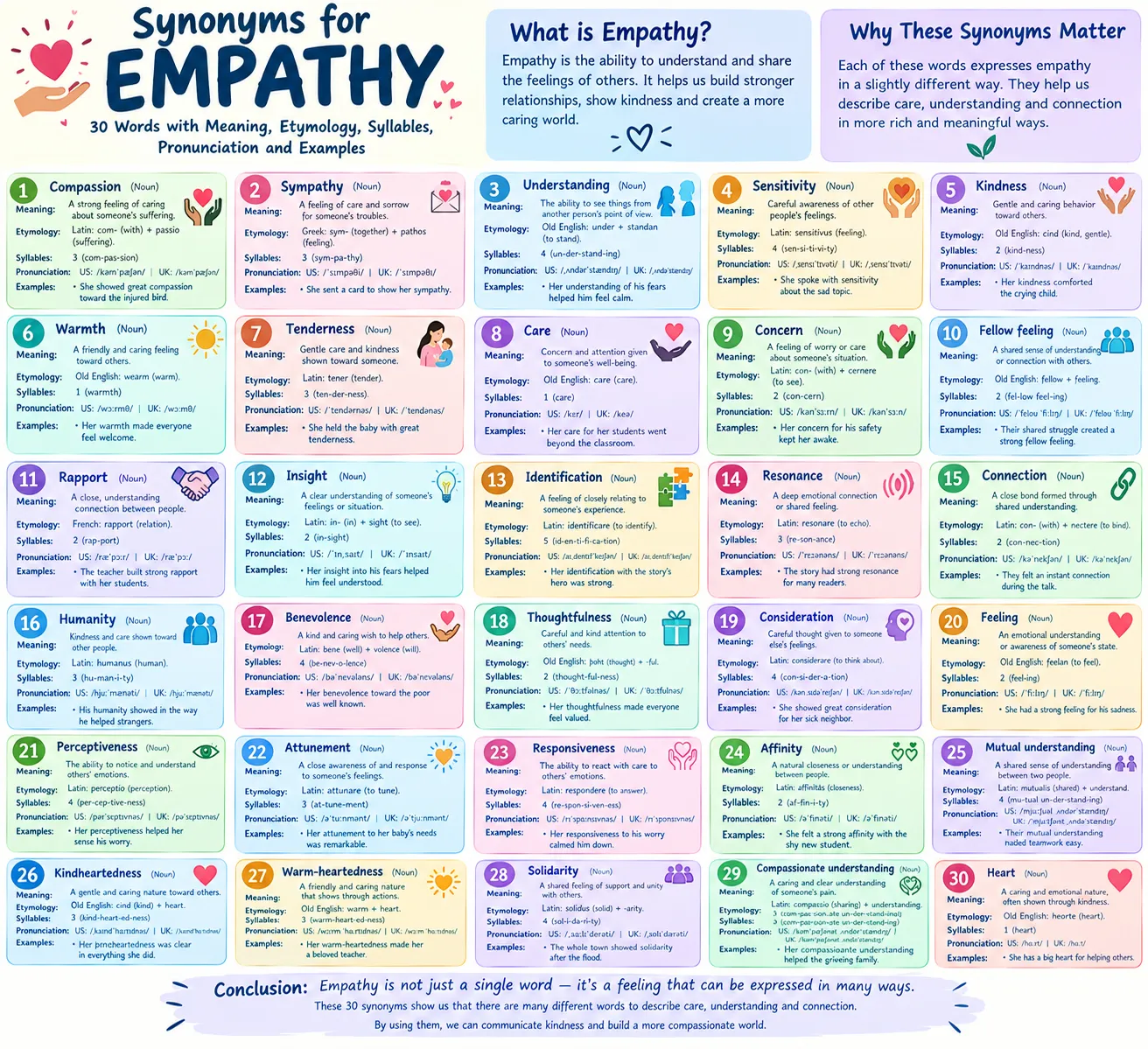
Synonyms for Empathy
1. Compassion (Noun) — US: /kəmˈpæʃən/ | UK: /kəmˈpæʃən/
Meaning: A strong feeling of caring about someone’s suffering. Examples:
- She showed great compassion toward the injured bird.
- His compassion for others made him a kind doctor.
2. Sympathy (Noun) — US: /ˈsɪmpəθi/ | UK: /ˈsɪmpəθi/
Meaning: A feeling of care and sorrow for someone’s troubles. Examples:
- She sent a card to show her sympathy.
- His sympathy for the lost puppy touched everyone.
3. Understanding (Noun) — US: /ˌʌndərˈstændɪŋ/ | UK: /ˌʌndəˈstændɪŋ/
Meaning: The ability to see things from another person’s point of view. Examples:
- Her understanding of his fears helped him feel calm.
- Teachers need understanding when students make mistakes.
4. Sensitivity (Noun) — US: /ˌsɛnsɪˈtɪvəti/ | UK: /ˌsɛnsɪˈtɪvəti/
Meaning: Careful awareness of other people’s feelings. Examples:
- She spoke with sensitivity about the sad topic.
- His sensitivity toward others made him a good listener.
5. Kindness (Noun) — US: /ˈkaɪndnəs/ | UK: /ˈkaɪndnəs/
Meaning: Gentle and caring behavior toward others. Examples:
- Her kindness comforted the crying child.
- Small acts of kindness can brighten someone’s day.
6. Warmth (Noun) — US: /wɔːrmθ/ | UK: /wɔːmθ/
Meaning: A friendly and caring feeling toward others. Examples:
- Her warmth made everyone feel welcome.
- He greeted the guests with real warmth.
7. Tenderness (Noun) — US: /ˈtɛndərnəs/ | UK: /ˈtɛndənəs/
Meaning: Gentle care and kindness shown toward someone. Examples:
- She held the baby with great tenderness.
- His tenderness toward his aging parents was clear.
8. Care (Noun) — US: /kɛr/ | UK: /keə/
Meaning: Concern and attention given to someone’s well-being. Examples:
- Her care for her students went beyond the classroom.
- He showed real care when his friend was sick.
9. Concern (Noun) — US: /kənˈsɜːrn/ | UK: /kənˈsɜːn/
Meaning: A feeling of worry or care about someone’s situation. Examples:
- Her concern for his safety kept her awake.
- He expressed deep concern for the flood victims.
10. Fellow feeling (Noun) — US: /ˈfɛloʊ ˈfiːlɪŋ/ | UK: /ˈfɛləʊ ˈfiːlɪŋ/
Meaning: A shared sense of understanding or connection with others. Examples:
- Their shared struggle created a strong fellow feeling.
- The team felt a fellow feeling after the tough game.
11. Rapport (Noun) — US: /ræˈpɔːr/ | UK: /ræˈpɔː/
Meaning: A close, understanding connection between people. Examples:
- The teacher built strong rapport with her students.
- Their rapport made teamwork easy and enjoyable.
12. Insight (Noun) — US: /ˈɪnˌsaɪt/ | UK: /ˈɪnsaɪt/
Meaning: A clear understanding of someone’s feelings or situation. Examples:
- Her insight into his fears helped him feel understood.
- The counselor’s insight guided the whole family.
13. Identification (Noun) — US: /aɪˌdɛntɪfɪˈkeɪʃən/ | UK: /aɪˌdɛntɪfɪˈkeɪʃən/
Meaning: A feeling of closely relating to someone’s experience. Examples:
- Her identification with the story’s hero was strong.
- Their shared past created deep identification between them.
14. Resonance (Noun) — US: /ˈrɛzənəns/ | UK: /ˈrɛzənəns/
Meaning: A deep emotional connection or shared feeling. Examples:
- The story had strong resonance for many readers.
- Her words carried real emotional resonance.
15. Connection (Noun) — US: /kəˈnɛkʃən/ | UK: /kəˈnɛkʃən/
Meaning: A close bond formed through shared understanding. Examples:
- They felt an instant connection during the talk.
- Her connection with the children was easy to see.
16. Humanity (Noun) — US: /hjuːˈmænəti/ | UK: /hjuːˈmænəti/
Meaning: Kindness and care shown toward other people. Examples:
- His humanity showed in the way he helped strangers.
- The volunteers acted with great humanity during the crisis.
17. Benevolence (Noun) — US: /bəˈnɛvələns/ | UK: /bəˈnɛvələns/
Meaning: A kind and caring wish to help others. Examples:
- Her benevolence toward the people with low income was well known.
- The charity’s benevolence changed many lives.
18. Thoughtfulness (Noun) — US: /ˈθɔːtfəlnəs/ | UK: /ˈθɔːtfʊlnəs/
Meaning: Careful and kind attention to others’ needs. Examples:
- Her thoughtfulness made everyone feel valued.
- His thoughtfulness during the tough time meant a lot.
19. Consideration (Noun) — US: /kənˌsɪdəˈreɪʃən/ | UK: /kənˌsɪdəˈreɪʃən/
Meaning: Careful thought given to someone else’s feelings. Examples:
- She showed great consideration for her sick neighbor.
- His consideration made the meeting go smoothly.
20. Feeling (Noun) — US: /ˈfiːlɪŋ/ | UK: /ˈfiːlɪŋ/
Meaning: An emotional understanding or awareness of someone’s state. Examples:
- She had a strong feeling for his sadness.
- His feeling for others made him a caring friend.
21. Perceptiveness (Noun) — US: /pərˈsɛptɪvnəs/ | UK: /pəˈsɛptɪvnəs/
Meaning: The ability to notice and understand others’ emotions. Examples:
- Her perceptiveness helped her sense his worry.
- The counselor’s perceptiveness guided the discussion.
22. Attunement (Noun) — US: /əˈtuːnmənt/ | UK: /əˈtjuːnmənt/
Meaning: A close awareness of and response to someone’s feelings. Examples:
- Her attunement to her baby’s needs was remarkable.
- The therapist’s attunement helped the client feel heard.
23. Responsiveness (Noun) — US: /rɪˈspɑːnsɪvnəs/ | UK: /rɪˈspɒnsɪvnəs/
Meaning: The ability to react with care to others’ emotions. Examples:
- Her responsiveness to his worry calmed him down.
- Good teachers show responsiveness to their students’ needs.
24. Affinity (Noun) — US: /əˈfɪnəti/ | UK: /əˈfɪnəti/
Meaning: A natural closeness or understanding between people. Examples:
- She felt a strong affinity with the shy new student.
- Their shared affinity made the friendship grow fast.
25. Mutual understanding (Noun) — US: /ˈmjuːtʃuəl ˌʌndərˈstændɪŋ/ | UK: /ˈmjuːtʃuəl ˌʌndəˈstændɪŋ/
Meaning: A shared sense of understanding between two people. Examples:
- Their mutual understanding made teamwork easy.
- The talk helped build mutual understanding between the groups.
26. Kindheartedness (Noun) — US: /ˌkaɪndˈhɑːrtɪdnəs/ | UK: /ˌkaɪndˈhɑːtɪdnəs/
Meaning: A gentle and caring nature toward others. Examples:
- Her kindheartedness was clear in everything she did.
- His kindheartedness earned him many loyal friends.
27. Warm-heartedness (Noun) — US: /wɔːrm ˈhɑːrtɪdnəs/ | UK: /wɔːm ˈhɑːtɪdnəs/
Meaning: A friendly and caring nature that shows through actions. Examples:
- Her warm-heartedness made her a beloved teacher.
- His warm-heartedness comforted the nervous new students.
28. Solidarity (Noun) — US: /ˌsɑːlɪˈdɛrəti/ | UK: /ˌsɒlɪˈdærəti/
Meaning: A shared feeling of support and unity with others. Examples:
- The whole town showed solidarity after the flood.
- Their solidarity helped the workers through hard times.
29. Compassionate understanding (Noun) — US: /kəmˈpæʃənət ˌʌndərˈstændɪŋ/ | UK: /kəmˈpæʃənət ˌʌndəˈstændɪŋ/
Meaning: A caring and clear understanding of someone’s pain. Examples:
- Her compassionate understanding helped the grieving family.
- The nurse offered compassionate understanding to every patient.
30. Heart (Noun) — US: /hɑːrt/ | UK: /hɑːt/
Meaning: A caring and emotional nature, often shown through kindness. Examples:
- She has a big heart for helping others.
- His heart went out to the struggling family.
Prototype Meaning
When people hear the word empathy, they often think of someone who deeply understands. And also shares another person’s feelings, especially during hard or sad moments. It brings to mind gentle listening, comforting words, and quiet acts of kindness. This word carries a warm feeling of connection between people.
Prototype Categorization
- Deep understanding: understanding, insight, perceptiveness, attunement
- Caring feelings: compassion, sympathy, care, concern, tenderness
- Kind and gentle nature: kindness, kindheartedness, warm-heartedness, warmth
- Shared connection: rapport, connection, affinity, fellow feeling, mutual understanding
- General goodwill: humanity, benevolence, solidarity, thoughtfulness, consideration
- Emotional response: feeling, resonance, identification, responsiveness, compassionate understanding, heart, sensitivity
Antonyms of Empathy
- Indifference
- Coldness
- Insensitivity
- Apathy
- Callousness
Short Questions and Answers
- What does empathy mean?
- It means the ability to understand and share another person’s feelings.
- When should empathy be used?
- Use it when describing kindness, understanding, or emotional connection with others.
- Is empathy positive or negative?
- It is almost always positive, showing warmth, kindness, and care for others.
- How is it different from similar words?
- “Sympathy” often means feeling sorry for someone. “Empathy” goes deeper, meaning you truly understand and share their feelings.
Conclusion
Synonyms for empathy helps you build a richer, more caring vocabulary. It strengthens your writing by giving you ways to describe emotional connection. Synonyms for empathy also helps you avoid repeating the same word again and again. Which keeps your writing warmer and more expressive. Most importantly, learning new synonyms for empathy builds your confidence as an English speaker and writer. Try learning one new word from this list each day, and watch your vocabulary grow steadily over time.

I’m Zahid Abbas, an educator, researcher, and digital publishing strategist with a passion for linguistics, grammar, and clear communication. As a content creator and SEO specialist, I craft research-driven, reader-focused content that empowers learners and makes knowledge accessible worldwide.