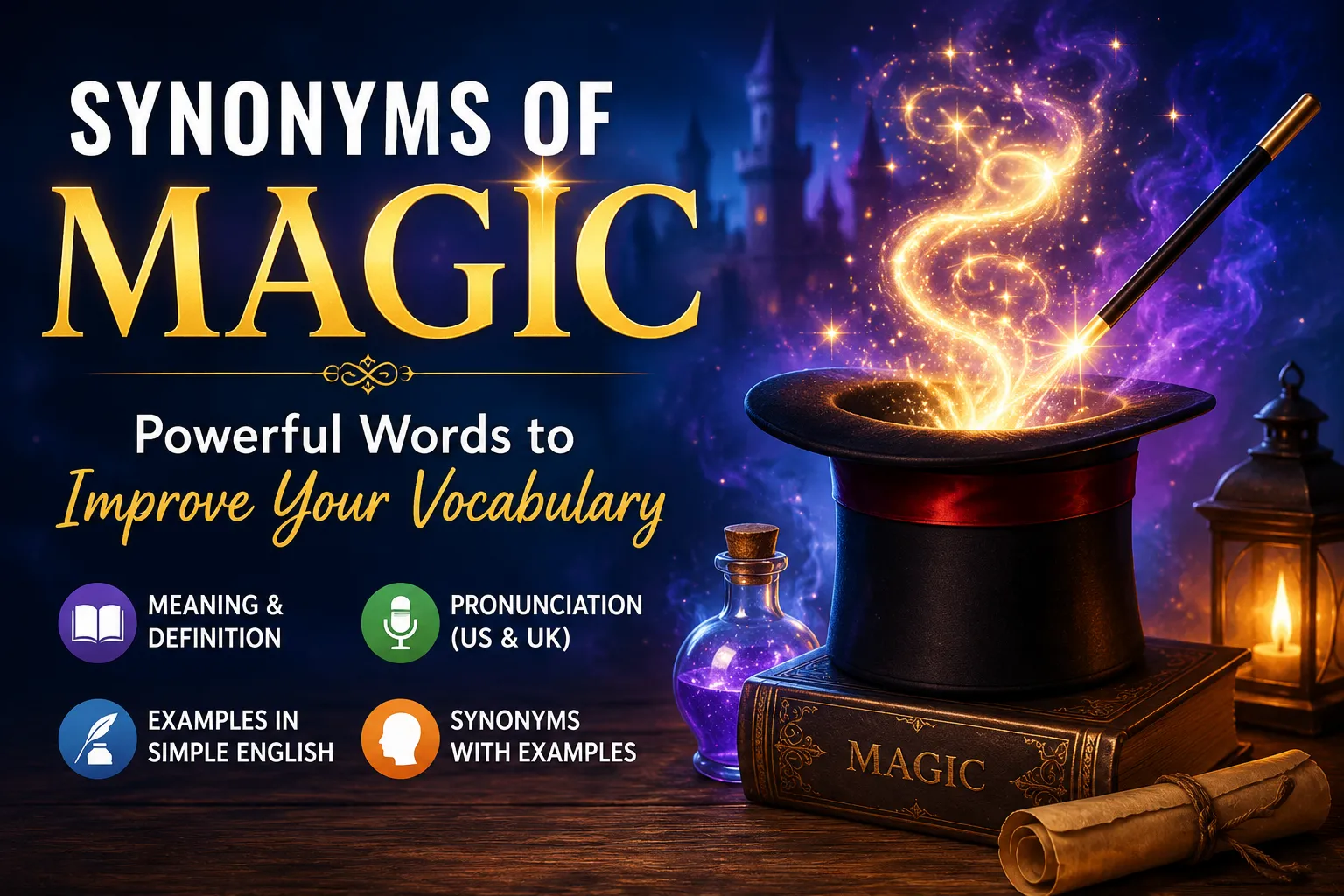
Magic means the power to make impossible things happen through special or supernatural forces. Imagine a child watching a magician pull a rabbit from a hat. The child smiles with surprise and says, “That is magic!” People also use this word when something feels wonderful, beautiful, or beyond normal. A sunset, a great song, or a kind act can all feel like magic.
Magic is a common English word in books, movies, daily conversations, and creative writing. Learning its synonyms helps English learners, students, and content writers express ideas with better accuracy and variety. It also makes writing more interesting and avoids repeating the same word. In this article, you will learn the meaning of magic, its definition, pronunciation, grammar, history, semantic categories, and useful synonyms with clear examples in simple English.
Meaning of Magic
Definition
Magic (Noun, Adjective):
As a noun, magic is the power to make impossible or supernatural things happen.
As an adjective, magic describes something wonderful, special, or seemingly impossible.
Examples
- The children loved the magic in the fairy tale.
- Her smile had a magic effect on everyone.
Connotative Meaning
- Positive tone: Wonder, beauty, joy, mystery, excitement, imagination, hope.
- Negative tone: Trickery, dark powers, danger, deception, evil spells.
- Neutral tone: Stage performances, fantasy stories, cultural beliefs, entertainment.
Etymology
- Source language: Old French and Latin.
- Old French word: magique.
- Latin word: magica.
- Earlier Greek word: magikē.
- Original meaning: “The art or power of magicians.”
Short History
Old English (450–1100):
- The exact word magic was not common. People used words linked to sorcery, charms, and enchantment.
Middle English (1100–1500):
- The word entered English through Old French after the Norman influence.
Modern English (1500–Present):
- The word became common in literature, science fiction, fantasy, entertainment, and everyday speech. Today, it also describes anything wonderful or unforgettable.
Pronunciation (US & UK – IPA)
US: /ˈmædʒɪk/
UK: /ˈmædʒɪk/
Syllables
mag-ic
Affixation Pattern of Magic
Root: mag-
Prefix: None
Suffix: -ic
Word Formation
Common words formed from magic include:
SpeechmagicNounmagicAdjectivemagicalAdjectivemagicallyAdverbmagicianNounmagiciansNoun (Plural)magician’sNoun (Possessive)magiclessAdjective (Rare)
Synonyms of Magic
1. Enchantment (Noun) — US /ɪnˈtʃæntmənt/ | UK /ɪnˈtʃɑːntmənt/
Meaning: A special power or feeling that fills people with wonder or delight.
Examples:
- The old forest was full of enchantment.
- The movie created a feeling of enchantment for the audience.
2. Sorcery (Noun) — US /ˈsɔːrsəri/ | UK /ˈsɔːsəri/
Meaning: The use of supernatural powers, often through spells or rituals.
Examples:
- The story tells of ancient sorcery.
- Many legends speak about sorcery and mysterious powers.
3. Witchcraft (Noun) — US /ˈwɪtʃkræft/ | UK /ˈwɪtʃkrɑːft/
Meaning: The practice of using magical powers, usually connected with witches.
Examples:
- The villagers believed in witchcraft.
- The novel explores old stories about witchcraft.
4. Wizardry (Noun) — US /ˈwɪzərdri/ | UK /ˈwɪzədri/
Meaning: Great magical skill or amazing ability.
Examples:
- The young wizard learned powerful wizardry.
- His computer wizardry solved the problem quickly.
5. Mysticism (Noun) — US /ˈmɪstɪˌsɪzəm/ | UK /ˈmɪstɪsɪzəm/
Meaning: A belief in spiritual or hidden powers beyond normal understanding.
Examples:
- The book combines history with mysticism.
- Some cultures have a long tradition of mysticism.
6. Charm (Noun) — US /tʃɑːrm/ | UK /tʃɑːm/
Meaning: A special quality or magical power that attracts or delights people.
Examples:
- The old village has a timeless charm.
- The fairy used a charm to protect the prince.
7. Spell (Noun) — US /spel/ | UK /spel/
Meaning: A set of magical words believed to cause a special effect.
Examples:
- The witch cast a spell on the castle.
- The wizard broke the spell with a magic stone.
8. Incantation (Noun) — US /ˌɪnkænˈteɪʃən/ | UK /ˌɪnkænˈteɪʃən/
Meaning: A series of special words spoken to create a magical effect.
Examples:
- The magician whispered an ancient incantation.
- Every spell began with a long incantation.
9. Bewitchment (Noun) — US /bɪˈwɪtʃmənt/ | UK /bɪˈwɪtʃmənt/
Meaning: The state of being strongly attracted or magically controlled.
Examples:
- The audience watched the show in complete bewitchment.
- Her beauty seemed like a bewitchment to everyone.
10. Glamour (Noun) — US /ˈɡlæmər/ | UK /ˈɡlæmə/
Meaning: Great beauty, excitement, or an attractive magical quality.
Examples:
- The city is famous for its glamour.
- The old legend gave the queen an air of glamour.
11. Miracle (Noun) — US /ˈmɪrəkəl/ | UK /ˈmɪrəkəl/
Meaning: An amazing event that seems impossible and cannot be explained naturally.
Examples:
- Many people called his recovery a miracle.
- Finding the lost child safely was a miracle.
12. Wonder (Noun) — US /ˈwʌndər/ | UK /ˈwʌndə/
Meaning: A feeling of great surprise and admiration.
Examples:
- The children looked at the stars with wonder.
- The beautiful waterfall filled us with wonder.
13. Marvel (Noun) — US /ˈmɑːrvəl/ | UK /ˈmɑːvəl/
Meaning: Something that causes great surprise because it is excellent or unusual.
Examples:
- The bridge is an engineering marvel.
- Visitors admired the ancient temple as a marvel.
14. Mystique (Noun) — US /mɪˈstiːk/ | UK /mɪˈstiːk/
Meaning: A mysterious quality that makes someone or something interesting.
Examples:
- The old castle has a unique mystique.
- Her quiet nature added to her mystique.
15. Illusion (Noun) — US /ɪˈluːʒən/ | UK /ɪˈluːʒən/
Meaning: Something that appears real but is not actually real.
Examples:
- The magician created the illusion of flying.
- The mirror produced an amazing illusion.
16. Prestidigitation (Noun) — US /ˌprɛstɪˌdɪdʒɪˈteɪʃən/ | UK /ˌprestɪˌdɪdʒɪˈteɪʃən/
Meaning: The skill of performing magic tricks with quick hand movements.
Examples:
- The magician amazed everyone with his prestidigitation.
- Years of practice improved her prestidigitation.
17. Sleight of Hand (Noun Phrase) — US /ˌslaɪt əv ˈhænd/ | UK /ˌslaɪt əv ˈhænd/
Meaning: Skillful hand movements used to perform magic tricks.
Examples:
- The coin disappeared through sleight of hand.
- Good sleight of hand fooled the audience.
18. Necromancy (Noun) — US /ˈnɛkrəˌmænsi/ | UK /ˈnekrəmænsi/
Meaning: A form of magic that is believed to communicate with the dead.
Examples:
- The old story mentions forbidden necromancy.
- The wizard was accused of practicing necromancy.
19. Divination (Noun) — US /ˌdɪvəˈneɪʃən/ | UK /ˌdɪvɪˈneɪʃən/
Meaning: The practice of trying to discover hidden knowledge or the future through supernatural methods.
Examples:
- Ancient cultures practiced divination.
- She studied divination in old books.
20. Alchemy (Noun) — US /ˈælkəmi/ | UK /ˈælkəmi/
Meaning: An ancient practice that mixed science, philosophy, and magical ideas.
Examples:
- Alchemy inspired many old legends.
- The scholar spent years studying alchemy.
21. Supernatural (Adjective) — US /ˌsuːpərˈnætʃərəl/ | UK /ˌsuːpənˈnætʃərəl/
Meaning: Related to powers or events beyond the natural world.
Examples:
- The film tells a supernatural story.
- Many people enjoy supernatural novels.
22. Mystical (Adjective) — US /ˈmɪstɪkəl/ | UK /ˈmɪstɪkəl/
Meaning: Connected with spiritual mystery or hidden powers.
Examples:
- The mountain has a mystical beauty.
- They visited a mystical forest.
23. Enchanted (Adjective) — US /ɪnˈtʃæntɪd/ | UK /ɪnˈtʃɑːntɪd/
Meaning: Filled with magic or causing great delight.
Examples:
- The children explored an enchanted garden.
- She felt enchanted by the beautiful music.
24. Arcane (Adjective) — US /ɑːrˈkeɪn/ | UK /ɑːˈkeɪn/
Meaning: Known by only a few people because it is mysterious or secret.
Examples:
- The wizard protected arcane knowledge.
- The book explained many arcane symbols.
25. Occult (Adjective, Noun) — US /əˈkʌlt/ | UK /əˈkʌlt/
Meaning: Connected with secret or supernatural powers.
Examples:
- The museum displayed occult symbols.
- The novel explores occult traditions from ancient times.
26. Sorcerous (Adjective) — US /ˈsɔːrsərəs/ | UK /ˈsɔːsərəs/
Meaning: Having the qualities or powers of a sorcerer.
Examples:
- The hero entered a sorcerous kingdom.
- The old book described sorcerous rituals.
27. Bewitching (Adjective) — US /bɪˈwɪtʃɪŋ/ | UK /bɪˈwɪtʃɪŋ/
Meaning: Extremely attractive, charming, or delightful.
Examples:
- She wore a bewitching smile.
- The garden looked bewitching in spring.
28. Mesmerizing (Adjective) — US /ˈmezməraɪzɪŋ/ | UK /ˈmezməraɪzɪŋ/
Meaning: So beautiful or interesting that it holds your full attention.
Examples:
- The dancer gave a mesmerizing performance.
- We watched the mesmerizing waves for hours.
29. Spellbinding (Adjective) — US /ˈspelˌbaɪndɪŋ/ | UK /ˈspelˌbaɪndɪŋ/
Meaning: So exciting or beautiful that it keeps everyone’s attention.
Examples:
- The actor gave a spellbinding performance.
- The mountain view was spellbinding.
30. Fantastic (Adjective)
US: /fænˈtæstɪk/
UK: /fænˈtæstɪk/
Meaning: Extremely good, wonderful, or seeming like something from fantasy.
Examples:
- We had a fantastic holiday.
- The artist created a fantastic world in the story.
Prototype Meaning
The most common meaning of magic is the power to make impossible things happen through supernatural forces. When people hear the word, they often imagine magicians, wizards, fairy tales, spells, enchanted forests, and magical creatures. In everyday English, magic also describes something amazing, joyful, or unforgettable, such as a beautiful sunset, a perfect performance, or a special moment with loved ones.
Prototype Categorization
Supernatural Powers
- Sorcery
- Witchcraft
- Wizardry
- Necromancy
- Divination
- Alchemy
- Occult
- Sorcerous
Magic Spells and Actions
- Spell
- Incantation
- Enchantment
- Sleight of Hand
- Prestidigitation
Mystery and Hidden Knowledge
- Mysticism
- Mystique
- Arcane
- Mystical
- Supernatural
Beauty and Attraction
- Charm
- Glamour
- Bewitchment
- Bewitching
Wonder and Amazement
- Miracle
- Wonder
- Marvel
- Mesmerizing
- Spellbinding
- Fantastic
- Illusion
Antonyms of Magic
- Reality
- Truth
- Science
- Fact
- Nature
- Normality
- Ordinary
- Logic
- Reason
- Certainty
Short Questions and Answers
- What does magic mean?
- Magic means the power to do impossible or supernatural things. It can also describe something wonderful or amazing.
- When should magic be used?
- Use magic when talking about supernatural powers, fantasy stories, stage performances, or special moments that feel extraordinary.
- Is magic positive or negative?
- It depends on the context. It is usually positive when it means wonder or beauty. It can be negative when it refers to dark or harmful supernatural powers.
- How is magic different from similar words?
- Magic is a broad word. Sorcery and witchcraft usually refer to supernatural practices. Enchantment suggests wonder or delight. Illusion refers to a trick that only appears to be real, while miracle often describes an extraordinary event believed to come from divine power.
Conclusion
Learning the Synonyms of Magic is a simple way to build a stronger English vocabulary. Different synonyms help you express ideas with greater accuracy and make your writing more interesting. They also improve speaking by giving you more natural word choices for different situations. Using a variety of words helps you avoid repetition and keeps your sentences fresh and engaging. Understanding meanings, pronunciation, history, tone, and usage also increases your confidence in English. Make vocabulary learning a daily habit. Practice one new synonym each day, use it in your own sentences, and review it often. Over time, your reading, writing, speaking, and overall communication skills will become much stronger.

I’m Zahid Abbas, an educator, researcher, and digital publishing strategist with a passion for linguistics, grammar, and clear communication. As a content creator and SEO specialist, I craft research-driven, reader-focused content that empowers learners and makes knowledge accessible worldwide.