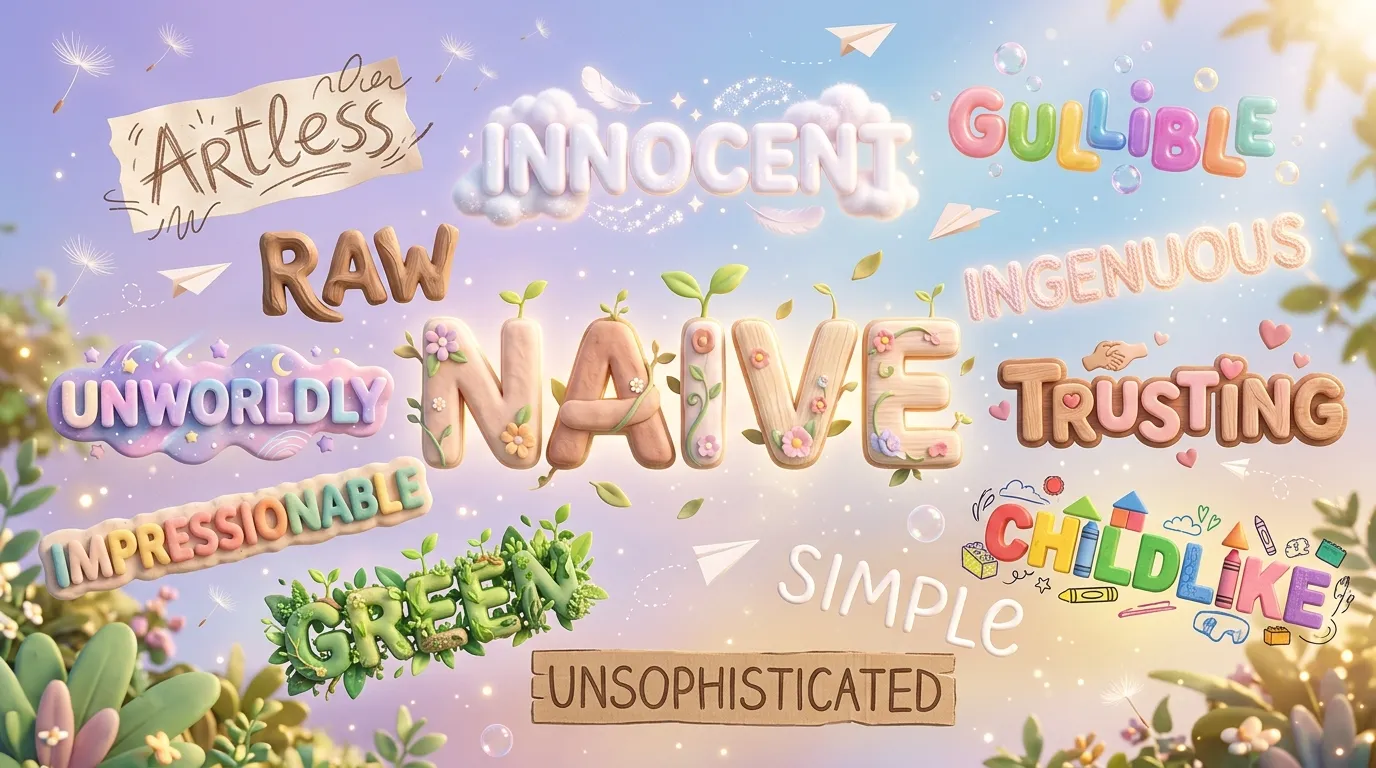
Naive means having little experience and trusting people or things too easily. Imagine a young person who gets a message saying, “You won a free phone!” He believes it at once and shares his personal details. This person may be naive because he does not know that the message could be a scam. The word naive is common in daily English. We use it to talk about people who lack experience or do not understand how things really work. Learning synonyms is useful for English learners and content writers because it helps them use better and more exact words. In this article, you will learn the meaning of naive, its 30 synonyms, examples, grammar, pronunciation, history, word formation, and semantic groups. You will also learn how to choose the right synonym in different situations.
Meaning of Naive
Definition
Naive (adjective): A person who is naive has little experience and trusts people or things too easily.
Examples
- The naive boy believed the false story.
- She was naive to think that everyone was honest.
Connotative Meaning
Connotation (the feeling or idea that a word suggests beyond its basic meaning).
- Positive tone: Innocent, simple, open, and trusting.
- Negative tone: Inexperienced, foolish, or too trusting.
- Neutral tone: Lacking experience or knowledge.
Etymology
- Source: Naive comes from French naïf or naïve.
- Original meaning: Natural, simple, innocent, or without much experience.
- The French word came from Latin nativus, meaning “natural” or “inborn.”
Short History
- Old English (450–1100): The modern word naive was not used in Old English. Similar ideas were expressed with words related to innocence, youth, and lack of wisdom.
- Middle English (1100–1500): English used words such as innocent and simple for related ideas.
- Modern English (1500–Present): Naive entered English from French and became a common word for someone who lacks experience or judgment.
Read more about:https://synonymhunting.com/synonyms-for-remember/
Pronunciation
US: /naɪˈiːv/ UK: /naɪˈiːv/
Syllables
na-ive
Affixation Pattern of Naive
- Root: naive
- Prefix: None
- Suffix: None
- Word formation: Naive is mainly used as an adjective. Related forms include naively (adverb), naivety (noun), and naivete (noun).
Synonyms of Naive
1. Innocent (Adjective) — /ˈɪnəsənt/ | /ˈɪnəsənt/
Meaning: Not knowing about bad or harmful things.
Examples:
- The innocent child trusted the stranger.
- She had an innocent view of the world.
2. Inexperienced (Adjective) — /ˌɪnɪkˈspɪriənst/ | /ˌɪnɪkˈspɪəriənst/
Meaning: Having little experience in something.
Examples:
- The inexperienced worker made a small mistake.
- He was inexperienced in business.
3. Unsophisticated (Adjective) — /ˌʌnsəˈfɪstəkeɪtɪd/ | /ˌʌnsəˈfɪstɪkeɪtɪd/
Meaning: Lacking knowledge of complex social or practical matters.
Examples:
- He was unsophisticated in business matters.
- Her unsophisticated view made her easy to fool.
4. Gullible (Adjective) — /ˈɡʌləbəl/ | /ˈɡʌləbəl/
Meaning: Easy to trick because you believe things too quickly.
Examples:
- The gullible man believed the fake offer.
- Gullible people can become victims of scams.
5. Trusting (Adjective) — /ˈtrʌstɪŋ/ | /ˈtrʌstɪŋ/
Meaning: Ready to believe that other people are honest.
Examples:
- She is very trusting with new friends.
- His trusting nature sometimes causes problems.
6. Credulous (Adjective) — /ˈkrɛdjələs/ | /ˈkrɛdjʊləs/
Meaning: Too ready to believe something without proof.
Examples:
- The credulous man believed the strange claim.
- A credulous reader may accept false news.
7. Simple (Adjective) — /ˈsɪmpəl/ | /ˈsɪmpəl/
Meaning: Not showing much knowledge or experience.
Examples:
- His simple view of business was not realistic.
- She had a simple idea about how money worked.
8. Unsuspecting (Adjective) — /ˌʌnsəˈspɛktɪŋ/ | /ˌʌnsəˈspɛktɪŋ/
Meaning: Not expecting something bad or dishonest.
Examples:
- The unsuspecting buyer paid the fake seller.
- The scam targeted unsuspecting users.
9. Childlike (Adjective) — /ˈtʃaɪldlaɪk/ | /ˈtʃaɪldlaɪk/
Meaning: Having qualities like a child, such as trust or wonder.
Examples:
- He has a childlike trust in people.
- Her childlike excitement was easy to see.
10. Unworldly (Adjective) — /ʌnˈwɜrldli/ | /ʌnˈwɜːldli/
Meaning: Not having much knowledge of real life.
Examples:
- His unworldly nature made him easy to deceive.
- She seemed unworldly and very trusting.
11. Green (Adjective) — /ɡriːn/ | /ɡriːn/
Meaning: Lacking experience, especially in work or business.
Examples:
- The green worker needed more training.
- He was still green in the business world.
12. Unschooled (Adjective) — /ʌnˈskuːld/ | /ʌnˈskuːld/
Meaning: Lacking education or knowledge in a particular area.
Examples:
- He was unschooled in financial matters.
- Her unschooled opinion came from limited experience.
13. Unworldly-wise (Adjective) — /ʌnˈwɜrldli waɪz/ | /ʌnˈwɜːldli waɪz/
Meaning: Lacking practical knowledge of the world.
Examples:
- His unworldly-wise attitude caused problems.
- She was young and unworldly-wise.
14. Artless (Adjective) — /ˈɑːrtləs/ | /ˈɑːtləs/
Meaning: Simple and without tricks or deceit.
Examples:
- His artless answer sounded honest.
- She gave an artless smile.
15. Unaffected (Adjective) — /ˌʌnəˈfɛktɪd/ | /ˌʌnəˈfɛktɪd/
Meaning: Natural and not changed by outside influence.
Examples:
- Her unaffected manner made people trust her.
- He gave an unaffected response.
16. Open (Adjective) — /ˈoʊpən/ | /ˈəʊpən/
Meaning: Willing to trust or accept people and ideas.
Examples:
- He is open with people he meets.
- Her open nature made her easy to approach.
17. Unsuspecting (Adjective) — /ˌʌnsəˈspɛktɪŋ/ | /ˌʌnsəˈspɛktɪŋ/
Meaning: Not aware that something bad may happen.
Examples:
- The unsuspecting customer clicked the link.
- The thief approached an unsuspecting traveler.
18. Uncritical (Adjective) — /ʌnˈkrɪtɪkəl/ | /ʌnˈkrɪtɪkəl/
Meaning: Accepting ideas without questioning them.
Examples:
- His uncritical support surprised everyone.
- An uncritical reader may believe every claim.
19. Unquestioning (Adjective) — /ʌnˈkwɛstʃənɪŋ/ | /ʌnˈkwestʃənɪŋ/
Meaning: Accepting something without asking questions.
Examples:
- His unquestioning trust was risky.
- She showed unquestioning faith in the leader.
20. Credulous (Adjective) — /ˈkrɛdjələs/ | /ˈkrɛdjʊləs/
Meaning: Too willing to believe something.
Examples:
- The credulous customer believed the advertisement.
- The story fooled a credulous audience.
21. Greenhorn (Noun) — /ˈɡriːnhɔːrn/ | /ˈɡriːnhɔːn/
Meaning: A person with little experience.
Examples:
- The new worker was a greenhorn.
- As a greenhorn, he needed help.
22. Newcomer (Noun) — /ˈnuːˌkʌmər/ | /ˈnjuːˌkʌmə/
Meaning: A person who is new to a place or activity.
Examples:
- The newcomer knew little about the industry.
- As a newcomer, she asked many questions.
23. Beginner (Noun) — /bɪˈɡɪnər/ | /bɪˈɡɪnə/
Meaning: A person who is starting to learn something.
Examples:
- He is a beginner at investing.
- The course is perfect for beginners.
24. Tyro (Noun) — /ˈtaɪroʊ/ | /ˈtaɪərəʊ/
Meaning: A person who is new and has little experience.
Examples:
- The young tyro needed guidance.
- The tyro made several simple mistakes.
25. Tenderfoot (Noun) — /ˈtɛndərfʊt/ | /ˈtendəfʊt/
Meaning: A person who lacks experience.
Examples:
- The tenderfoot needed help on the trip.
- The new player was a tenderfoot.
26. Novice (Noun) — /ˈnɑːvɪs/ | /ˈnɒvɪs/
Meaning: A person who is new to a skill or activity.
Examples:
- She is a novice in photography.
- The novice needed more practice.
27. Unseasoned (Adjective) — /ʌnˈsiːzənd/ | /ʌnˈsiːzənd/
Meaning: Not yet experienced or skilled.
Examples:
- The unseasoned manager needed support.
- He was an unseasoned employee.
28. Unsophisticated (Adjective) — /ˌʌnsəˈfɪstəkeɪtɪd/ | /ˌʌnsəˈfɪstɪkeɪtɪd/
Meaning: Not experienced with complex ideas or situations.
Examples:
- The buyer was unsophisticated in finance.
- His unsophisticated approach failed.
29. Greenish (Adjective) — /ˈɡriːnɪʃ/ | /ˈɡriːnɪʃ/
Meaning: Showing a small amount of inexperience.
Examples:
- His greenish approach showed that he was new.
- The team had a greenish attitude toward the task.
30. Uninitiated (Adjective) — /ˌʌnɪˈnɪʃieɪtɪd/ | /ˌʌnɪˈnɪʃiətɪd/
Meaning: Not having special knowledge or experience of something.
Examples:
- The guide was written for the uninitiated reader.
- An uninitiated person may find the topic difficult.
Prototype Meaning
The most typical meaning of naive is someone who has little experience and trusts others too easily. When people hear this word, they often imagine a person who is innocent, new to a situation, or unable to see a hidden problem. The word can sound kind when it means innocent, but it can also sound negative when it suggests poor judgment.
Prototype Categorization
- Innocence and trust: innocent, trusting, childlike, artless, open.
- Lack of experience: inexperienced, green, novice, beginner, greenhorn, tyro.
- Easy to deceive: gullible, credulous, unsuspecting, uncritical, unquestioning.
- Lack of world knowledge: unsophisticated, unworldly, uninitiated, unseasoned.
- Simple or natural behavior: simple, unaffected, artless.
These groups help writers choose the right synonym. For example, innocent can sound kind, while gullible often sounds negative. Inexperienced is useful when talking about work or skills. Choosing the right word makes writing clearer and more natural.
Antonyms of Naive
- Experienced
- Wise
- Sophisticated
- Knowledgeable
- Worldly
- Shrewd
- Cautious
- Skeptical
- Clever
- Streetwise
Short Questions and Answers
- What does naive mean? Naive means having little experience and trusting people or things too easily.
- When should naive be used? Use naive when describing someone who does not have enough experience or knowledge to understand a situation well.
- Is naive positive or negative? It depends on the context. It can mean innocent and trusting, but it can also suggest that someone is too easy to fool.
Conclusion
Learning the word naive and its synonyms can make your English stronger and more useful. Words such as innocent, inexperienced, trusting, gullible, credulous, unsophisticated, novice, and uninitiated help you describe different types of limited experience or knowledge. Each synonym has its own tone and use. Some sound kind, while others show a clear weakness in judgment. Understanding these small differences helps English learners speak with more confidence and write with greater accuracy. It also helps content writers avoid using the same word again and again. Try to learn one new synonym each day and use it in your own sentence. With regular practice, your vocabulary, writing, speaking, and overall English confidence will improve.

I’m Zahid Abbas, an educator, researcher, and digital publishing strategist with a passion for linguistics, grammar, and clear communication. As a content creator and SEO specialist, I craft research-driven, reader-focused content that empowers learners and makes knowledge accessible worldwide.










