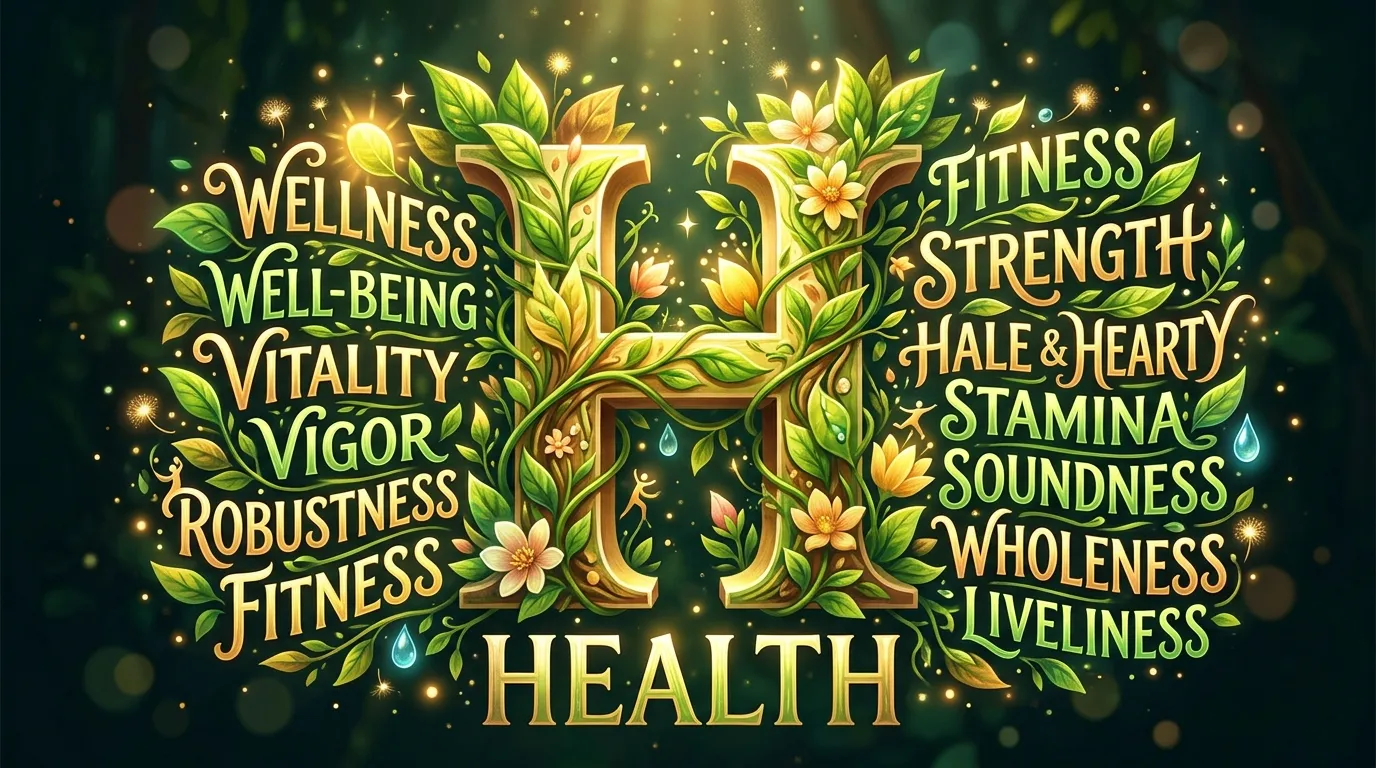
Health means the condition of a person’s body or mind. When someone eats well, sleeps enough, and stays active, we often say that the person has good health. For example, Ali starts his day with a healthy breakfast and a short walk because he wants to improve his health.
Learning synonyms of health helps English learners use more varied and natural words. It also helps content writers make their articles clearer and less repetitive. In this guide, you will learn the meaning of health and 30 useful synonyms with simple examples.
Meaning of Health
Definition
Health (noun): the state of being physically and mentally well and free from illness or disease.
Examples
- Regular exercise can improve your health.
- Good health helps children learn and play actively.
Connotative Meaning
Connotation (the feeling or idea that a word suggests beyond its basic meaning):
- Positive tone: Health can suggest strength, energy, fitness, wellness, and a good quality of life.
- Neutral tone: Health can simply describe a person’s physical or mental condition without showing a strong feeling.
Etymology
- Source language: The word health comes from Old English hǣlth.
- Original meaning: It was linked to being whole, sound, or free from illness.
- Related root: It is related to the Old English word hāl, meaning whole or sound.
Short History
- Middle English (1100–1500): The word developed through forms such as helthe and continued to mean bodily well-being or freedom from disease.
- Modern English (1500–Present): Health expanded to include physical, mental, social, and general well-being.
Pronunciation (US & UK – IPA)
US: /helθ/ UK: /helθ/
Syllables
health
Health is a one-syllable word.
Affixation Pattern of Health
- Root: heal / hal- — connected with being whole or sound.
- Prefix: None.
- Suffix: -th — forms a noun expressing a state or condition.
Word Formation
Several words are formed from health, including:
- health — noun
- healthy — adjective
- healthily — adverb
- healthiness — noun
- healthcare — noun
- healthful — adjective
- healthfulness — noun
- unhealthy — adjective
- unhealthily — adverb
- unhealthiness — noun
Read more about:https://synonymhunting.com/synonyms-of-sustainable-2/
Synonyms of Health
1. Wellness (Noun) — US /ˈwɛlnəs/ | UK /ˈwɛlnəs/
Meaning: A state of good physical and mental well-being.
Examples:
- Exercise is important for your wellness.
- The center offers programs that support mental wellness.
2. Well-being (Noun) — US /ˌwɛl ˈbiːɪŋ/ | UK /ˌwɛl ˈbiːɪŋ/
Meaning: A state in which a person feels healthy, safe, and comfortable.
Examples:
- Sleep is important for your well-being.
- The school cares about the well-being of its students.
3. Fitness (Noun) — US /ˈfɪtnəs/ | UK /ˈfɪtnəs/
Meaning: The condition of being physically strong and active.
Examples:
- Running has improved my fitness.
- Physical fitness can reduce the risk of some diseases.
4. Vitality (Noun) — US /vaɪˈtæləti/ | UK /vaɪˈtæləti/
Meaning: Energy and strength that show a person is healthy and active.
Examples:
- She has remarkable vitality for her age.
- Fresh food can help restore your vitality.
5. Vigor (Noun) — US /ˈvɪɡər/ | UK /ˈvɪɡə/
Meaning: Physical or mental strength and energy.
Examples:
- He returned to work with renewed vigor.
- Regular exercise can help maintain physical vigor.
6. Wholeness (Noun) — US /ˈhoʊlnəs/ | UK /ˈhəʊlnəs/
Meaning: A state of being complete and healthy in body and mind.
Examples:
- Meditation helped her feel a sense of wholeness.
- Emotional wholeness can support a balanced life.
7. Soundness (Noun) — US /ˈsaʊndnəs/ | UK /ˈsaʊndnəs/
Meaning: The condition of being strong, healthy, or free from serious problems.
Examples:
- The doctor checked the soundness of his heart.
- Good nutrition supports physical soundness.
8. Robustness (Noun) — US /roʊˈbʌstnəs/ | UK /rəʊˈbʌstnəs/
Meaning: The quality of being strong and healthy.
Examples:
- A balanced diet may improve physical robustness.
- The athlete’s robustness helped him recover quickly.
9. Hardiness (Noun) — US /ˈhɑːrdinəs/ | UK /ˈhɑːdinəs/
Meaning: The ability to remain strong and healthy in difficult conditions.
Examples:
- Outdoor activities can build physical hardiness.
- His hardiness helped him work in cold weather.
10. Stamina (Noun) — US /ˈstæmənə/ | UK /ˈstæmɪnə/
Meaning: The physical or mental ability to continue an activity for a long time.
Examples:
- Swimming regularly improved her stamina.
- Good stamina helps runners finish long races.
11. Strength (Noun) — US /strɛŋθ/ | UK /streŋθ/
Meaning: The power or ability to stay physically or mentally strong.
Examples:
- Exercise can build muscle strength.
- She showed great mental strength during the challenge.
12. Condition (Noun) — US /kənˈdɪʃən/ | UK /kənˈdɪʃən/
Meaning: The physical or mental state of a person.
Examples:
- The doctor said that his condition was improving.
- Regular training keeps athletes in good condition.
13. Shape (Noun) — US /ʃeɪp/ | UK /ʃeɪp/
Meaning: A person’s level of physical fitness.
Examples:
- Walking every day keeps me in good shape.
- She joined a gym to get into better shape.
14. Fitness Level (Noun) — US /ˈfɪtnəs ˈlɛvəl/ | UK /ˈfɪtnəs ˈlevəl/
Meaning: The degree of physical fitness a person has.
Examples:
- His fitness level improved after six months of training.
- The coach tested each player’s fitness level.
15. Prosperity (Noun) — US /prɑːˈsperəti/ | UK /prɒˈsperəti/
Meaning: A state of doing well, sometimes including physical and social well-being.
Examples:
- Good health contributes to personal prosperity.
- The community works for the prosperity of its people.
16. Welfare (Noun) — US /ˈwɛlˌfɛr/ | UK /ˈwelfeə/
Meaning: The health, happiness, and general well-being of a person or group.
Examples:
- The program focuses on children’s welfare.
- The company cares about the welfare of its workers.
17. Condition of Health (Noun Phrase) — US /kənˈdɪʃən əv hɛlθ/ | UK /kənˈdɪʃən əv helθ/
Meaning: The overall physical or mental state of a person.
Examples:
- The doctor recorded her condition of health.
- His condition of health improved after treatment.
18. Sound Health (Noun Phrase) — US /saʊnd hɛlθ/ | UK /saʊnd helθ/
Meaning: A state of strong and good health.
Examples:
- Regular exercise can help people maintain sound health.
- The doctor said he was in sound health.
19. Good Shape (Noun Phrase) — US /ɡʊd ʃeɪp/ | UK /ɡʊd ʃeɪp/
Meaning: A state of being physically fit and healthy.
Examples:
- She is in good shape after months of training.
- Cycling keeps him in good shape.
20. Energy (Noun) — US /ˈɛnərdʒi/ | UK /ˈenədʒi/
Meaning: The physical or mental power needed to do things.
Examples:
- I have more energy after a good night’s sleep.
- Healthy food can give children more energy.
21. Livelihood (Noun) — US /ˈlaɪvlihʊd/ | UK /ˈlaɪvlihʊd/
Meaning: A way of supporting one’s life and basic needs.
Examples:
- Farming provides a livelihood for many families.
- A stable livelihood can support a person’s overall well-being.
22. Life (Noun) — US /laɪf/ | UK /laɪf/
Meaning: The state of being alive, especially when discussing health and living.
Examples:
- Exercise can add healthy years to your life.
- A balanced lifestyle can improve your quality of life.
23. Recovery (Noun) — US /rɪˈkʌvəri/ | UK /rɪˈkʌvəri/
Meaning: The process of becoming healthy again after illness or injury.
Examples:
- Rest helped speed up his recovery.
- She made a full recovery after surgery.
24. Healing (Noun) — US /ˈhiːlɪŋ/ | UK /ˈhiːlɪŋ/
Meaning: The process of becoming healthy or repairing an injury.
Examples:
- The wound is showing signs of healing.
- Rest is important for physical healing.
25. Resilience (Noun) — US /rɪˈzɪliəns/ | UK /rɪˈzɪliəns/
Meaning: The ability to recover from difficulty, stress, or illness.
Examples:
- Exercise can build physical and mental resilience.
- Her resilience helped her cope with a difficult period.
26. Constitution (Noun) — US /ˌkɑːnstəˈtuːʃən/ | UK /ˌkɒnstɪˈtjuːʃən/
Meaning: A person’s natural physical strength and health.
Examples:
- He has a strong constitution.
- Her healthy lifestyle supports her constitution.
27. Physical Fitness (Noun Phrase) — US /ˈfɪzɪkəl ˈfɪtnəs/ | UK /ˈfɪzɪkəl ˈfɪtnəs/
Meaning: The ability of the body to work well and stay active.
Examples:
- Walking is a simple way to improve physical fitness.
- Schools should encourage physical fitness.
28. Mental Wellness (Noun Phrase) — US /ˈmɛntl ˈwɛlnəs/ | UK /ˈmentl ˈwelnəs/
Meaning: A healthy and balanced state of mind.
Examples:
- Sleep is important for mental wellness.
- Talking to friends can support mental wellness.
29. Good Health (Noun Phrase) — US /ɡʊd hɛlθ/ | UK /ɡʊd helθ/
Meaning: A state of being physically and mentally healthy.
Examples:
- Fresh food can help you maintain good health.
- Exercise is important for good health.
30. Wellness State (Noun Phrase) — US /ˈwɛlnəs steɪt/ | UK /ˈwɛlnəs steɪt/
Meaning: A condition in which a person enjoys good overall well-being.
Examples:
- Exercise can support a positive wellness state.
- Good sleep helps maintain a healthy wellness state.
Prototype Meaning
The most typical meaning of health is the condition of a person’s body and mind. When people hear the word health, they usually think about being free from illness, having energy, eating nutritious food, exercising, sleeping well, and feeling mentally balanced. It can describe both physical and mental well-being.
Prototype Categorization
Synonyms of health can be grouped by their main meaning:
- General well-being: wellness, well-being, welfare, wholeness.
- Physical fitness: fitness, stamina, strength, physical fitness, shape.
- Energy and strength: vitality, vigor, energy, robustness, hardiness.
- Mental and emotional health: mental wellness, resilience, wholeness.
- Medical condition: condition, soundness, recovery, healing.
- Lifestyle and broader life quality: good health, good shape, livelihood, quality of life.
This categorization helps writers choose the best synonym for the exact situation. For example, fitness works well when discussing exercise, while well-being is better when discussing a person’s overall physical and emotional state.
Antonyms of Health
- Illness — a state of being sick.
- Disease — a medical condition that affects the body or mind.
- Sickness — the state of being ill.
- Unwellness — poor physical or mental health.
- Weakness — lack of physical or mental strength.
- Poor health — a condition in which a person is not healthy.
- Infirmity — physical weakness or illness, especially in old age.
Short Questions and Answers
- What does health mean? Health means the condition of being physically and mentally well.
- When should health be used? Use health when talking about a person’s physical or mental condition, well-being, or freedom from illness.
- Is health positive or negative? The word is usually neutral or positive. Its tone depends on the context. Good health has a clearly positive meaning, while poor health has a negative meaning.
- How is health different from similar words? Health is a broad word. Fitness focuses more on physical ability, wellness often covers overall well-being, and vitality focuses on energy and strength.
Conclusion
Learning the meaning and synonyms of health can make your English stronger and more natural. Words such as wellness, well-being, fitness, vitality, stamina, strength, and resilience let you express different aspects of health with greater accuracy. They can improve both speaking and writing because they help you avoid using the same word again and again. Understanding pronunciation, connotation, history, grammar, and semantic categories also helps you use each synonym correctly. For students and English learners, these words can make conversations and schoolwork more varied. For content writers, they can make articles easier to read and more useful. Try learning two or three health-related words each day. Use them in your own sentences and review them often. Daily practice is a simple way to build vocabulary and English confidence.

I’m Zahid Abbas, an educator, researcher, and digital publishing strategist with a passion for linguistics, grammar, and clear communication. As a content creator and SEO specialist, I craft research-driven, reader-focused content that empowers learners and makes knowledge accessible worldwide.










