The word dramatic means exciting, emotional, surprising, or full of strong action. Imagine watching a movie where the hero suddenly appears to save everyone. The scene feels dramatic because it creates strong emotion and excitement.
People use this word in daily conversation, storytelling, news, theater, and writing. It helps describe powerful changes, emotional behavior, or exciting events. However, repeating the same word many times can make communication boring.
Learning synonyms of dramatic helps English learners improve vocabulary and express emotions more clearly. It also helps writers create more colorful and engaging sentences. In this article, you will learn the meaning of dramatic, its pronunciation, history, grammar, and 30 useful synonyms with examples. You will also explore semantic categories, antonyms, and simple questions to strengthen your English speaking and writing skills.
Meaning of Dramatic
Definition
Dramatic (adjective): exciting, emotional, surprising, or full of strong action or change.
Examples
- The movie had a dramatic ending.
- Her voice became dramatic during the speech.
Connotative Meaning
(Connotation means the feeling or emotion a word suggests beyond its basic meaning.)
- Positive tone: exciting, powerful, expressive
- Negative tone: exaggerated, overly emotional
- Neutral tone: related to theater or strong events
Etymology
- From Greek drama meaning “action” or “play”
- Entered English through Latin and French language influence
Short History:
- Old English (450–1100): theater words were uncommon
- Middle English (1100–1500): drama-related language grew slowly
- Modern English (1500–Present): “dramatic” became common in theater, literature, and daily speech
Pronunciation (US & UK – IPA)
- US: /drəˈmætɪk/
- UK: /drəˈmætɪk/
Syllables
- dra-mat-ic
Affixation Pattern of Dramatic
- Root: drama
- Prefix: none
- Suffix: -tic
Word Formation:
- drama (noun)
- dramatic (adjective)
- dramatically (adverb)
- dramatize (verb)
- dramatization (noun)
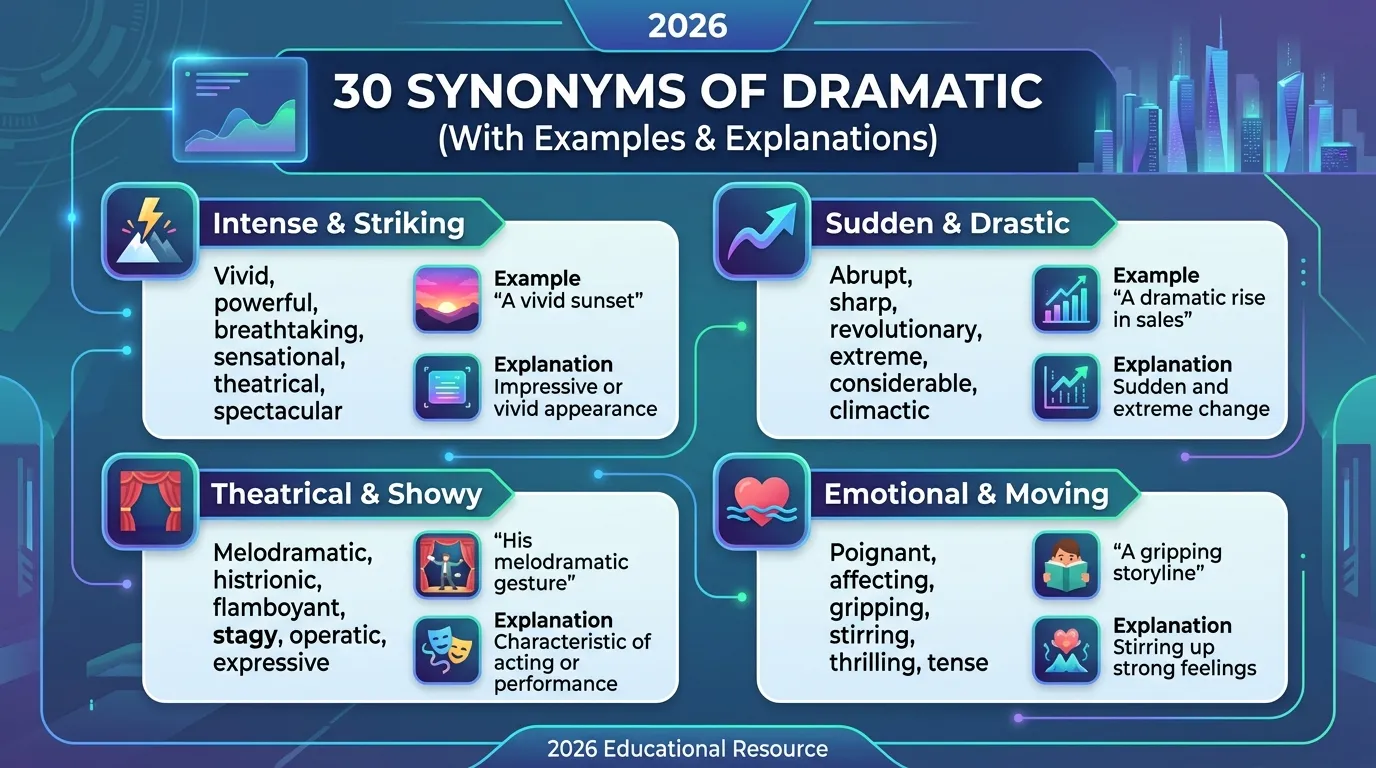
30 Synonyms of Dramatic
1. Exciting (adjective)
US: /ɪkˈsaɪtɪŋ/ | UK: /ɪkˈsaɪtɪŋ/
Meaning: causing strong interest or excitement
Examples:
- The game was very exciting.
- She told an exciting story.
2. Emotional (adjective)
US: /ɪˈmoʊʃənəl/ | UK: /ɪˈməʊʃənəl/
Meaning: full of strong feelings
Examples:
- His speech was deeply emotional.
- She became emotional during the movie.
3. Intense (adjective)
US: /ɪnˈtɛns/ | UK: /ɪnˈtens/
Meaning: very strong or serious
Examples:
- They had an intense discussion.
- The storm became intense.
4. Powerful (adjective)
US: /ˈpaʊərfəl/ | UK: /ˈpaʊəfəl/
Meaning: having strong effect or influence
Examples:
- The film delivered a powerful message.
- Her words were powerful.
5. Theatrical (adjective)
US: /θiˈætrɪkəl/ | UK: /θiˈætrɪkəl/
Meaning: related to acting or exaggerated behavior
Examples:
- His reaction seemed theatrical.
- She used a theatrical voice.
6. Sensational (adjective)
US: /sɛnˈseɪʃənəl/ | UK: /senˈseɪʃənəl/
Meaning: causing great excitement or surprise
Examples:
- The singer gave a sensational performance.
- The news was sensational.
7. Striking (adjective)
US: /ˈstraɪkɪŋ/ | UK: /ˈstraɪkɪŋ/
Meaning: very noticeable or impressive
Examples:
- She wore a striking dress.
- The change was striking.
8. Remarkable (adjective)
US: /rɪˈmɑːrkəbəl/ | UK: /rɪˈmɑːkəbəl/
Meaning: unusual and impressive
Examples:
- He made a remarkable recovery.
- The athlete showed remarkable skill.
9. Stunning (adjective)
US: /ˈstʌnɪŋ/ | UK: /ˈstʌnɪŋ/
Meaning: extremely impressive or shocking
Examples:
- The view was stunning.
- She gave a stunning performance.
10. Spectacular (adjective)
US: /spɛkˈtækjələr/ | UK: /spekˈtækjʊlə/
Meaning: extremely exciting and impressive
Examples:
- The fireworks were spectacular.
- They enjoyed a spectacular show.
11. Extraordinary (adjective)
US: /ɪkˈstrɔːrdəˌnɛri/ | UK: /ɪkˈstrɔːdənəri/
Meaning: very unusual or special
Examples:
- She showed extraordinary talent.
- It was an extraordinary event.
12. Impressive (adjective)
US: /ɪmˈprɛsɪv/ | UK: /ɪmˈpresɪv/
Meaning: making people admire something
Examples:
- The building looks impressive.
- His work was impressive.
13. Bold (adjective)
US: /boʊld/ | UK: /bəʊld/
Meaning: confident and noticeable
Examples:
- She made a bold decision.
- The painting used bold colors.
14. Vivid (adjective)
US: /ˈvɪvɪd/ | UK: /ˈvɪvɪd/
Meaning: bright, clear, and full of life
Examples:
- He described the event in vivid detail.
- The dream felt vivid.
15. Expressive (adjective)
US: /ɪkˈsprɛsɪv/ | UK: /ɪkˈspresɪv/
Meaning: showing feelings clearly
Examples:
- Her eyes were very expressive.
- He used expressive language.
16. Overemotional (adjective)
US: /ˌoʊvərɪˈmoʊʃənəl/ | UK: /ˌəʊvərɪˈməʊʃənəl/
Meaning: too emotional
Examples:
- He sounded overemotional.
- Her reaction was overemotional.
17. Exaggerated (adjective)
US: /ɪɡˈzædʒəreɪtɪd/ | UK: /ɪɡˈzædʒəreɪtɪd/
Meaning: made larger or more extreme than reality
Examples:
- The story seemed exaggerated.
- He made exaggerated gestures.
18. Dynamic (adjective)
US: /daɪˈnæmɪk/ | UK: /daɪˈnæmɪk/
Meaning: energetic and full of movement
Examples:
- She is a dynamic speaker.
- The team showed dynamic energy.
19. Passionate (adjective)
US: /ˈpæʃənət/ | UK: /ˈpæʃənət/
Meaning: showing strong feelings
Examples:
- He gave a passionate speech.
- She is passionate about art.
20. Forceful (adjective)
US: /ˈfɔːrsfəl/ | UK: /ˈfɔːsfəl/
Meaning: strong and powerful in effect
Examples:
- She made a forceful argument.
- His words sounded forceful.
21. Thrilling (adjective)
US: /ˈθrɪlɪŋ/ | UK: /ˈθrɪlɪŋ/
Meaning: causing excitement and pleasure
Examples:
- The race was thrilling.
- They watched a thrilling match.
22. Startling (adjective)
US: /ˈstɑːrtlɪŋ/ | UK: /ˈstɑːtlɪŋ/
Meaning: surprising in a shocking way
Examples:
- The results were startling.
- She heard a startling sound.
23. Astonishing (adjective)
US: /əˈstɑːnɪʃɪŋ/ | UK: /əˈstɒnɪʃɪŋ/
Meaning: extremely surprising
Examples:
- His progress was astonishing.
- They saw an astonishing performance.
24. Fierce (adjective)
US: /fɪrs/ | UK: /fɪəs/
Meaning: strong and powerful
Examples:
- The competition became fierce.
- She gave a fierce response.
25. Grand (adjective)
US: /ɡrænd/ | UK: /ɡrænd/
Meaning: large, impressive, or important
Examples:
- They planned a grand celebration.
- The hall looked grand.
26. Magnificent (adjective)
US: /mæɡˈnɪfɪsənt/ | UK: /mæɡˈnɪfɪsənt/
Meaning: extremely beautiful or impressive
Examples:
- The palace was magnificent.
- She wore a magnificent dress.
27. Flashy (adjective)
US: /ˈflæʃi/ | UK: /ˈflæʃi/
Meaning: too bright or showy
Examples:
- He drove a flashy car.
- Her clothes looked flashy.
28. Climactic (adjective)
US: /klaɪˈmæktɪk/ | UK: /klaɪˈmæktɪk/
Meaning: reaching the most exciting point
Examples:
- The movie ended with a climactic scene.
- The match had a climactic finish.
29. Eye-Catching (adjective)
US: /ˈaɪ ˌkætʃɪŋ/ | UK: /ˈaɪ ˌkætʃɪŋ/
Meaning: attracting attention easily
Examples:
- The poster was eye-catching.
- She wore an eye-catching hat.
30. Memorable (adjective)
US: /ˈmɛmərəbəl/ | UK: /ˈmemərəbəl/
Meaning: worth remembering
Examples:
- It was a memorable evening.
- The actor gave a memorable performance.
Prototype Meaning
The most common meaning of dramatic is something exciting, emotional, or very noticeable. People usually imagine powerful speeches, emotional scenes, surprising events, or strong changes when they hear this word.
Prototype Categorization
- Emotional intensity: emotional, passionate, expressive
- Excitement and surprise: thrilling, astonishing, startling
- Visual impact: striking, eye-catching, vivid
- Exaggeration and theater: theatrical, exaggerated, flashy
Categorization helps writers choose the best synonym based on tone, emotion, and situation.
Antonyms of Dramatic
- Calm (adjective): peaceful and quiet
- Ordinary (adjective): normal and not special
- Boring (adjective): not exciting
- Plain (adjective): simple and not expressive
- Mild (adjective): gentle and not strong
Short Questions and Answers
What does dramatic mean?
- It means exciting, emotional, or full of strong action or change.
When should dramatic be used?
- Use it to describe emotional events, surprising situations, or powerful performances.
Is dramatic positive or negative?
- It can be positive for excitement or negative when someone exaggerates emotions.
How is it different from similar words?
- “Dramatic” focuses on strong emotion or impact, while “exciting” mainly focuses on enjoyment and energy.
Conclusion
Learning synonyms of dramatic and synonyms of dramatic improves vocabulary and communication skills. It helps English learners describe emotions, events, and experiences more clearly in speaking and writing. Using different synonyms also avoids repetition and makes sentences more colorful and engaging. These words are useful in storytelling, conversations, essays, entertainment writing, and daily communication. They help writers express excitement, emotion, surprise, and intensity more accurately. Practice learning and using new words every day. Small vocabulary habits can build stronger English confidence and improve fluency over time.

I’m Zahid Abbas, an educator, researcher, and digital publishing strategist with a passion for linguistics, grammar, and clear communication. As a content creator and SEO specialist, I craft research-driven, reader-focused content that empowers learners and makes knowledge accessible worldwide.