Selfish is a common English word that describes a person who thinks mostly about their own needs, wishes, or benefits and pays little attention to others. Imagine a group of friends sharing pizza. One person takes most of the slices and leaves very little for everyone else. People may call that person selfish.
This word is often used in daily conversations, books, news articles, and social media because human behavior is a common topic. Learning synonyms of selfish helps English learners express ideas more clearly and avoid repeating the same word. It also helps content writers make their writing richer and more engaging.
In this article, you will learn the meaning of selfish, its pronunciation, history, grammar, connotation, and 30 useful synonyms with examples. You will also discover antonyms, categories, and practical usage tips.
Meaning of Selfish
Selfish (Adjective):
A person who cares mainly about themselves and their own interests without considering the needs or feelings of others.
Examples
- He was selfish and refused to share his toys.
- It is selfish to think only about your own success.
Connotative Meaning
- Positive tone: Rarely positive; sometimes used to describe healthy self-care in certain contexts.
- Negative tone: Usually negative because it suggests lack of concern for others.
- Neutral tone: Can be neutral when describing behavior objectively.
Etymology
- Origin: Old English and Germanic roots.
- Derived from self + -ish.
- Original meaning: “Concerned with oneself.”
Short History of the Keyword
- Old English (450–1100): The root word self was commonly used.
- Middle English (1100–1500): Forms related to self-interest appeared.
- Modern English (1500–Present): The word selfish became widely used to describe self-centered behavior.
Pronunciation (US & UK – IPA)
US: /ˈsel.fɪʃ/
UK: /ˈsel.fɪʃ/
Syllables
self-ish
Affixation Pattern of Selfish
Root: self
Prefix: None
Suffix: -ish
Word Formation of Selfish
- Self (Noun)
- Selfish (Adjective)
- Selfishly (Adverb)
- Selfishness (Noun)
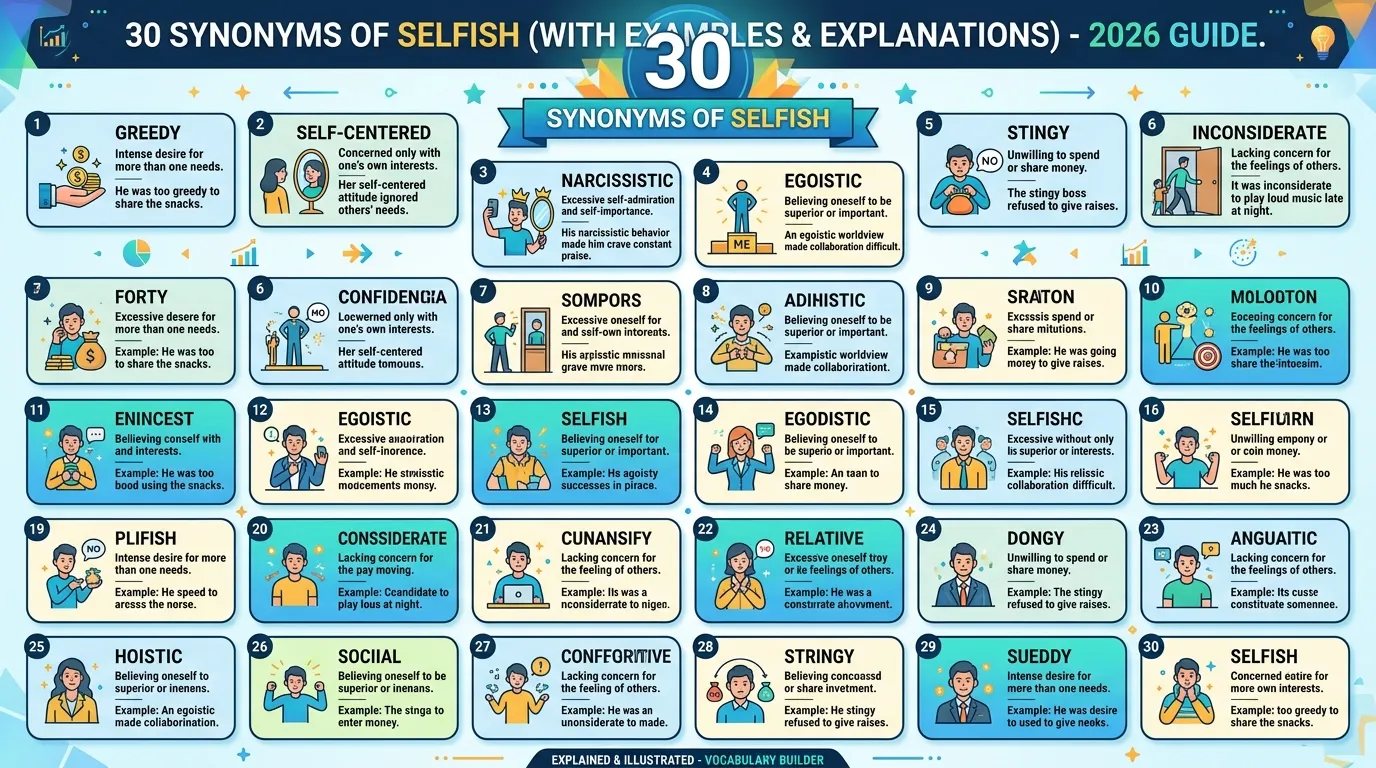
30 Synonyms of Selfish
1. Self-Centered (Adjective)
US: /ˌself ˈsen.tɚd/ | UK: /ˌself ˈsen.təd/
Meaning: Focused mainly on oneself.
Examples:
- She is too self-centered to notice others.
- A self-centered person often ignores advice.
2. Egotistical (Adjective)
US: /ˌiː.ɡəˈtɪs.tɪ.kəl/ | UK: /ˌeɡ.əˈtɪs.tɪ.kəl/
Meaning: Having an excessive sense of self-importance.
Examples:
- His egotistical attitude annoyed everyone.
- The actor sounded egotistical during the interview.
3. Narcissistic (Adjective)
US: /ˌnɑːr.sɪˈsɪs.tɪk/ | UK: /ˌnɑː.sɪˈsɪs.tɪk/
Meaning: Extremely interested in oneself.
Examples:
- She displayed narcissistic behavior.
- Narcissistic people often seek attention.
4. Conceited (Adjective)
US: /kənˈsiː.t̬ɪd/ | UK: /kənˈsiː.tɪd/
Meaning: Too proud of oneself.
Examples:
- He became conceited after winning.
- Nobody likes a conceited leader.
5. Egoistic (Adjective)
US: /ˌiː.ɡoʊˈɪs.tɪk/ | UK: /ˌiː.ɡəʊˈɪs.tɪk/
Meaning: Thinking mainly about personal advantage.
Examples:
- The decision seemed egoistic.
- Egoistic actions can harm teamwork.
6. Egocentric (Adjective)
US: /ˌiː.ɡoʊˈsen.trɪk/ | UK: /ˌiː.ɡəʊˈsen.trɪk/
Meaning: Seeing everything from one’s own point of view.
Examples:
- Children can sometimes be egocentric.
- His egocentric view caused problems.
7. Greedy (Adjective)
US: /ˈɡriː.di/ | UK: /ˈɡriː.di/
Meaning: Wanting more than one needs.
Examples:
- The greedy man wanted all the money.
- Greedy behavior upset the group.
8. Possessive (Adjective)
US: /pəˈzes.ɪv/ | UK: /pəˈzes.ɪv/
Meaning: Wanting to keep things or people for oneself.
Examples:
- He is possessive about his belongings.
- Her possessive nature caused conflict.
9. Stingy (Adjective)
US: /ˈstɪn.dʒi/ | UK: /ˈstɪn.dʒi/
Meaning: Unwilling to share money or resources.
Examples:
- He was stingy with donations.
- A stingy person rarely gives freely.
10. Miserly (Adjective)
US: /ˈmaɪ.zɚ.li/ | UK: /ˈmaɪ.zə.li/
Meaning: Extremely unwilling to spend or share.
Examples:
- The miserly owner paid very little.
- His miserly habits were well known.
11. Mean (Adjective)
US: /miːn/ | UK: /miːn/
Meaning: Ungenerous and selfish.
Examples:
- That was a mean thing to do.
- He seemed mean about sharing.
12. Ungenerous (Adjective)
US: /ʌnˈdʒen.ər.əs/ | UK: /ʌnˈdʒen.ər.əs/
Meaning: Not willing to give or share.
Examples:
- Her ungenerous response surprised us.
- An ungenerous attitude hurts relationships.
13. Inconsiderate (Adjective)
US: /ˌɪn.kənˈsɪd.ɚ.ət/ | UK: /ˌɪn.kənˈsɪd.ər.ət/
Meaning: Not caring about others’ feelings.
Examples:
- Leaving a mess was inconsiderate.
- His inconsiderate actions annoyed neighbors.
14. Thoughtless (Adjective)
US: /ˈθɔːt.ləs/ | UK: /ˈθɔːt.ləs/
Meaning: Acting without considering others.
Examples:
- It was a thoughtless comment.
- Thoughtless actions can cause pain.
15. Unsympathetic (Adjective)
US: /ˌʌn.sɪm.pəˈθet̬.ɪk/ | UK: /ˌʌn.sɪm.pəˈθet.ɪk/
Meaning: Showing little concern for others.
Examples:
- The manager seemed unsympathetic.
- She gave an unsympathetic reply.
16. Heartless (Adjective)
US: /ˈhɑːrt.ləs/ | UK: /ˈhɑːt.ləs/
Meaning: Lacking kindness or compassion.
Examples:
- It was a heartless decision.
- A heartless person ignores suffering.
17. Callous (Adjective)
US: /ˈkæl.əs/ | UK: /ˈkæl.əs/
Meaning: Emotionally insensitive.
Examples:
- His callous remarks shocked everyone.
- The callous response felt cruel.
18. Coldhearted (Adjective)
US: /ˌkoʊldˈhɑːr.t̬ɪd/ | UK: /ˌkəʊldˈhɑː.tɪd/
Meaning: Showing little warmth or care.
Examples:
- She appeared coldhearted.
- A coldhearted reaction disappointed us.
19. Mercenary (Adjective)
US: /ˈmɝː.sə.ner.i/ | UK: /ˈmɜː.sɪ.nər.i/
Meaning: Motivated mainly by money or gain.
Examples:
- His mercenary motives were obvious.
- The deal seemed mercenary.
20. Opportunistic (Adjective)
US: /ˌɑː.pɚ.tuːˈnɪs.tɪk/ | UK: /ˌɒp.ə.tjuːˈnɪs.tɪk/
Meaning: Taking advantage of situations for personal benefit.
Examples:
- The move was opportunistic.
- Opportunistic behavior can seem selfish.
21. Self-Interested (Adjective)
US: /ˌself ˈɪn.trə.stɪd/ | UK: /ˌself ˈɪn.trəs.tɪd/
Meaning: Focused on personal benefit.
Examples:
- His advice sounded self-interested.
- Self-interested actions are common in business.
22. Self-Serving (Adjective)
US: /ˌself ˈsɝː.vɪŋ/ | UK: /ˌself ˈsɜː.vɪŋ/
Meaning: Designed to help oneself.
Examples:
- The statement was self-serving.
- People criticized the self-serving decision.
23. Covetous (Adjective)
US: /ˈkʌv.ə.t̬əs/ | UK: /ˈkʌv.ə.təs/
Meaning: Strongly desiring what others have.
Examples:
- He gave a covetous look.
- Covetous thoughts can create jealousy.
24. Grasping (Adjective)
US: /ˈɡræs.pɪŋ/ | UK: /ˈɡrɑː.spɪŋ/
Meaning: Always trying to gain more.
Examples:
- The grasping merchant wanted extra profit.
- People disliked his grasping nature.
25. Avaricious (Adjective)
US: /ˌæv.əˈrɪʃ.əs/ | UK: /ˌæv.əˈrɪʃ.əs/
Meaning: Extremely greedy for wealth.
Examples:
- The avaricious banker sought more money.
- An avaricious attitude causes distrust.
26. Materialistic (Adjective)
US: /məˌtɪr.i.əˈlɪs.tɪk/ | UK: /məˌtɪə.ri.əˈlɪs.tɪk/
Meaning: Caring greatly about possessions.
Examples:
- He is very materialistic.
- Materialistic values often focus on wealth.
27. Self-Absorbed (Adjective)
US: /ˌself əbˈzɔːrbd/ | UK: /ˌself əbˈzɔːbd/
Meaning: Deeply concerned with oneself.
Examples:
- She seemed self-absorbed.
- Self-absorbed people miss social cues.
28. Self-Seeking (Adjective)
US: /ˌself ˈsiː.kɪŋ/ | UK: /ˌself ˈsiː.kɪŋ/
Meaning: Seeking personal gain.
Examples:
- The leader appeared self-seeking.
- Self-seeking motives are easy to notice.
29. Boastful (Adjective)
US: /ˈboʊst.fəl/ | UK: /ˈbəʊst.fəl/
Meaning: Frequently talking proudly about oneself.
Examples:
- His boastful speech annoyed listeners.
- A boastful attitude can seem selfish.
30. Arrogant (Adjective)
US: /ˈer.ə.ɡənt/ | UK: /ˈær.ə.ɡənt/
Meaning: Believing oneself better than others.
Examples:
- The arrogant player ignored advice.
- Arrogant behavior damages friendships.
Prototype Meaning
The typical meaning of selfish is a person who puts their own wants, comfort, or success before the needs of others. Most people imagine someone who does not like sharing, helping, or making sacrifices for others.
Prototype Categorization
- Greed and Desire: greedy, avaricious, grasping, covetous, materialistic
- Lack of Care for Others: inconsiderate, thoughtless, callous, heartless, coldhearted
- Personal Gain and Advantage: self-serving, self-interested, opportunistic, mercenary, self-seeking
- Pride and Self-Importance: arrogant, conceited, boastful, egotistical
- Unwillingness to Share: stingy, miserly, mean, ungenerous, possessive
Antonyms of Selfish
- Generous (Adjective): willing to give and share with others.
- Kind (Adjective): caring and helpful toward people.
- Selfless (Adjective): putting others before oneself.
- Compassionate (Adjective): showing concern for others’ suffering.
- Considerate (Adjective): thinking about others’ needs and feelings.
- Altruistic (Adjective): helping others without expecting rewards.
- Charitable (Adjective): giving help or money to people in need.
- Thoughtful (Adjective): showing care and attention toward others.
- Benevolent (Adjective): wishing to do good for others.
- Supportive (Adjective): encouraging and helping other people.
Short Questions and Answers
- What does selfish mean?It means caring mainly about your own needs and interests rather than those of other people.
- When should selfish be used?Use it when describing a person, action, or decision that ignores the needs or feelings of others.
- Is selfish positive or negative?It is usually negative because it suggests a lack of concern for other people.
- How is it different from similar words?Selfish is a broad term. Words like greedy focus on wanting more, while self-centered focuses on thinking mostly about oneself.
Conclusion
Learning the Synonyms of Selfish and Synonyms of Selfish can greatly improve your English vocabulary. Instead of using the same word repeatedly, you can choose more precise alternatives such as self-centered, greedy, self-serving, or inconsiderate. This makes your writing and speaking more effective and interesting. Understanding pronunciation, connotation, history, and categories also helps you use these words correctly in different situations. A stronger vocabulary allows you to express ideas clearly, communicate with confidence, and understand English texts more easily. Make vocabulary learning a daily habit, and practice using new synonyms in sentences. Small steps each day can lead to big improvements in your English skills using Synonyms of Selfish.

I’m Zahid Abbas, an educator, researcher, and digital publishing strategist with a passion for linguistics, grammar, and clear communication. As a content creator and SEO specialist, I craft research-driven, reader-focused content that empowers learners and makes knowledge accessible worldwide.